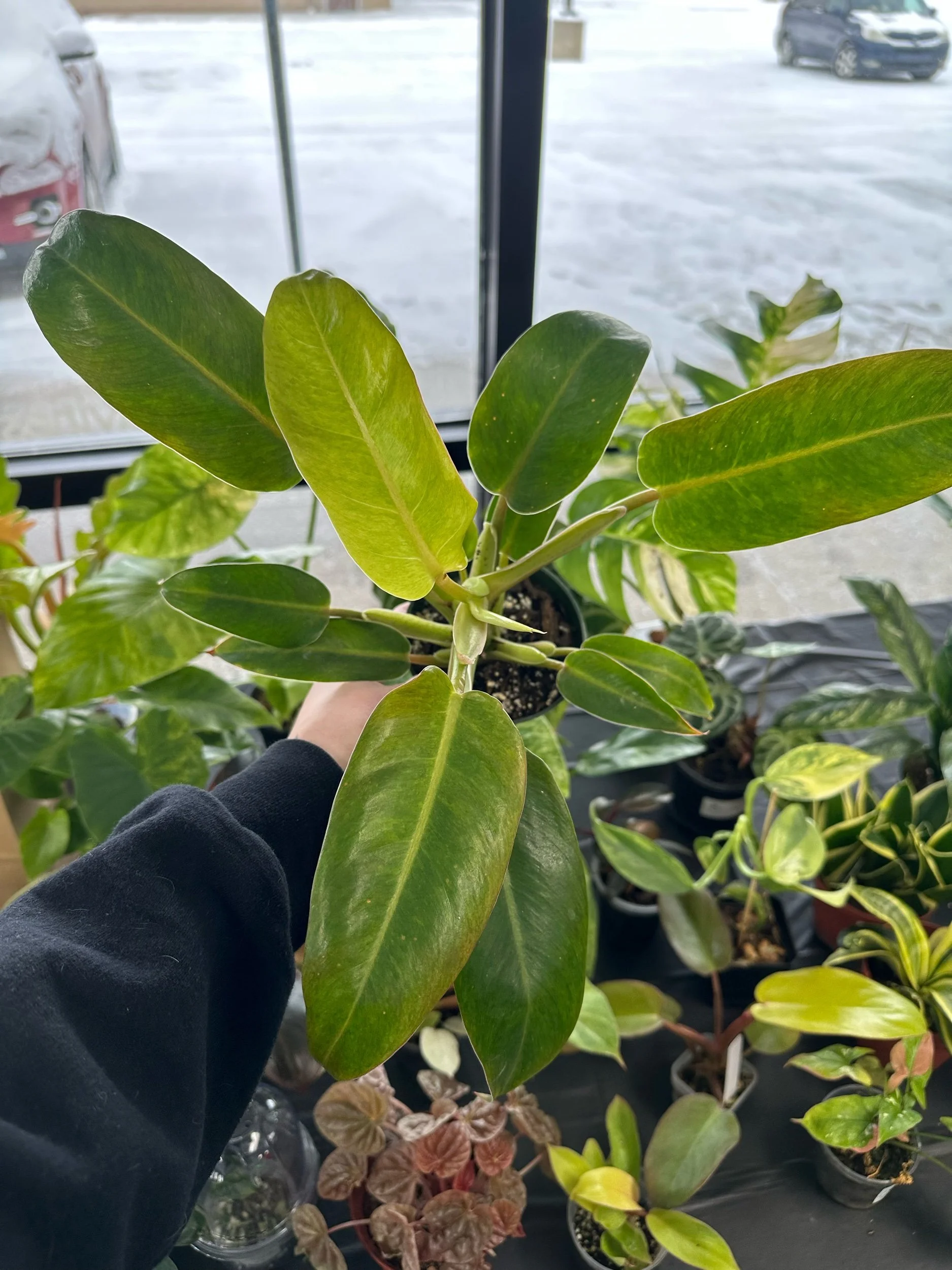
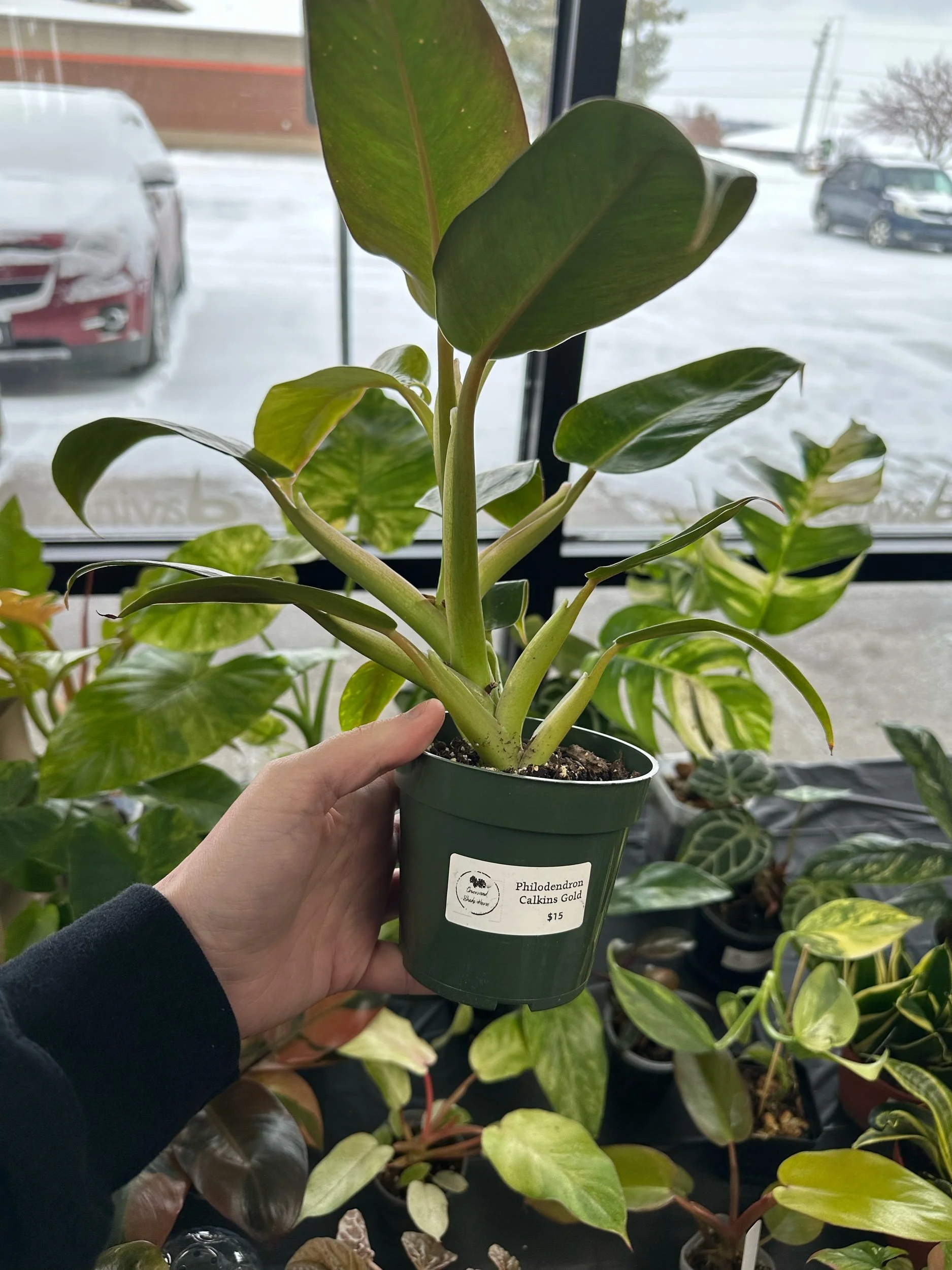
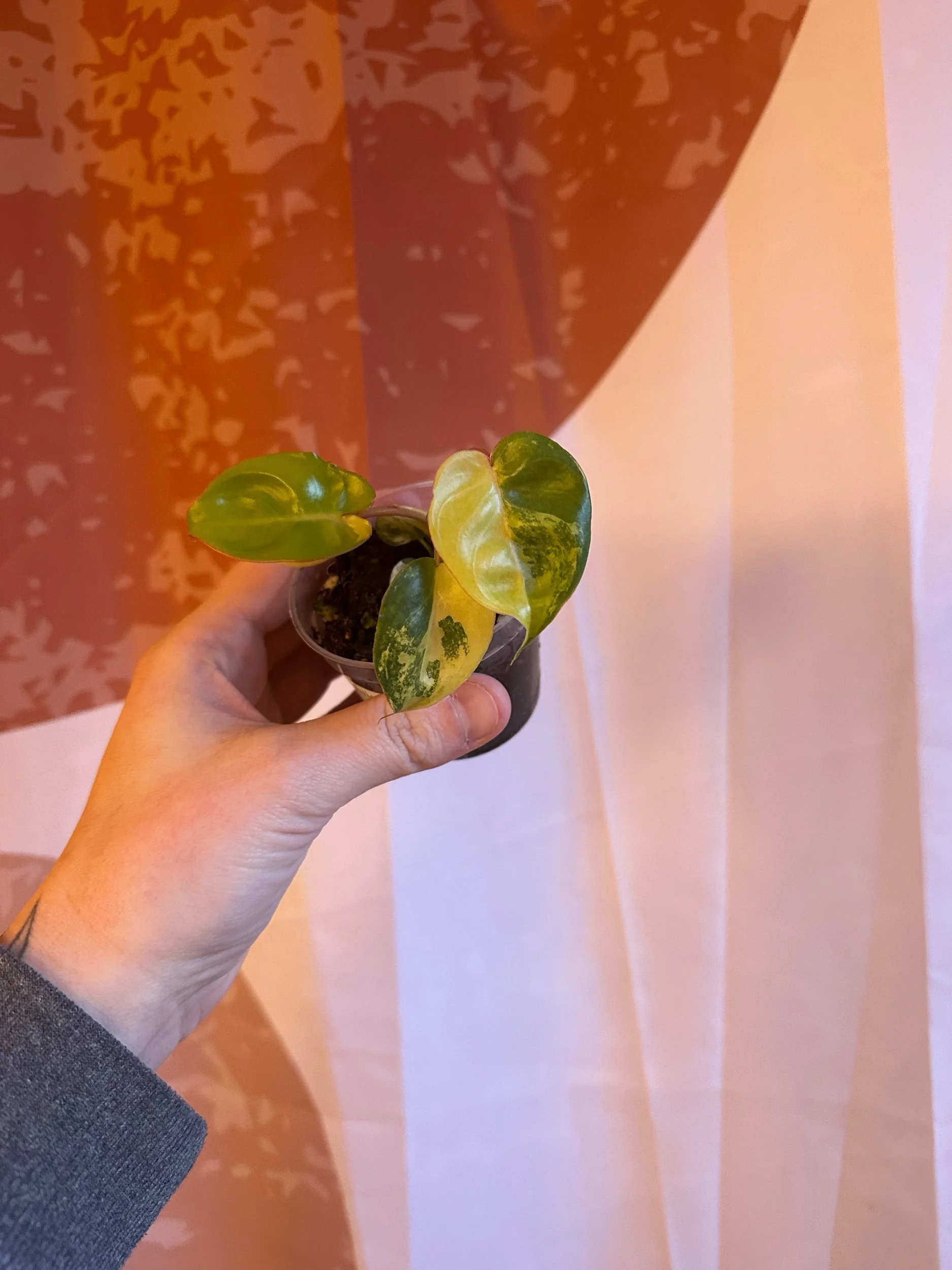
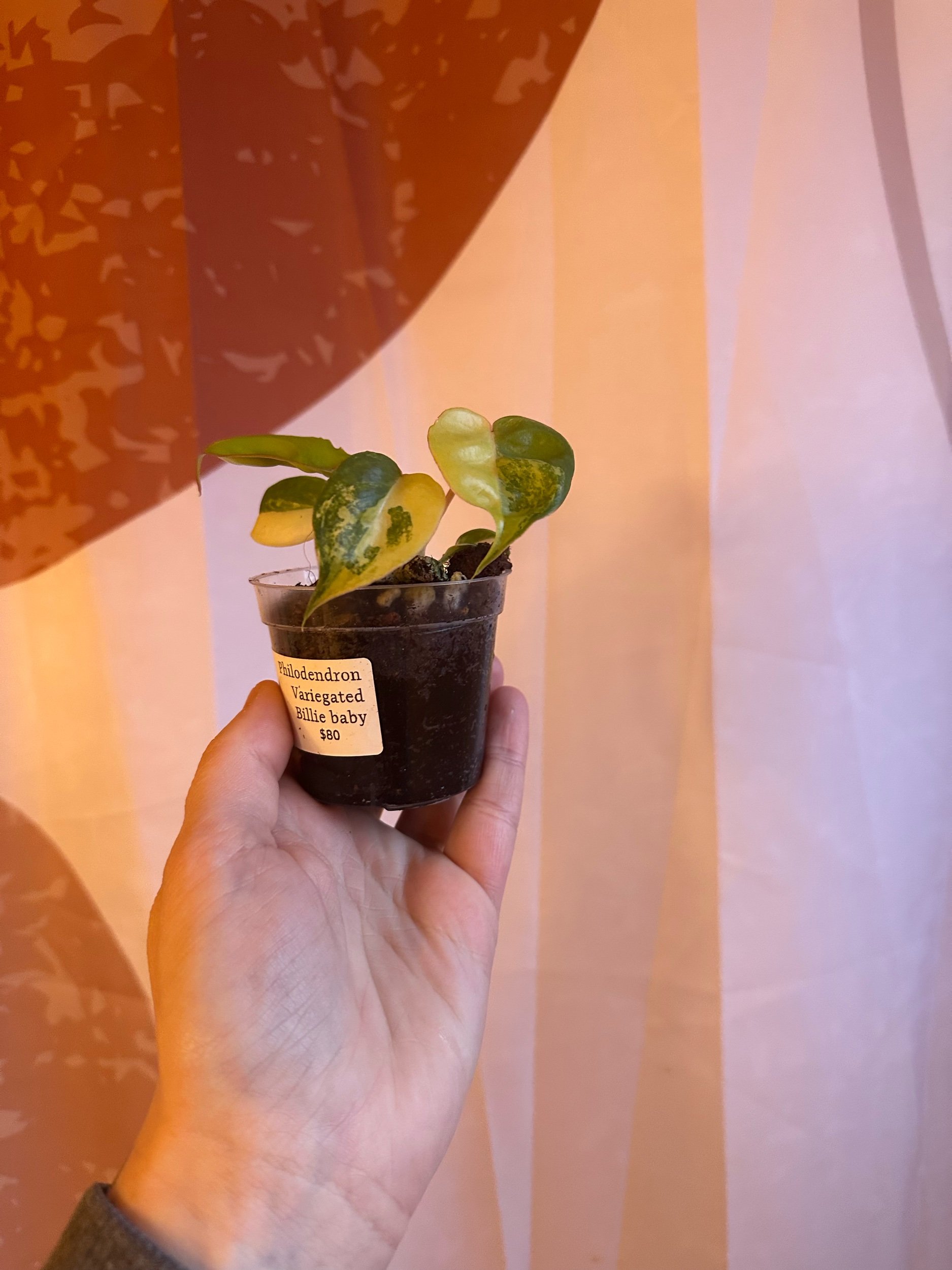
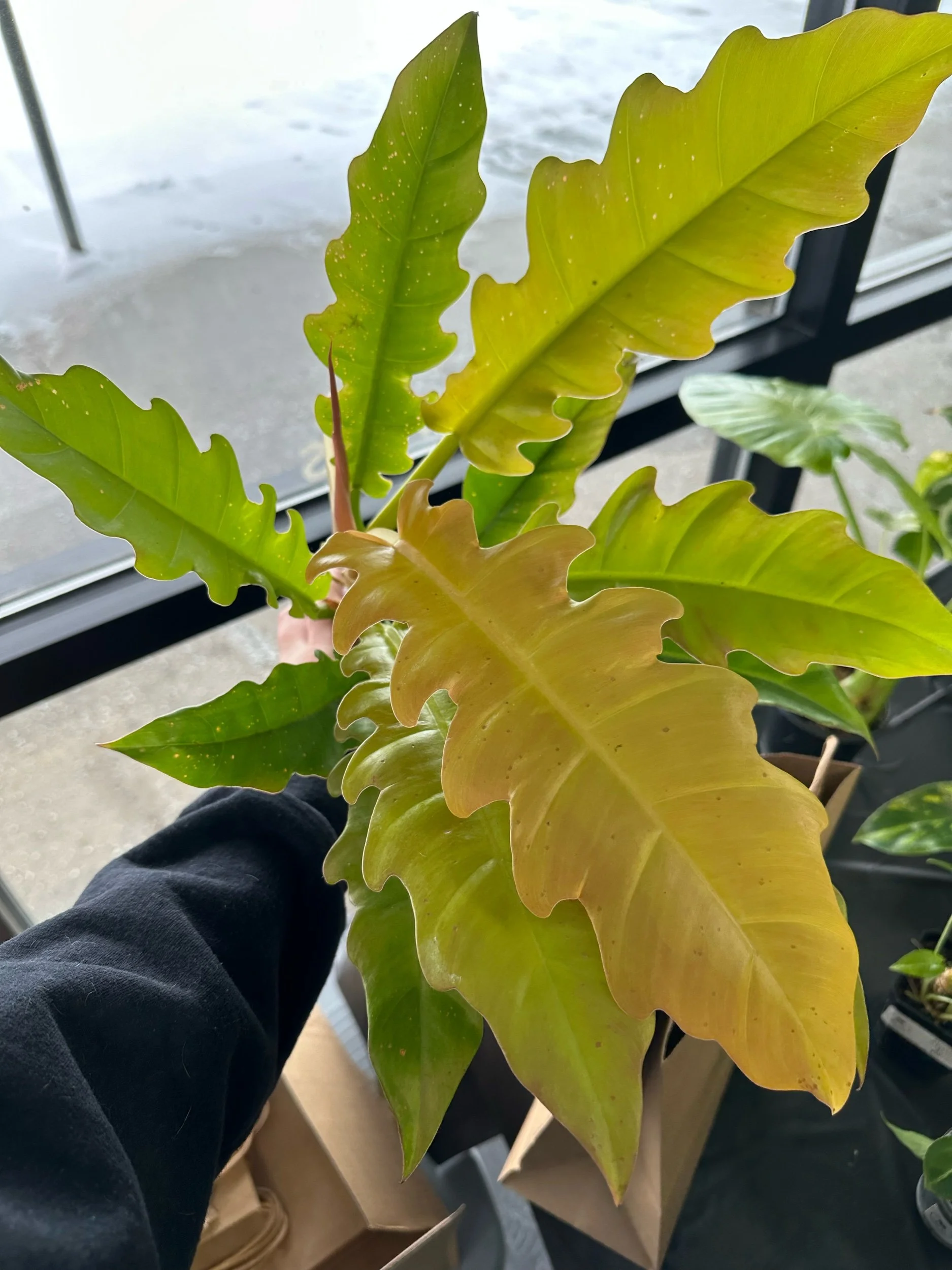
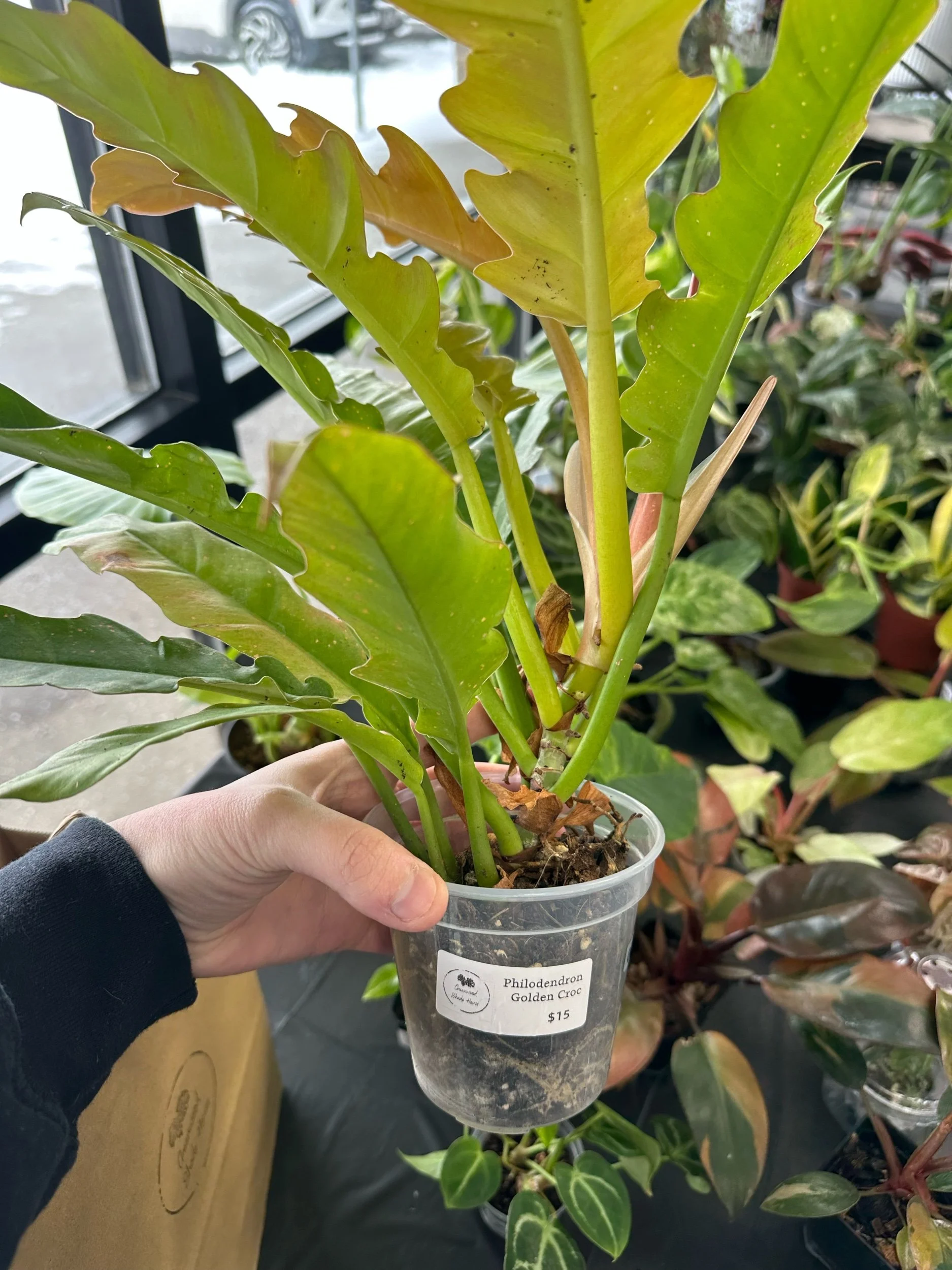
 Image 1 of 2
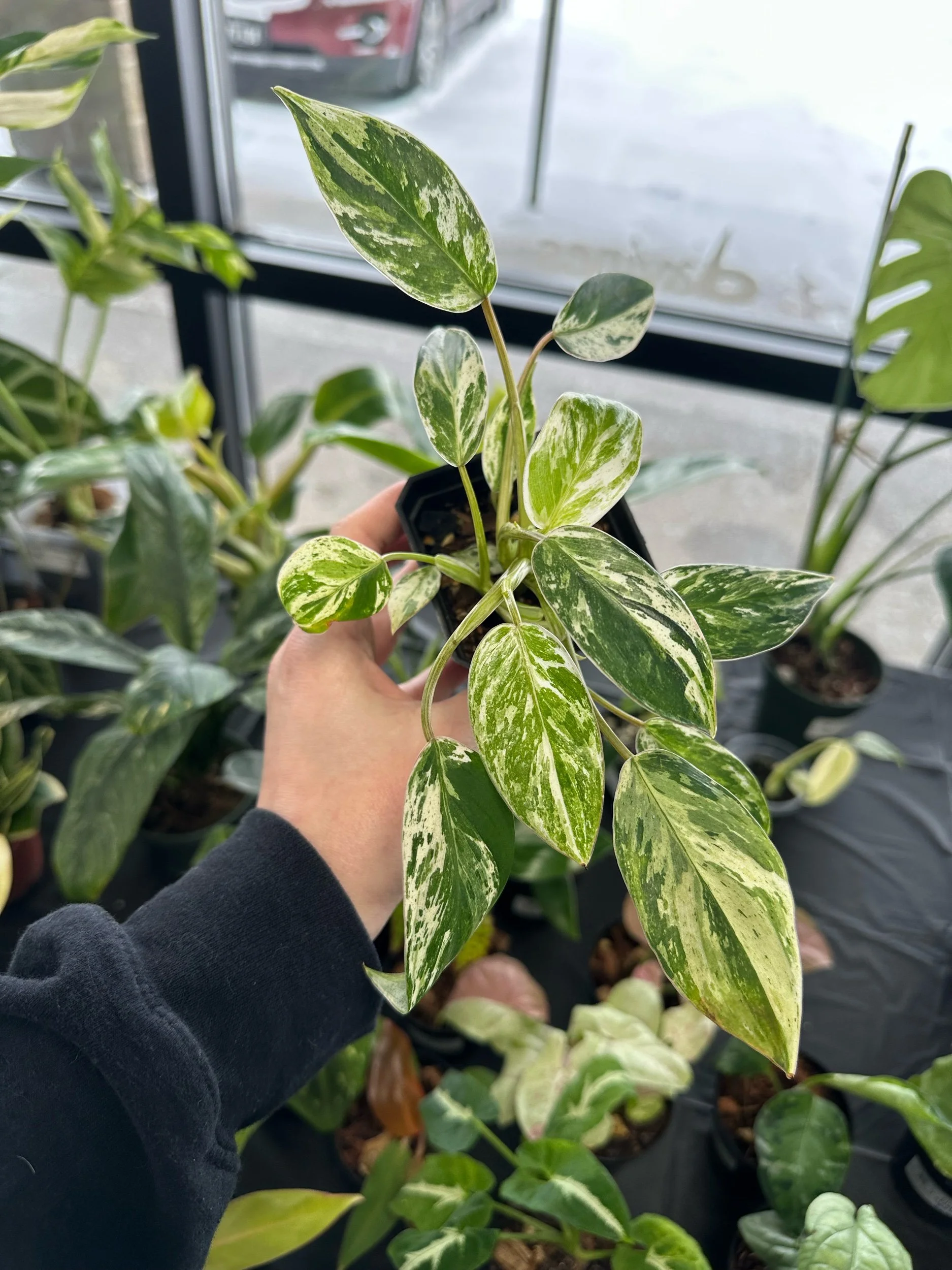
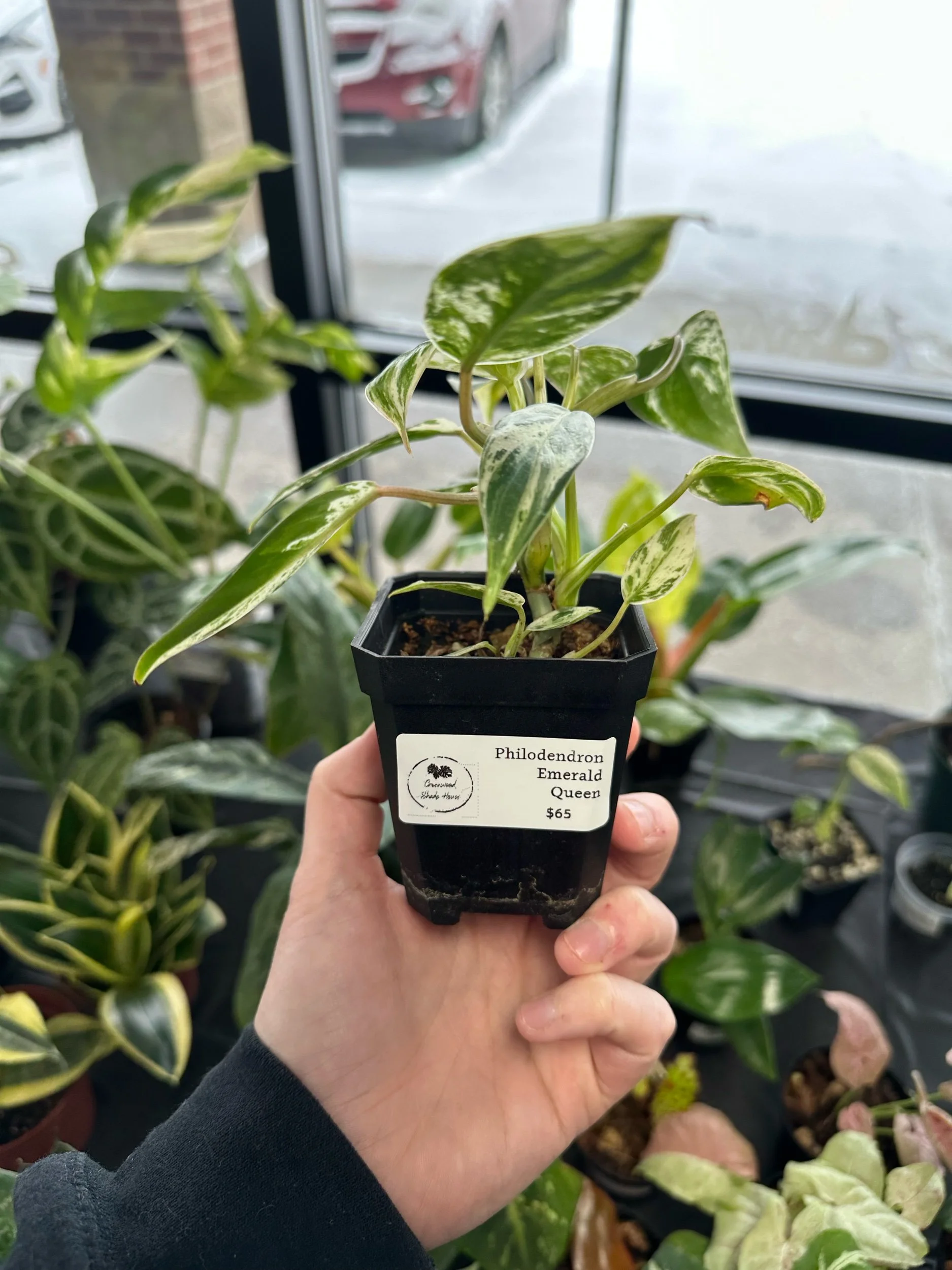
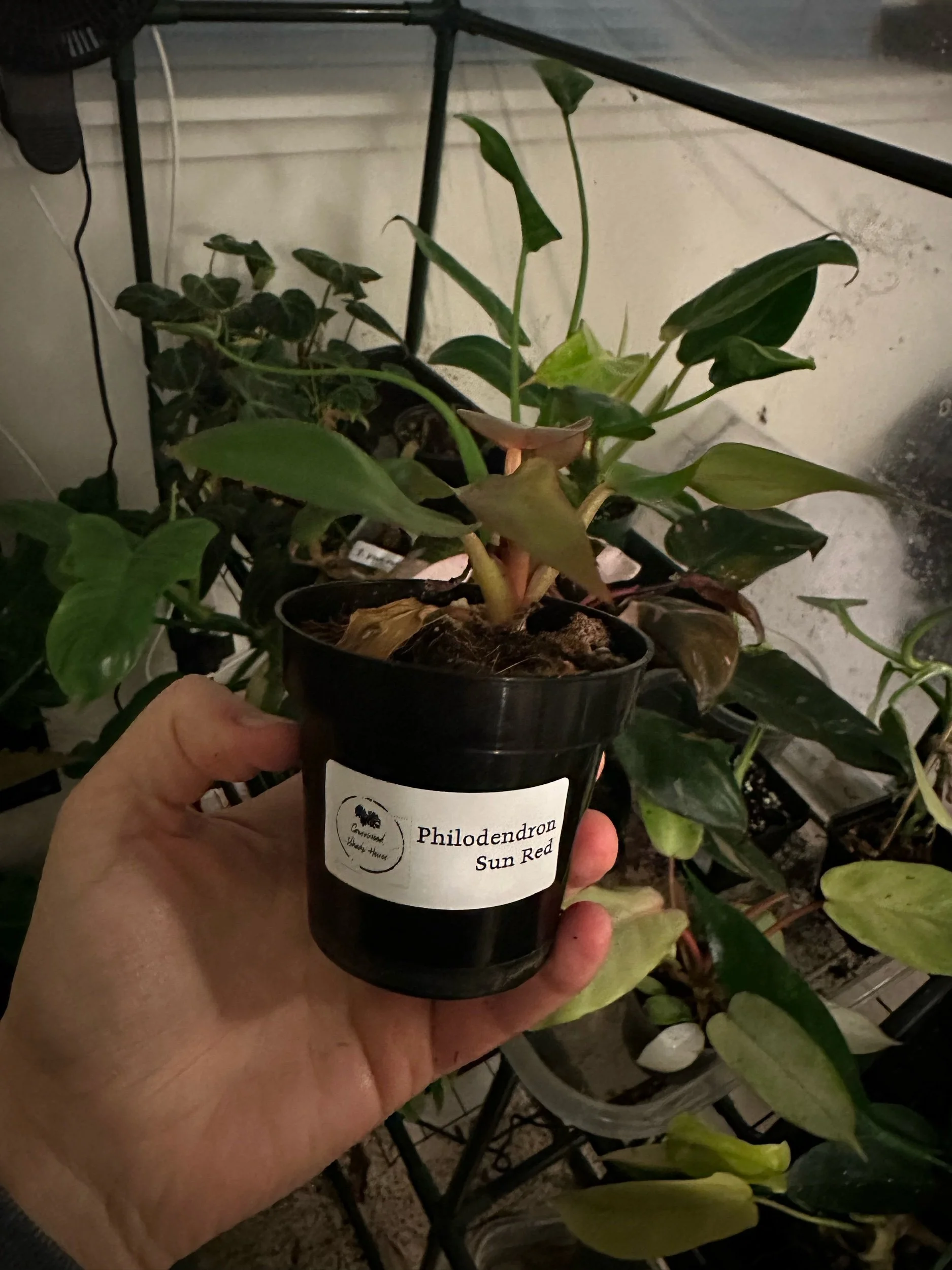 Image 2 of 2
Philodendron 'Sun Red'
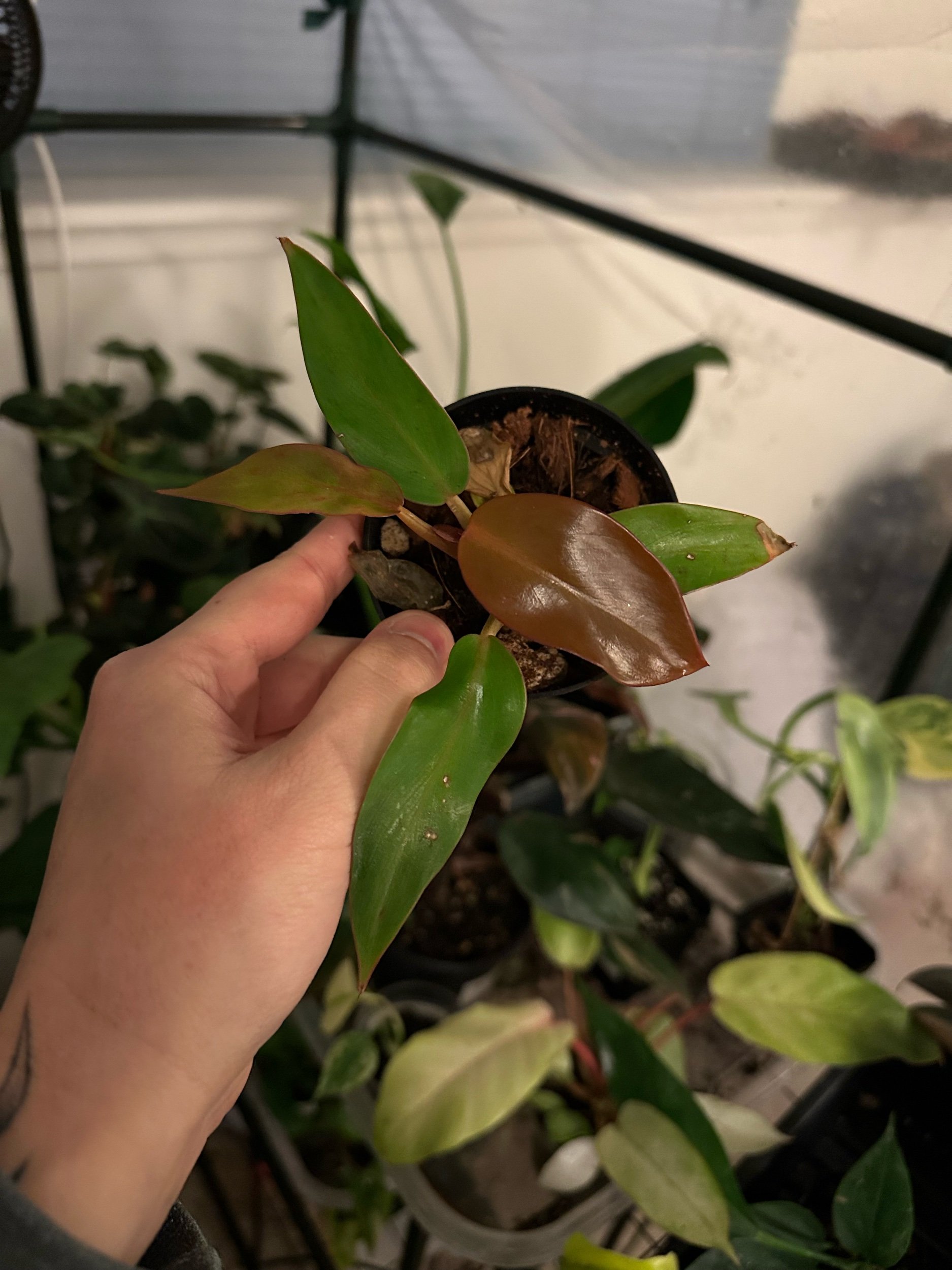
Overview Philodendron 'Sun Red' is a heat-tolerant, sun-loving hybrid known for its vibrant red new growth that gradually deepens to bronze or green as leaves mature. It’s prized for its striking color contrast, compact to medium vining habit, and relative ease of care compared with many color-form philodendrons. This plant works well in bright, indirect light or in filtered sun where its coloration intensifies.
Appearance
New leaves: bright red to coral-red, glossy
Mature leaves: bronze to olive green with reddish undertones
Leaf shape: oblong to slightly lanceolate, smooth margins
Growth habit: vining or climbing; can be trained on a moss pole or allowed to trail
Size: indoors typically reaches 2–6 feet of vine length depending on support and pruning
Light
Best: bright, indirect light to partial direct sun (morning or filtered)
Tolerates: medium light but color will be less intense
Avoid: harsh, hot afternoon sun for prolonged periods, which can scorch leaves
Watering
Keep soil evenly moist but not waterlogged
Water when the top 1–2 inches of soil feel dry
Reduce frequency in winter; avoid allowing the plant to sit in standing water
Good drainage is essential to prevent root rot
Soil & Potting
Use a well-draining, aerated mix: quality indoor potting mix amended with perlite, orchid bark, or coco coir
pH: slightly acidic to neutral (around 5.5–7.0)
Repot every 1–2 years or when rootbound; choose a pot with drainage holes
Temperature & Humidity
Ideal temperature: 65–85°F (18–29°C)
Avoid temperatures below 55°F (13°C)
Prefers moderate to high humidity (50%+); benefits from regular misting, a humidifier, or grouping with other plants
Fertilizer
Feed during the growing season (spring and summer) with a balanced, water-soluble fertilizer diluted to half strength every 4–6 weeks
Reduce or stop fertilizing in fall and winter
Pruning & Training
Prune to control size, encourage bushier growth, and remove damaged leaves
Pinch back growing tips to promote branching
Provide a moss pole, trellis, or allow to trail; aerial roots will cling to supports
Propagation
Easily propagated by stem cuttings: take a cutting with at least one node and root in water or a moist potting mix
Keep cuttings warm and in bright, indirect light while roots develop
Pests & Problems
Common pests: spider mites, mealybugs, scale, and aphids—inspect regularly and treat promptly with insecticidal soap or neem oil
Leaf browning: often from low humidity, overfertilization, or inconsistent watering
Yellowing leaves: often from overwatering or poor drainage
Pale new growth: may indicate insufficient light or lack of nutrients
Toxicity
Toxic to pets and humans if ingested due to calcium oxalate crystals; keep out of reach of children and pets
Styling & Uses
Great as a hanging/trailed plant from shelves or baskets, or trained vertically on a support for a dramatic accent
Its colorful new growth makes it a focal plant in mixed tropical collections or modern interiors
Where to buy
Look for 'Sun Red' from reputable nurseries, specialty houseplant shops, or community plant exchanges. When purchasing online, check photos and seller reviews to confirm plant health and variety authenticity.
Care Summary (quick reference)
Light: bright, indirect to partial morning sun
Water: when top 1–2" of soil is dry
Soil: well-draining, aerated mix
Temp: 65–85°F (18–29°C)
Humidity: 50%+
Fertilizer: balanced, half strength during spring/summer every 4–6 weeks
Greenwood Shade House note As a women-owned indoor plant community, we recommend inspecting new arrivals for pests and acclimating 'Sun Red' slowly to brighter light to preserve its vibrant coloration. Enjoy the dramatic red new growth by pairing with plants that highlight its warm tones.
Philodendron 'Sun Red'
Overview Philodendron 'Sun Red' is a heat-tolerant, sun-loving hybrid known for its vibrant red new growth that gradually deepens to bronze or green as leaves mature. It’s prized for its striking color contrast, compact to medium vining habit, and relative ease of care compared with many color-form philodendrons. This plant works well in bright, indirect light or in filtered sun where its coloration intensifies.
Appearance
New leaves: bright red to coral-red, glossy
Mature leaves: bronze to olive green with reddish undertones
Leaf shape: oblong to slightly lanceolate, smooth margins
Growth habit: vining or climbing; can be trained on a moss pole or allowed to trail
Size: indoors typically reaches 2–6 feet of vine length depending on support and pruning
Light
Best: bright, indirect light to partial direct sun (morning or filtered)
Tolerates: medium light but color will be less intense
Avoid: harsh, hot afternoon sun for prolonged periods, which can scorch leaves
Watering
Keep soil evenly moist but not waterlogged
Water when the top 1–2 inches of soil feel dry
Reduce frequency in winter; avoid allowing the plant to sit in standing water
Good drainage is essential to prevent root rot
Soil & Potting
Use a well-draining, aerated mix: quality indoor potting mix amended with perlite, orchid bark, or coco coir
pH: slightly acidic to neutral (around 5.5–7.0)
Repot every 1–2 years or when rootbound; choose a pot with drainage holes
Temperature & Humidity
Ideal temperature: 65–85°F (18–29°C)
Avoid temperatures below 55°F (13°C)
Prefers moderate to high humidity (50%+); benefits from regular misting, a humidifier, or grouping with other plants
Fertilizer
Feed during the growing season (spring and summer) with a balanced, water-soluble fertilizer diluted to half strength every 4–6 weeks
Reduce or stop fertilizing in fall and winter
Pruning & Training
Prune to control size, encourage bushier growth, and remove damaged leaves
Pinch back growing tips to promote branching
Provide a moss pole, trellis, or allow to trail; aerial roots will cling to supports
Propagation
Easily propagated by stem cuttings: take a cutting with at least one node and root in water or a moist potting mix
Keep cuttings warm and in bright, indirect light while roots develop
Pests & Problems
Common pests: spider mites, mealybugs, scale, and aphids—inspect regularly and treat promptly with insecticidal soap or neem oil
Leaf browning: often from low humidity, overfertilization, or inconsistent watering
Yellowing leaves: often from overwatering or poor drainage
Pale new growth: may indicate insufficient light or lack of nutrients
Toxicity
Toxic to pets and humans if ingested due to calcium oxalate crystals; keep out of reach of children and pets
Styling & Uses
Great as a hanging/trailed plant from shelves or baskets, or trained vertically on a support for a dramatic accent
Its colorful new growth makes it a focal plant in mixed tropical collections or modern interiors
Where to buy
Look for 'Sun Red' from reputable nurseries, specialty houseplant shops, or community plant exchanges. When purchasing online, check photos and seller reviews to confirm plant health and variety authenticity.
Care Summary (quick reference)
Light: bright, indirect to partial morning sun
Water: when top 1–2" of soil is dry
Soil: well-draining, aerated mix
Temp: 65–85°F (18–29°C)
Humidity: 50%+
Fertilizer: balanced, half strength during spring/summer every 4–6 weeks
Greenwood Shade House note As a women-owned indoor plant community, we recommend inspecting new arrivals for pests and acclimating 'Sun Red' slowly to brighter light to preserve its vibrant coloration. Enjoy the dramatic red new growth by pairing with plants that highlight its warm tones.