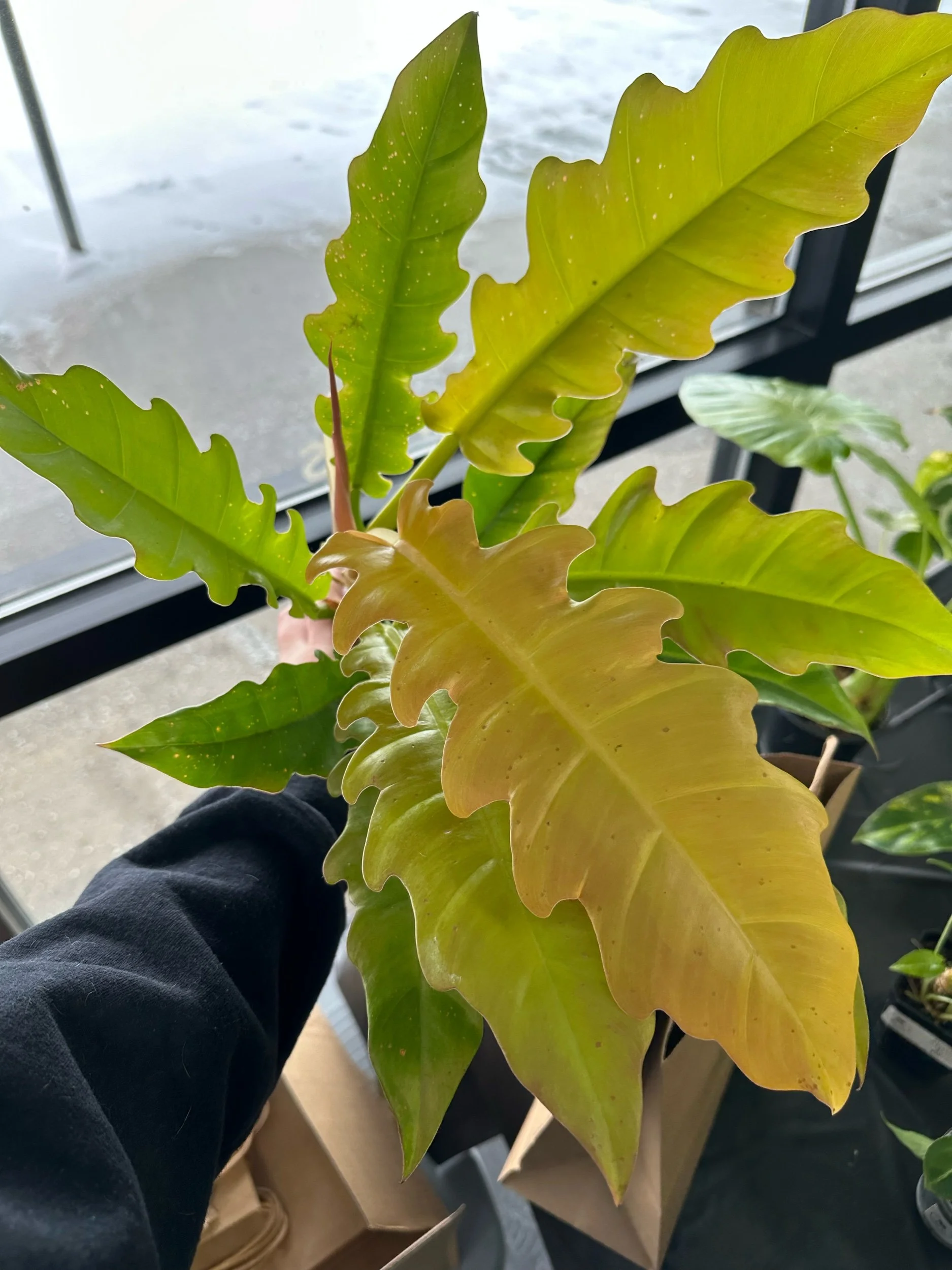
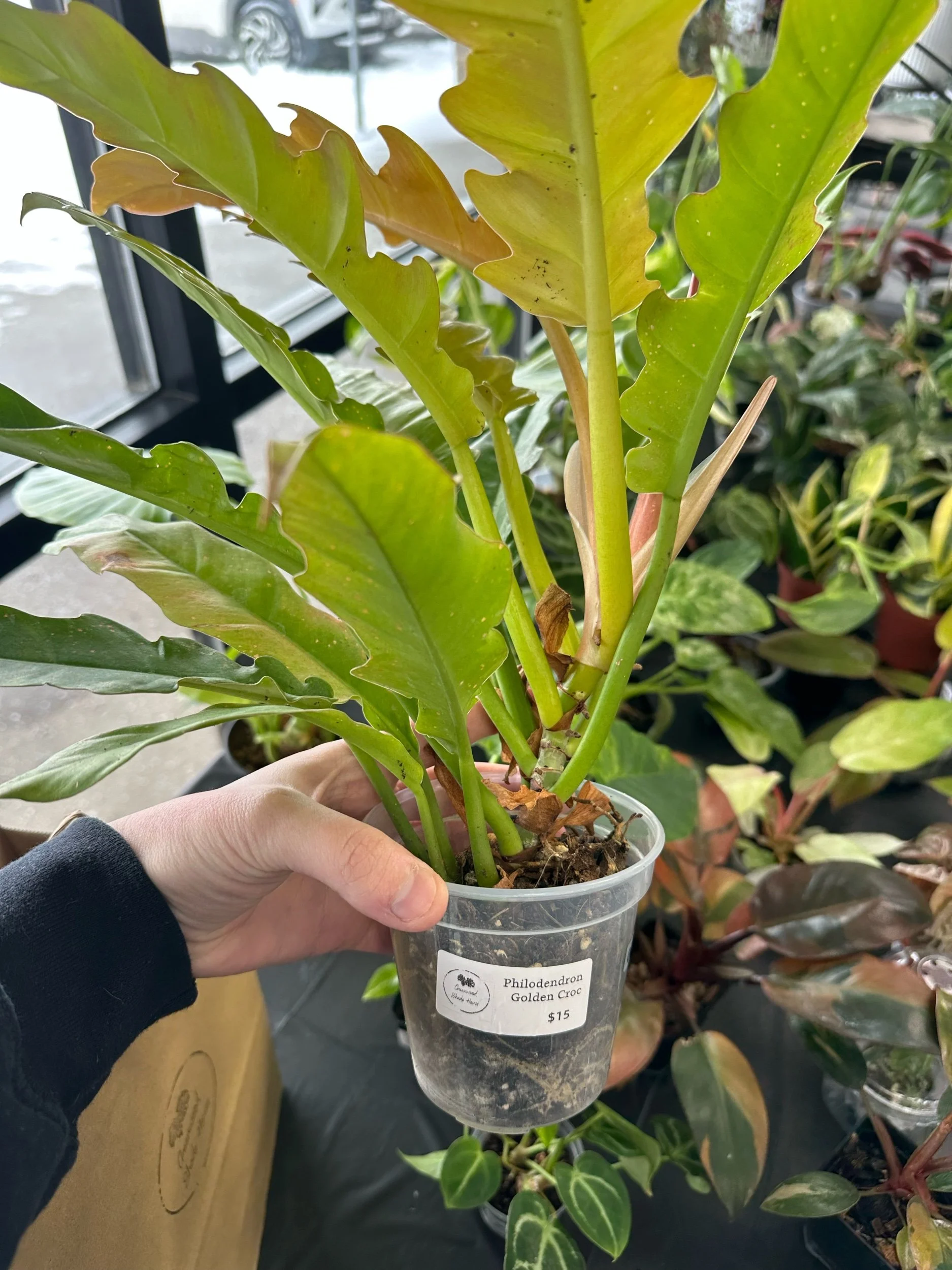
Philodendron 'Prince of Orange'
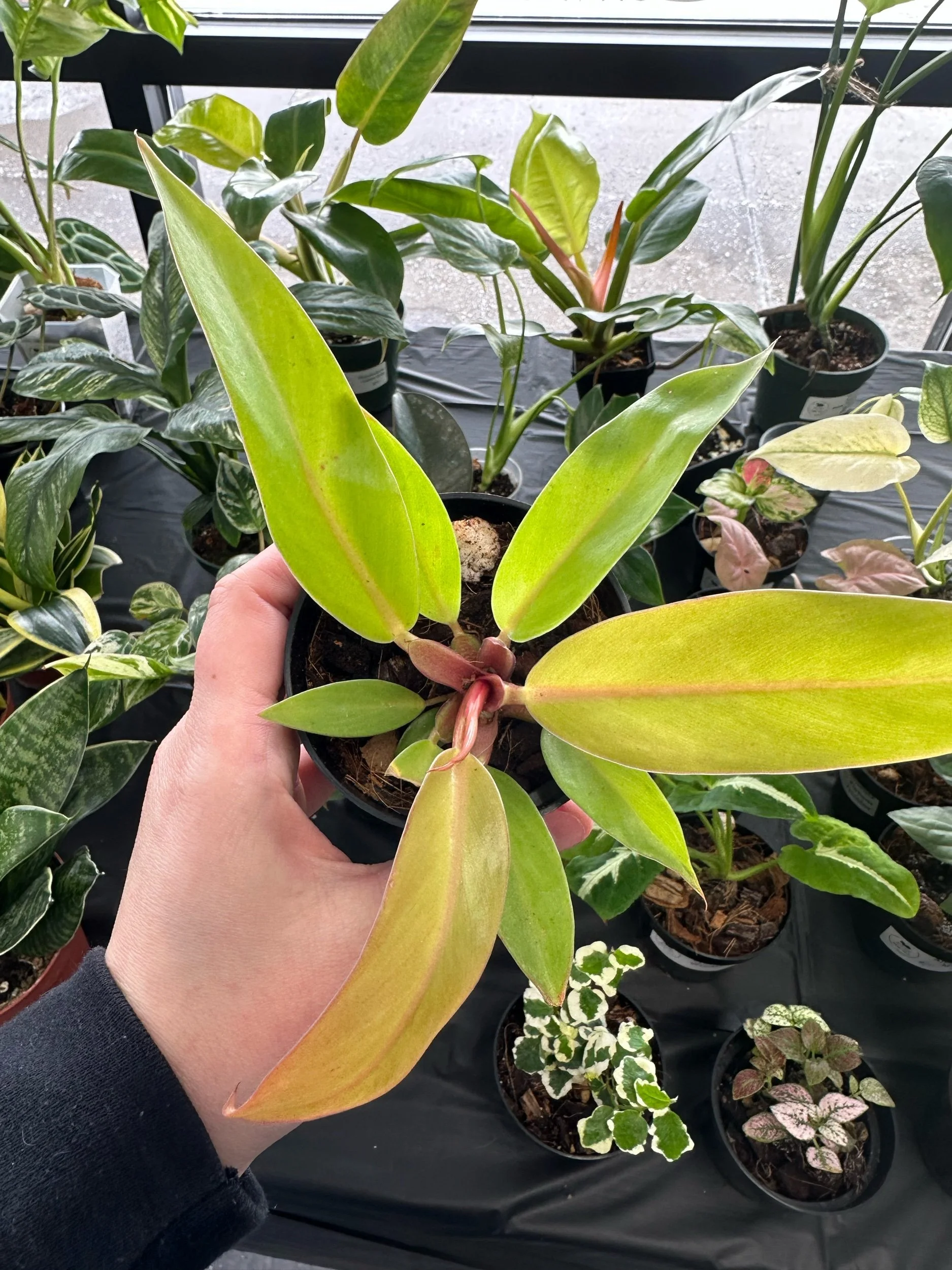
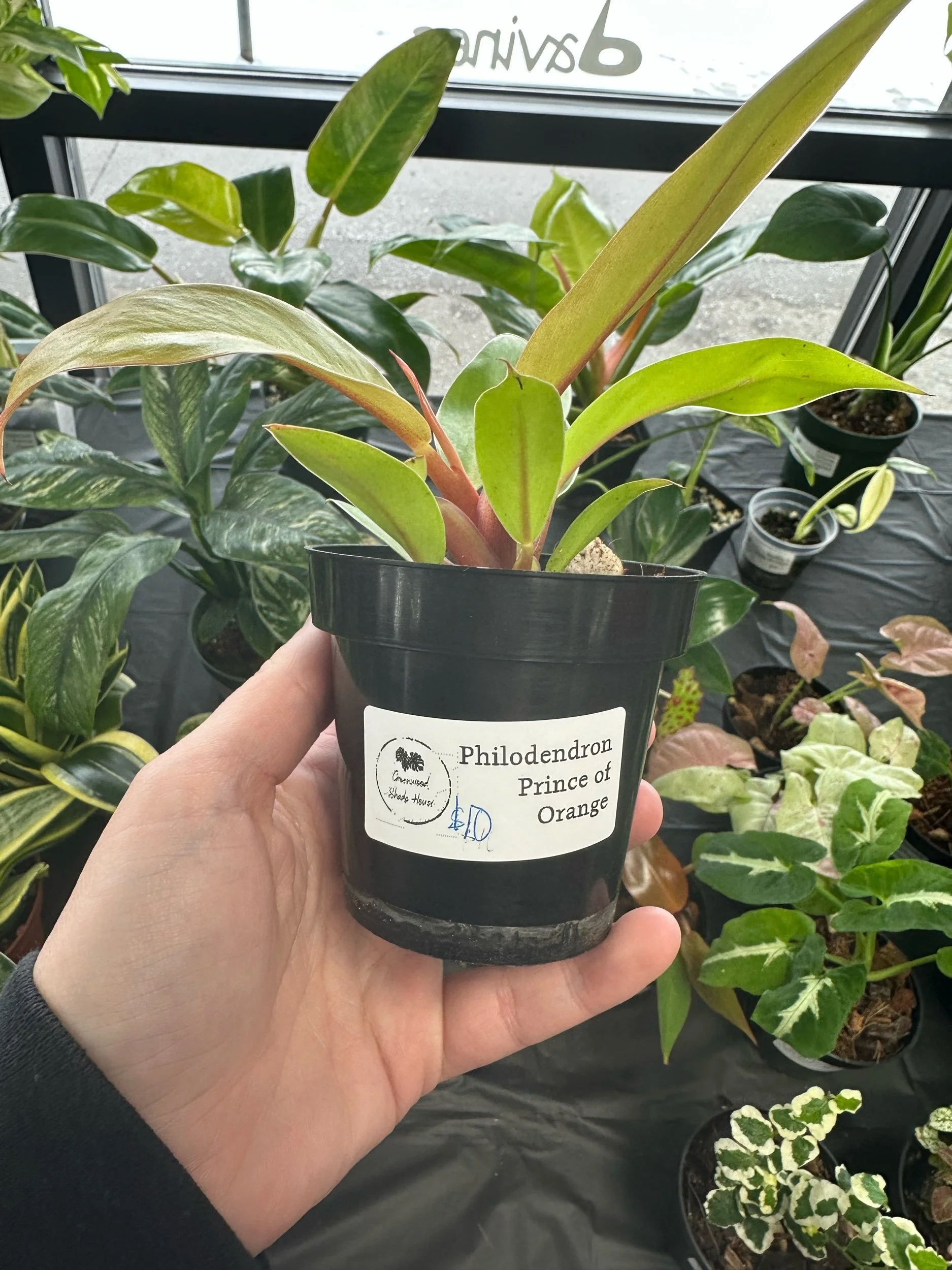
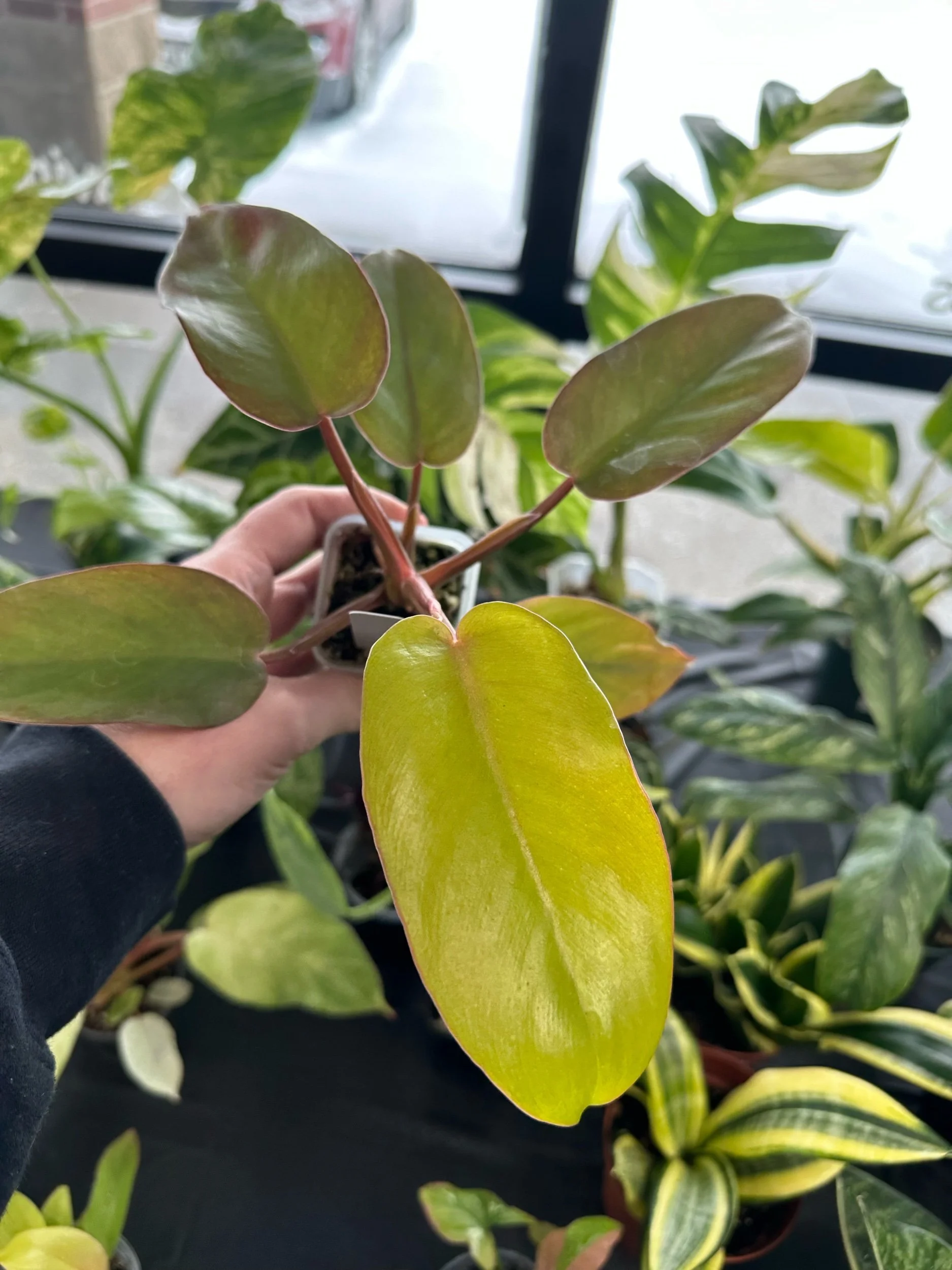
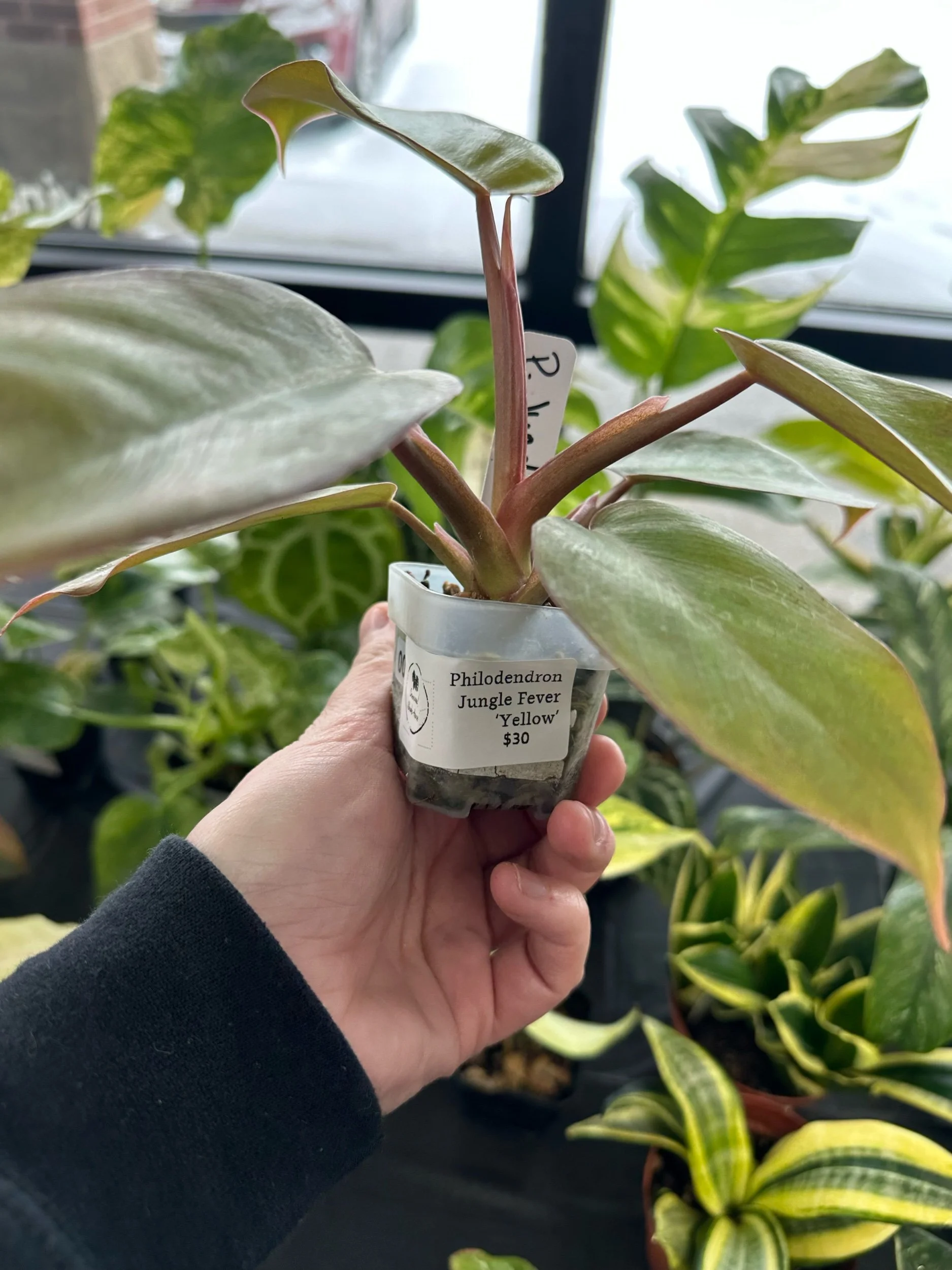
Overview Philodendron 'Prince of Orange' is a striking, tropical aroid prized for its vivid new growth that emerges in shades of orange, coral, or peach before maturing to chartreuse and then deep green. It’s an upright, climbing or trailing plant with glossy, lobed to heart-shaped leaves and a compact habit that makes it well suited for shelves, hanging baskets, and moss poles. This variety is popular for its colorful foliage and relative ease of care.
Light
Bright, indirect light is ideal. Too little light slows growth and reduces the intensity of the orange new leaves; direct sun can scorch foliage.
An east- or west-facing window with sheer curtains or a few feet back from a south-facing window works well.
Water
Water when the top 1–2 inches (2.5–5 cm) of potting mix feels dry.
Use room-temperature water and water thoroughly until excess drains from the pot. Discard any water from saucers.
Avoid both prolonged drought and consistently soggy soil. Overwatering can lead to root rot; underwatering causes leaf curling and brown edges.
Humidity & Temperature
Prefers moderate to high humidity (50–70%). Increase humidity with a pebble tray, humidifier, or by grouping plants.
Temperature range: 65–82°F (18–28°C). Protect from drafts and temperatures below 55°F (13°C).
Soil & Potting
Use a well-draining, aerated potting mix. Aroids do well in mixes that include peat or coco coir, perlite, and orchid bark or pumice for good drainage and air flow.
Choose a pot with drainage holes. Repot every 1–2 years or when rootbound. Refresh top couple inches of medium annually if not repotting.
Fertilizer
Feed with a balanced, water-soluble houseplant fertilizer diluted to half strength every 4–6 weeks during the growing season (spring and summer). Reduce feeding in fall and winter.
Support & Training
Can be grown on a moss pole or peat stick to encourage larger leaves and upright growth. As a trailing plant, it also looks attractive spilling from hanging baskets or high shelves.
Pruning & Maintenance
Prune to control size, remove yellow or damaged leaves, and encourage bushier growth. Sterilize pruning tools before use.
Wipe leaves occasionally to remove dust and help the plant photosynthesize efficiently.
Common Problems
Yellowing lower leaves: natural aging or overwatering. Check drainage and watering frequency.
Brown leaf tips or edges: low humidity, underwatering, or salt buildup from fertilizer. Flush soil occasionally and adjust care.
Pale new growth: insufficient light or nutrient deficiency. Increase light exposure and consider feeding.
Pests: watch for spider mites, mealybugs, thrips, and scale. Isolate new plants, inspect regularly, and treat infestations promptly with insecticidal soap or neem oil.
Propagation
Easily propagated by stem cuttings. Take a cutting that includes at least one node and an aerial root if possible. Root in water or directly in a moist, well-draining medium. Keep humidity high until new growth appears.
Styling Tips
Pair with plants that enjoy similar light and humidity, such as pothos, calathea, or other aroids, for cohesive displays.
Use a decorative moss pole or natural wood stake to showcase its color transition as new leaves unfurl.
A compact pot or hanging basket highlights the colorful new growth and keeps the plant manageable in small spaces.
Why Choose It
The rapid, colorful new growth makes Philodendron 'Prince of Orange' an excellent choice for plant lovers who want a dramatic, low-effort focal plant. Its combination of beauty and adaptability makes it a favorite in indoor plant collections.
Philodendron 'Prince of Orange'
Overview Philodendron 'Prince of Orange' is a striking, tropical aroid prized for its vivid new growth that emerges in shades of orange, coral, or peach before maturing to chartreuse and then deep green. It’s an upright, climbing or trailing plant with glossy, lobed to heart-shaped leaves and a compact habit that makes it well suited for shelves, hanging baskets, and moss poles. This variety is popular for its colorful foliage and relative ease of care.
Light
Bright, indirect light is ideal. Too little light slows growth and reduces the intensity of the orange new leaves; direct sun can scorch foliage.
An east- or west-facing window with sheer curtains or a few feet back from a south-facing window works well.
Water
Water when the top 1–2 inches (2.5–5 cm) of potting mix feels dry.
Use room-temperature water and water thoroughly until excess drains from the pot. Discard any water from saucers.
Avoid both prolonged drought and consistently soggy soil. Overwatering can lead to root rot; underwatering causes leaf curling and brown edges.
Humidity & Temperature
Prefers moderate to high humidity (50–70%). Increase humidity with a pebble tray, humidifier, or by grouping plants.
Temperature range: 65–82°F (18–28°C). Protect from drafts and temperatures below 55°F (13°C).
Soil & Potting
Use a well-draining, aerated potting mix. Aroids do well in mixes that include peat or coco coir, perlite, and orchid bark or pumice for good drainage and air flow.
Choose a pot with drainage holes. Repot every 1–2 years or when rootbound. Refresh top couple inches of medium annually if not repotting.
Fertilizer
Feed with a balanced, water-soluble houseplant fertilizer diluted to half strength every 4–6 weeks during the growing season (spring and summer). Reduce feeding in fall and winter.
Support & Training
Can be grown on a moss pole or peat stick to encourage larger leaves and upright growth. As a trailing plant, it also looks attractive spilling from hanging baskets or high shelves.
Pruning & Maintenance
Prune to control size, remove yellow or damaged leaves, and encourage bushier growth. Sterilize pruning tools before use.
Wipe leaves occasionally to remove dust and help the plant photosynthesize efficiently.
Common Problems
Yellowing lower leaves: natural aging or overwatering. Check drainage and watering frequency.
Brown leaf tips or edges: low humidity, underwatering, or salt buildup from fertilizer. Flush soil occasionally and adjust care.
Pale new growth: insufficient light or nutrient deficiency. Increase light exposure and consider feeding.
Pests: watch for spider mites, mealybugs, thrips, and scale. Isolate new plants, inspect regularly, and treat infestations promptly with insecticidal soap or neem oil.
Propagation
Easily propagated by stem cuttings. Take a cutting that includes at least one node and an aerial root if possible. Root in water or directly in a moist, well-draining medium. Keep humidity high until new growth appears.
Styling Tips
Pair with plants that enjoy similar light and humidity, such as pothos, calathea, or other aroids, for cohesive displays.
Use a decorative moss pole or natural wood stake to showcase its color transition as new leaves unfurl.
A compact pot or hanging basket highlights the colorful new growth and keeps the plant manageable in small spaces.
Why Choose It
The rapid, colorful new growth makes Philodendron 'Prince of Orange' an excellent choice for plant lovers who want a dramatic, low-effort focal plant. Its combination of beauty and adaptability makes it a favorite in indoor plant collections.