 Image 1 of 2
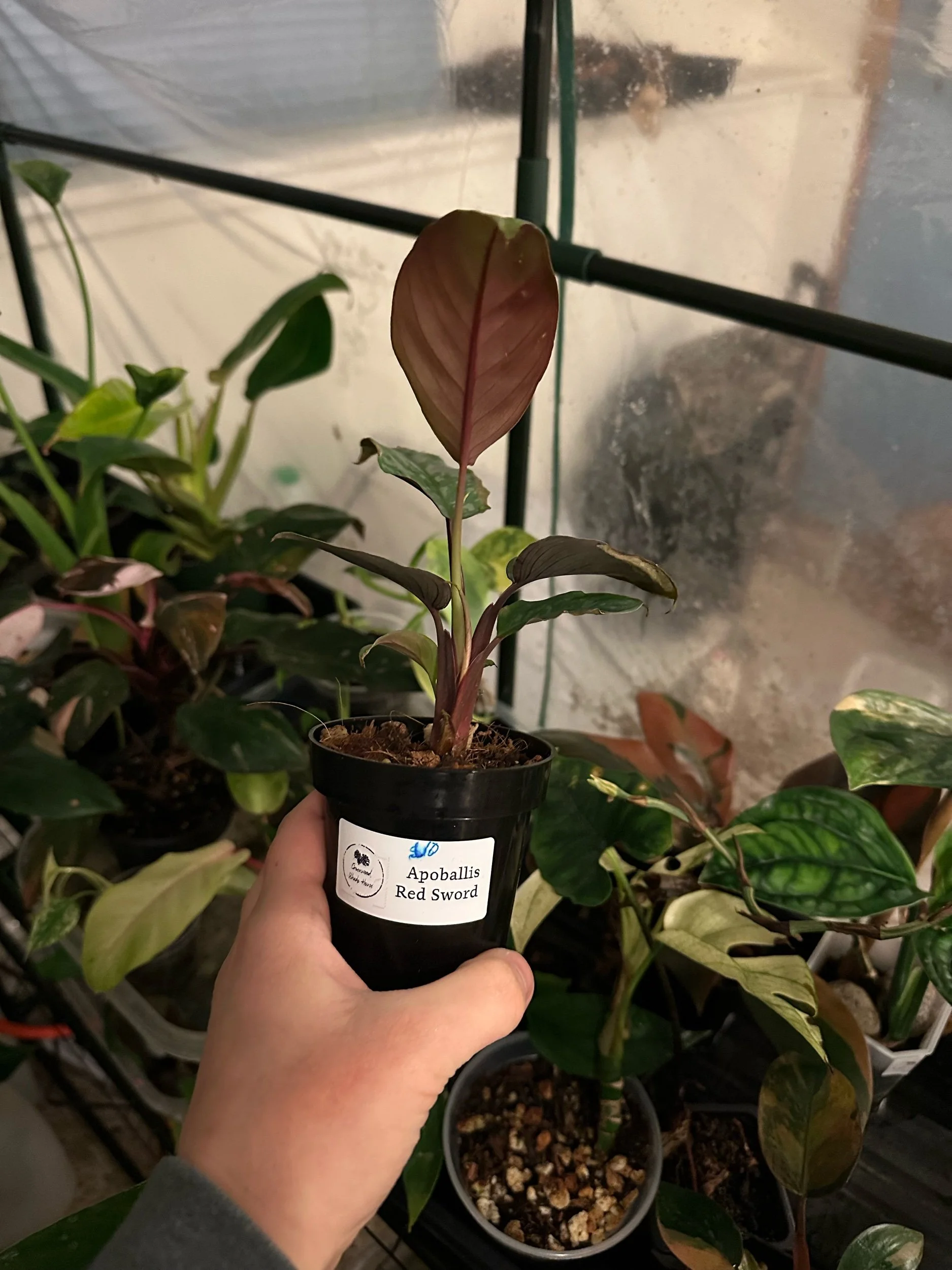 Image 2 of 2
Apoballis 'Red Sword'
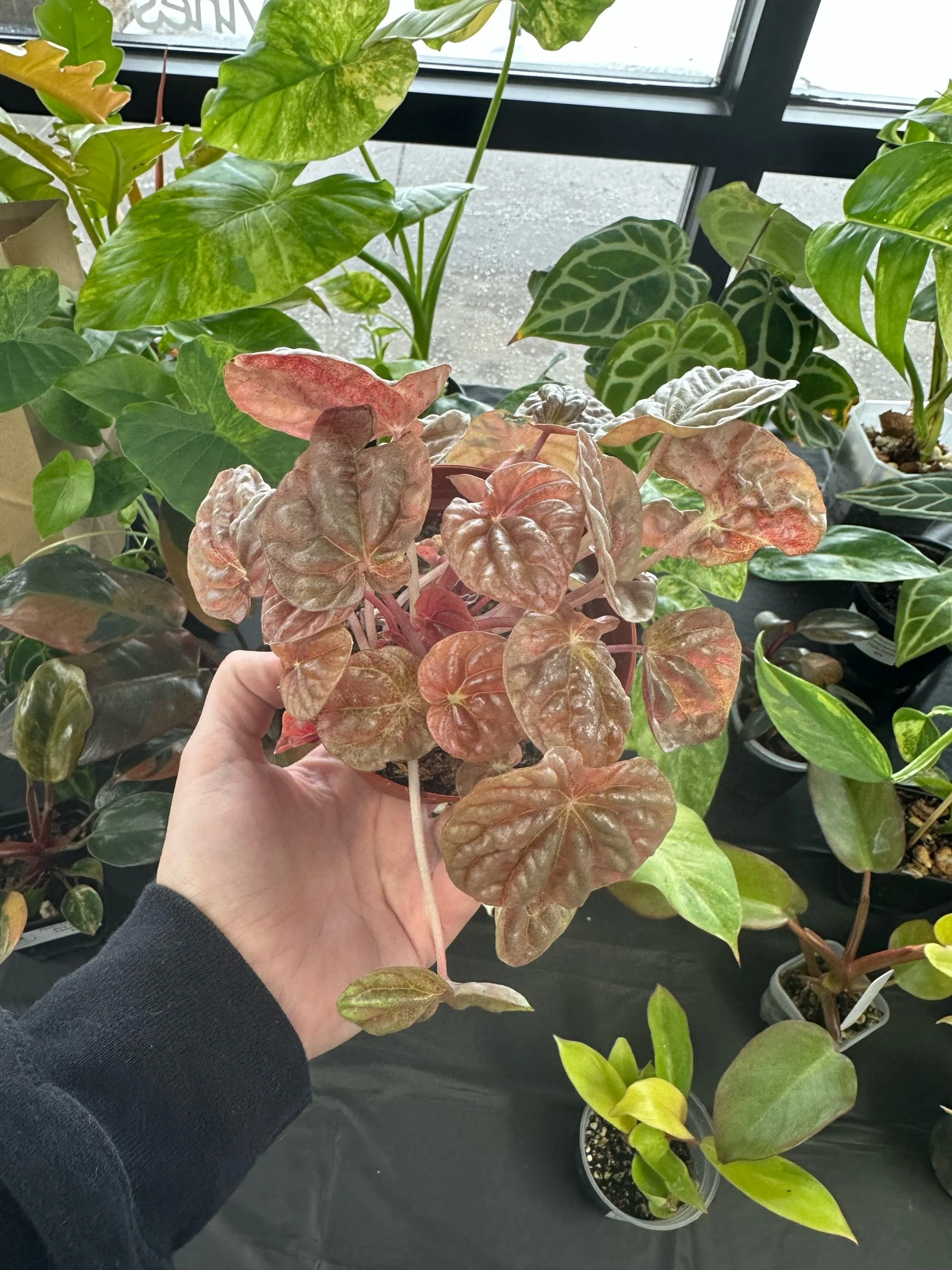
Overview Apoballis 'Red Sword' is a striking terrestrial aroid prized for its bold foliage and compact, clumping habit. Part of the Apoballis group (a name used for certain cultivated and naturally occurring Schismatoglottideae aroids), this cultivar is valued by collectors for leaves that emerge with deep red–bronze tones and mature to rich green with red undersides and vivid venation. It works well in shaded indoor settings, terrariums, or humid display cases.
Appearance
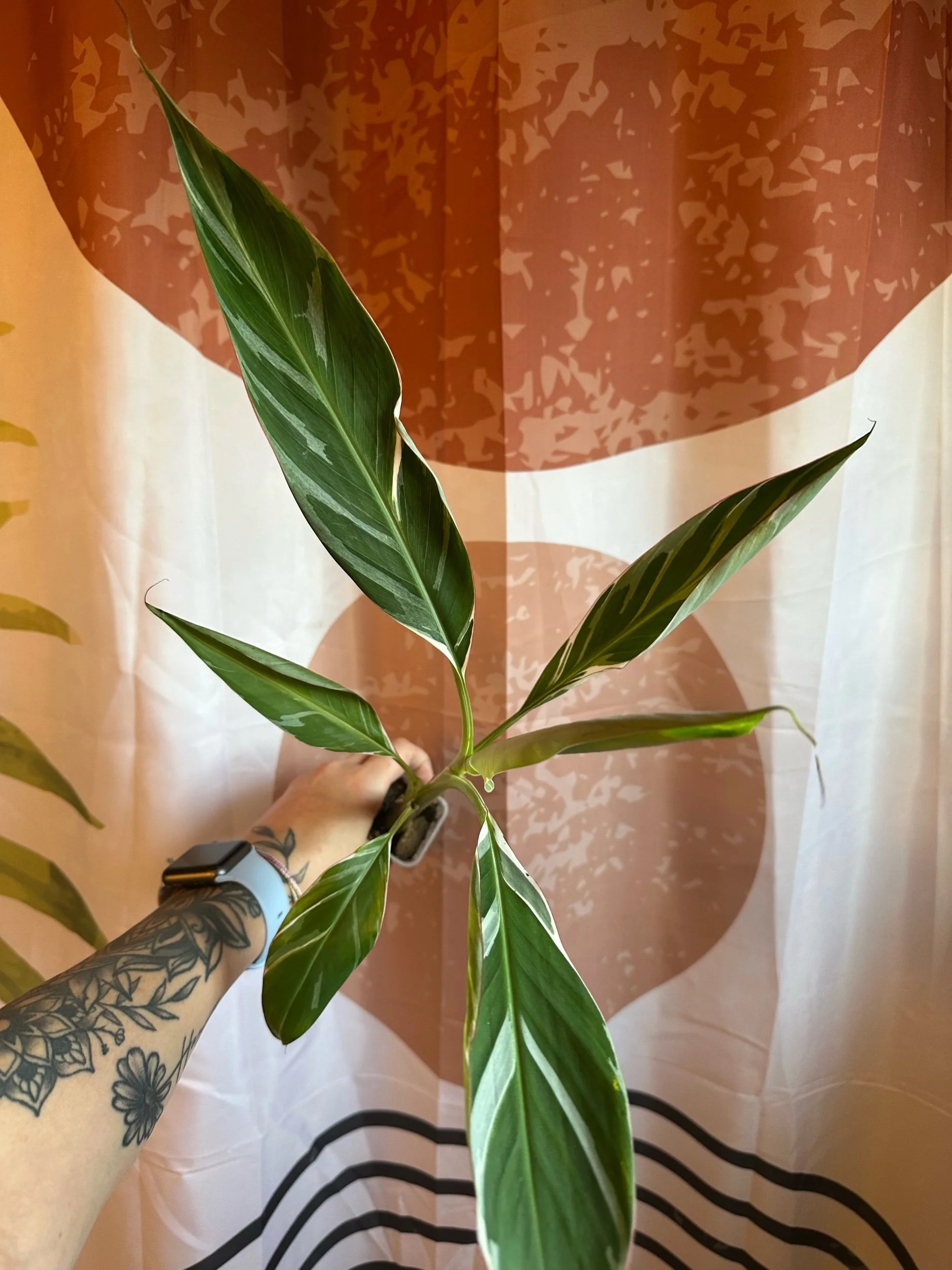
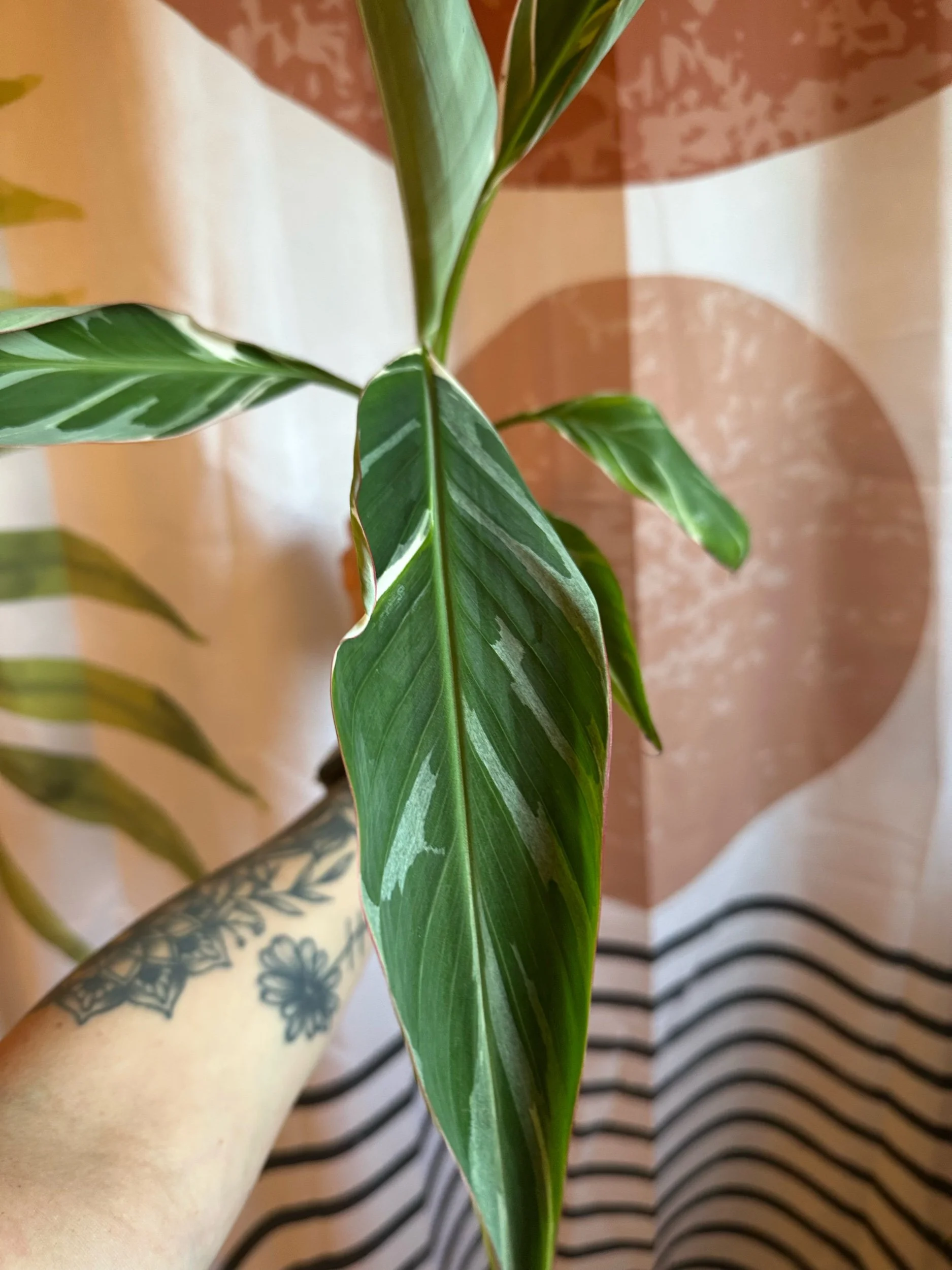
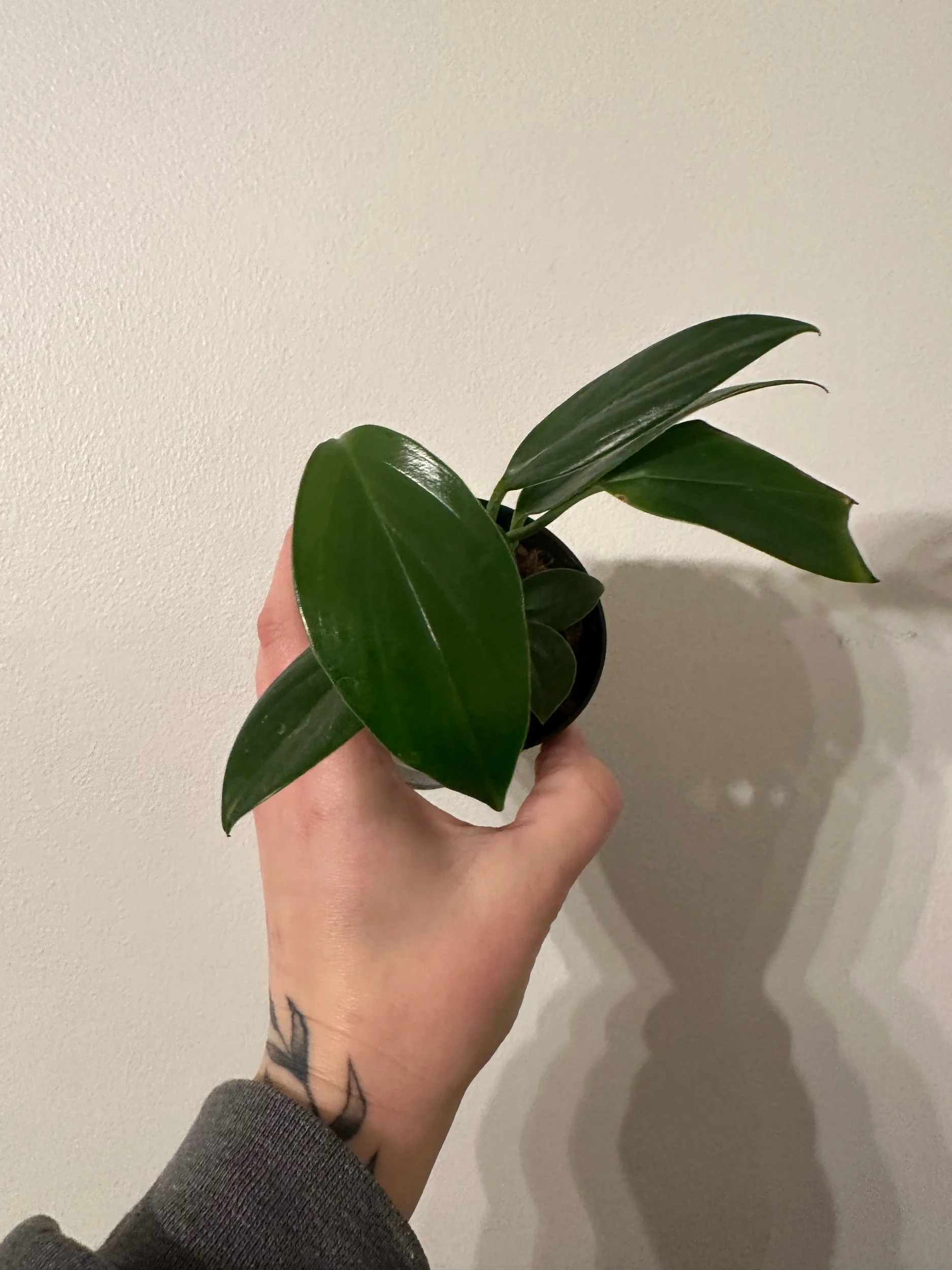
Leaves: Narrow to lanceolate “sword” leaves, typically 6–12 inches long on mature plants. New leaves emerge red to bronze, often deepening in tone before the upper surface transitions to green while retaining red or purple undersides and veins.
Habit: Clumping, forming a low mound of upright leaves. Rhizomatous base produces new shoots over time.
Size: Compact to medium; mature clumps often stay under 12–18 inches across in typical container culture.
Light
Bright, indirect light is best. Avoid direct sun, which can scorch the leaves and fade red coloration.
In lower light the plant will survive but red tones and overall vigor may decrease.
Temperature & Humidity
Temperature: Best between 65–80°F (18–27°C). Protect from drafts and temperatures below 55°F (13°C).
Humidity: Prefers moderate to high humidity (50–80%). Benefits from regular misting, pebble trays, or placement in a humid room or terrarium.
Soil & Potting
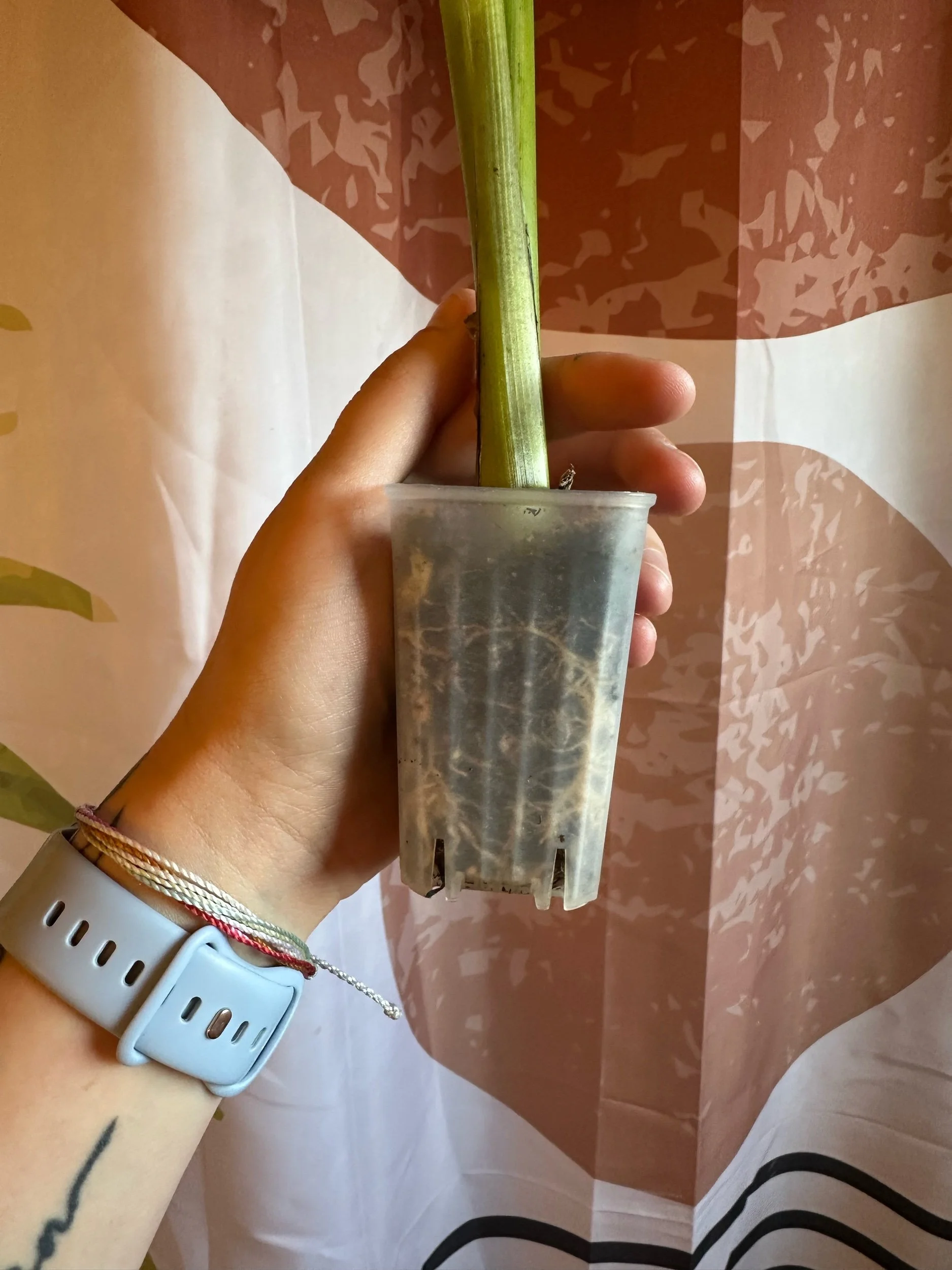
Use a well-draining, airy mix: equal parts peat or coco coir, orchid bark, and perlite or pumice works well.
Ensure good drainage to prevent rhizome rot; allow the top inch of mix to dry slightly between waterings.
Repot every 1–2 years as it fills the pot or to refresh media. When dividing, take care to preserve rhizome sections with at least one growing shoot.
Watering & Fertilizer
Water: Keep evenly moist but not waterlogged. Water thoroughly, then allow the top surface to dry slightly. Reduce frequency in winter when growth slows.
Fertilizer: Feed a balanced, diluted houseplant fertilizer every 4–6 weeks during the growing season (spring–early fall). Avoid overfertilizing, which can burn roots or reduce color.
Pests & Problems
Common pests: Spider mites, mealybugs, scale, and thrips. Inspect leaves regularly and treat with insecticidal soap or neem oil if needed.
Issues: Overwatering leads to root and rhizome rot; brown leaf tips often indicate low humidity or inconsistent watering. Fading of red coloration often signals insufficient light.
Propagation
Division at repotting is the easiest method. Separate rhizome segments ensuring each division has roots and at least one growth point.
Stem cuttings are less common; root slowly in a moist, well-aerated medium under high humidity.
Display Tips
Show the undersides by angling the plant or placing it where the red tones can catch soft light. Grouping with other shade-loving plants can increase humidity and create an attractive vignette.
Use a modest-sized pot to keep the plant compact and emphasize the clump of colorful leaves.
Toxicity
Like many aroids, Apoballis 'Red Sword' contains calcium oxalate crystals and is considered toxic if ingested. Keep away from pets and children.
Origin & Notes
Apoballis is a horticultural grouping within the broader family Araceae used by growers and collectors; naming and classification can vary as taxonomic work continues. 'Red Sword' is a descriptive cultivar name commonly used in the plant trade for clones with pronounced red, sword-shaped leaves.
Because cultivars and informal trade names can differ, check plant tags and seller descriptions when sourcing to ensure you receive the desired color and form.
Care Summary
Light: Bright, indirect
Temp: 65–80°F (18–27°C)
Humidity: 50–80%
Soil: Aerated, well-draining mix
Water: Keep evenly moist; avoid waterlogging
Fertilizer: Balanced, diluted during growing season
Greenwood Shade House tip: For richer red tones, provide bright filtered light and stable humidity; avoid sudden temperature drops and overwatering to keep the rhizome healthy and the leaves vibrant.
Apoballis 'Red Sword'
Overview Apoballis 'Red Sword' is a striking terrestrial aroid prized for its bold foliage and compact, clumping habit. Part of the Apoballis group (a name used for certain cultivated and naturally occurring Schismatoglottideae aroids), this cultivar is valued by collectors for leaves that emerge with deep red–bronze tones and mature to rich green with red undersides and vivid venation. It works well in shaded indoor settings, terrariums, or humid display cases.
Appearance
Leaves: Narrow to lanceolate “sword” leaves, typically 6–12 inches long on mature plants. New leaves emerge red to bronze, often deepening in tone before the upper surface transitions to green while retaining red or purple undersides and veins.
Habit: Clumping, forming a low mound of upright leaves. Rhizomatous base produces new shoots over time.
Size: Compact to medium; mature clumps often stay under 12–18 inches across in typical container culture.
Light
Bright, indirect light is best. Avoid direct sun, which can scorch the leaves and fade red coloration.
In lower light the plant will survive but red tones and overall vigor may decrease.
Temperature & Humidity
Temperature: Best between 65–80°F (18–27°C). Protect from drafts and temperatures below 55°F (13°C).
Humidity: Prefers moderate to high humidity (50–80%). Benefits from regular misting, pebble trays, or placement in a humid room or terrarium.
Soil & Potting
Use a well-draining, airy mix: equal parts peat or coco coir, orchid bark, and perlite or pumice works well.
Ensure good drainage to prevent rhizome rot; allow the top inch of mix to dry slightly between waterings.
Repot every 1–2 years as it fills the pot or to refresh media. When dividing, take care to preserve rhizome sections with at least one growing shoot.
Watering & Fertilizer
Water: Keep evenly moist but not waterlogged. Water thoroughly, then allow the top surface to dry slightly. Reduce frequency in winter when growth slows.
Fertilizer: Feed a balanced, diluted houseplant fertilizer every 4–6 weeks during the growing season (spring–early fall). Avoid overfertilizing, which can burn roots or reduce color.
Pests & Problems
Common pests: Spider mites, mealybugs, scale, and thrips. Inspect leaves regularly and treat with insecticidal soap or neem oil if needed.
Issues: Overwatering leads to root and rhizome rot; brown leaf tips often indicate low humidity or inconsistent watering. Fading of red coloration often signals insufficient light.
Propagation
Division at repotting is the easiest method. Separate rhizome segments ensuring each division has roots and at least one growth point.
Stem cuttings are less common; root slowly in a moist, well-aerated medium under high humidity.
Display Tips
Show the undersides by angling the plant or placing it where the red tones can catch soft light. Grouping with other shade-loving plants can increase humidity and create an attractive vignette.
Use a modest-sized pot to keep the plant compact and emphasize the clump of colorful leaves.
Toxicity
Like many aroids, Apoballis 'Red Sword' contains calcium oxalate crystals and is considered toxic if ingested. Keep away from pets and children.
Origin & Notes
Apoballis is a horticultural grouping within the broader family Araceae used by growers and collectors; naming and classification can vary as taxonomic work continues. 'Red Sword' is a descriptive cultivar name commonly used in the plant trade for clones with pronounced red, sword-shaped leaves.
Because cultivars and informal trade names can differ, check plant tags and seller descriptions when sourcing to ensure you receive the desired color and form.
Care Summary
Light: Bright, indirect
Temp: 65–80°F (18–27°C)
Humidity: 50–80%
Soil: Aerated, well-draining mix
Water: Keep evenly moist; avoid waterlogging
Fertilizer: Balanced, diluted during growing season
Greenwood Shade House tip: For richer red tones, provide bright filtered light and stable humidity; avoid sudden temperature drops and overwatering to keep the rhizome healthy and the leaves vibrant.