Synognium 'Pink Perfection'
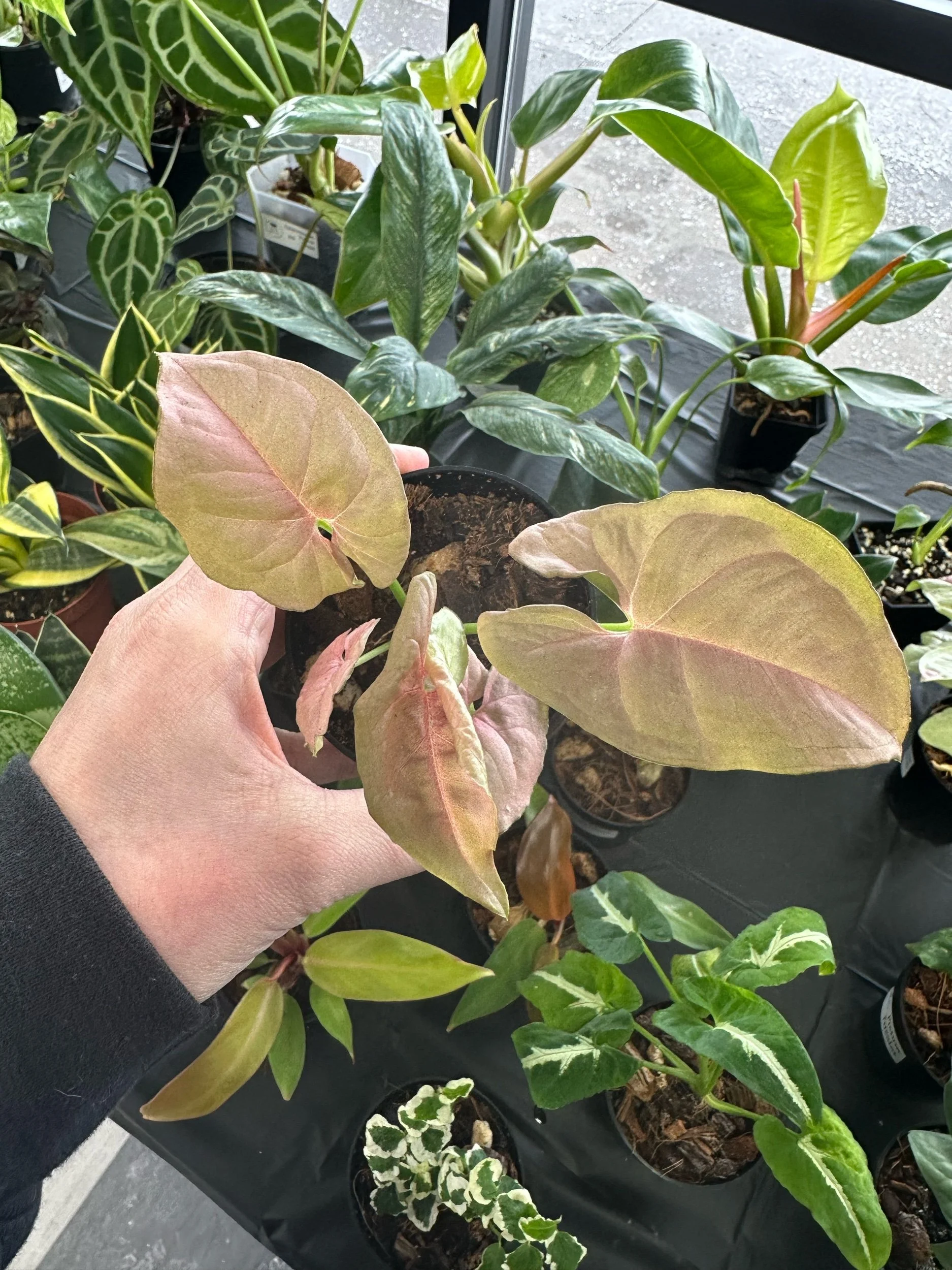
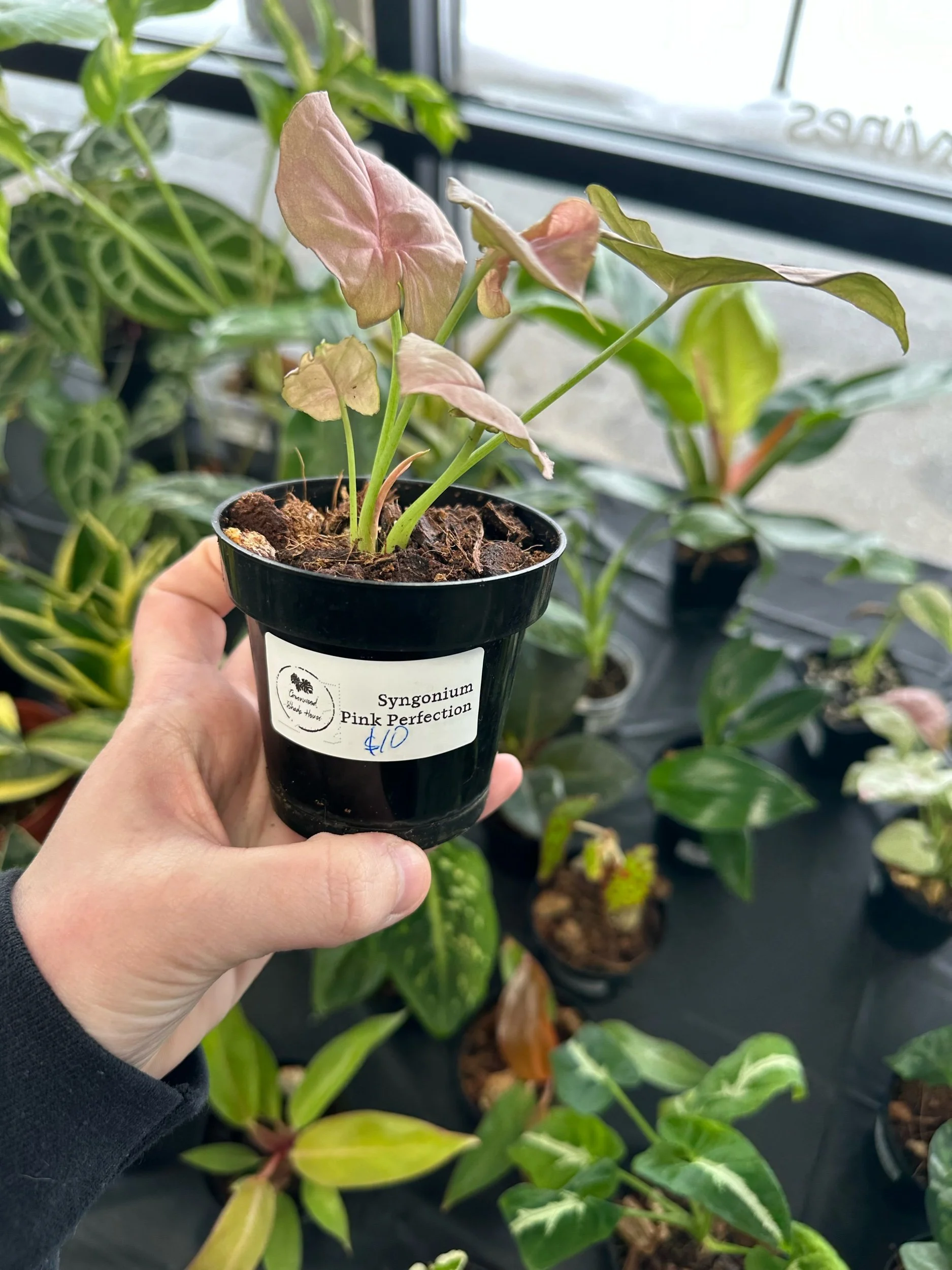
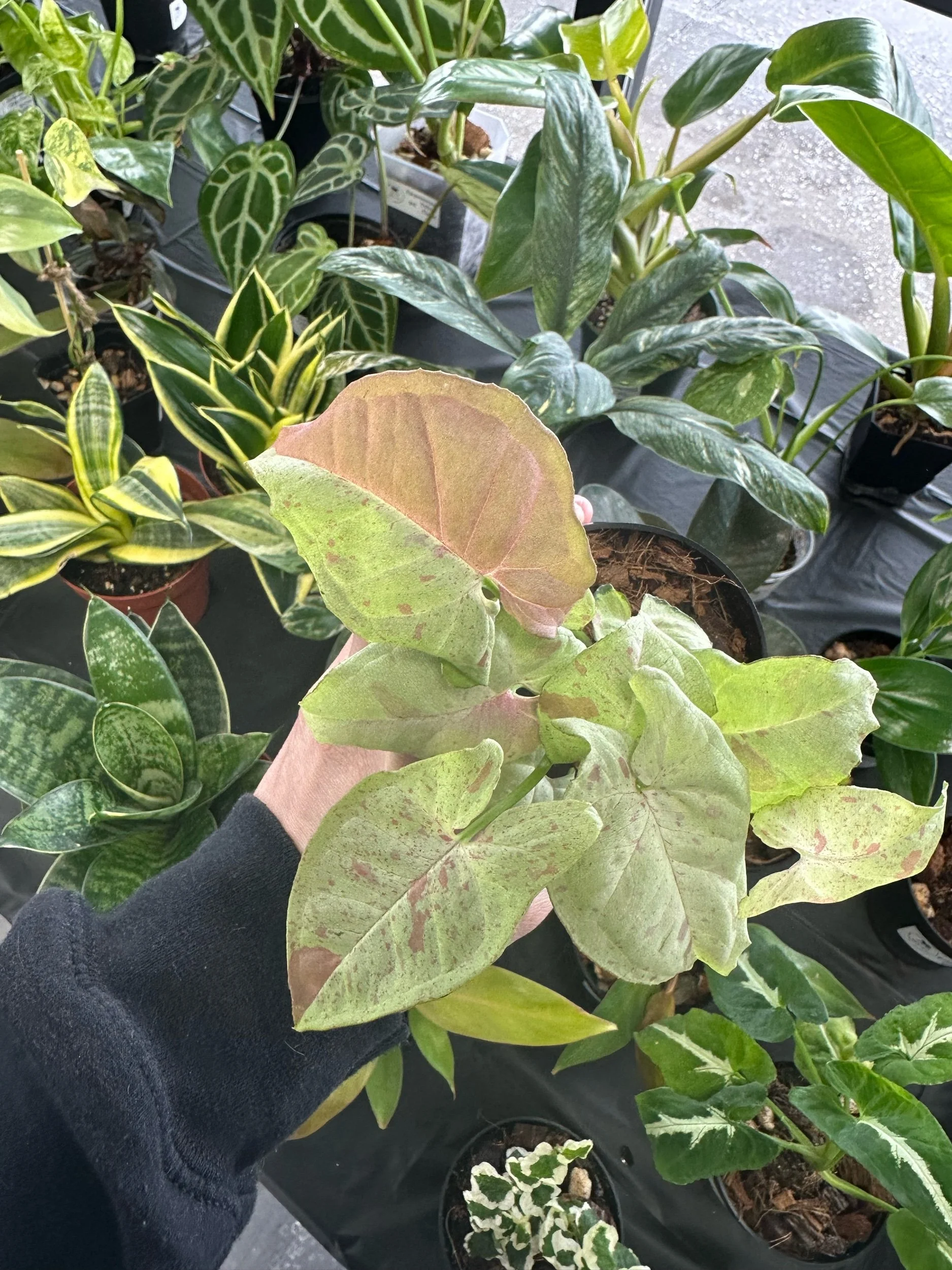
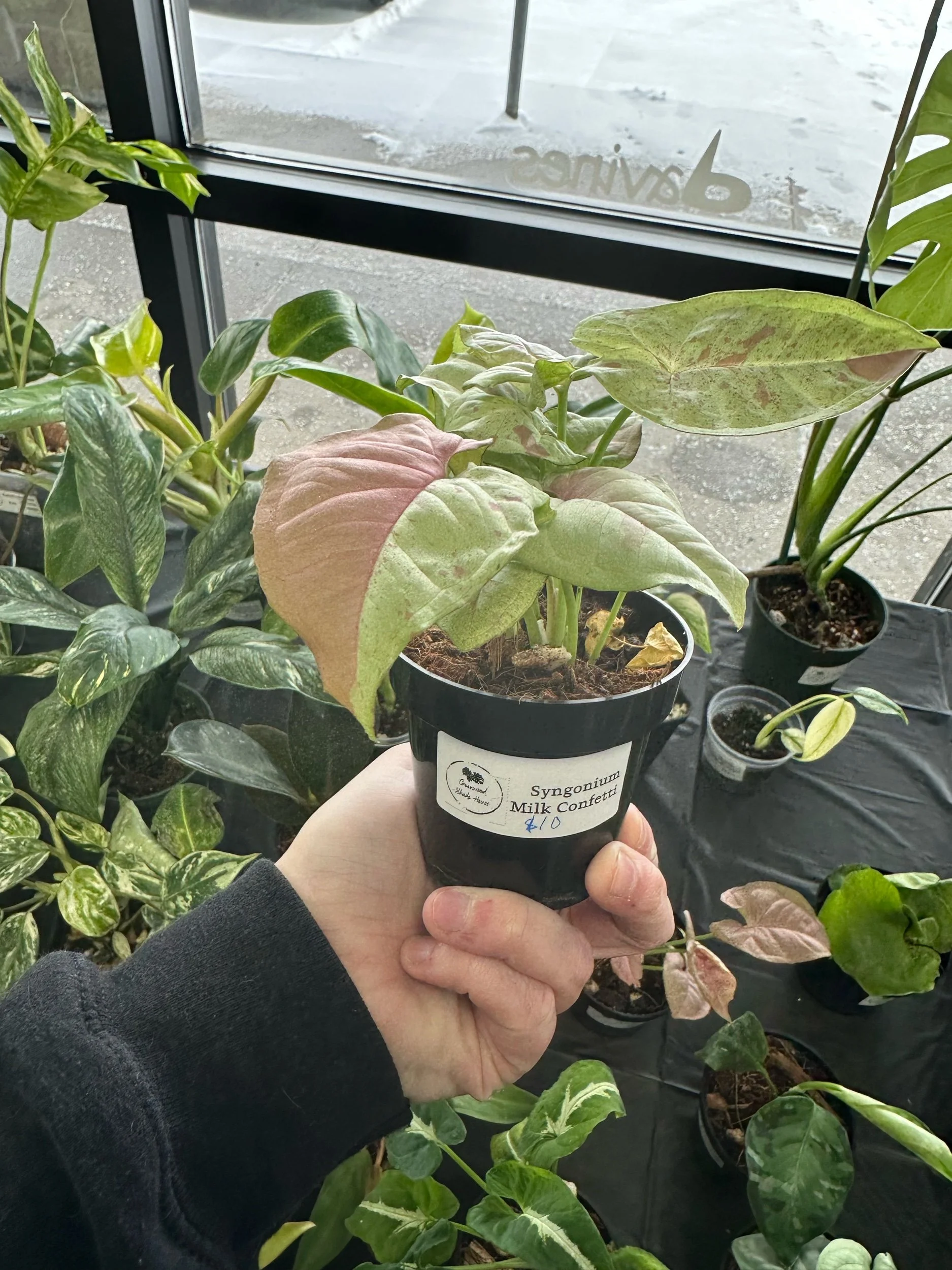
Overview Synognium 'Pink Perfection' is a compact, eye-catching houseplant prized for its glossy, ovate leaves flushed with varying shades of pink, blush, and deep green margins. A welcome addition to small-space collections, it offers long-lasting color and a tidy growth habit that suits tabletops, shelves, and bright windowsills.
Light Bright, indirect light is best. Too little light will dull the pink variegation and slow growth. Avoid harsh direct sun, which can scorch leaves. A north- or east-facing window or a filtered-sun south/west exposure works well.
Water Keep the soil evenly moist but not waterlogged. Water when the top 1–2 inches of potting mix are dry. Reduce watering slightly in winter. Ensure good drainage to prevent root rot; standing water is harmful.
Humidity & Temperature Prefers moderate to high humidity (50–70%). Increase humidity with a pebble tray, grouping plants, or a humidifier if your home is very dry. Ideal temperature range is 65–80°F (18–27°C). Protect from drafts and sudden temperature drops.
Soil & Potting Use a well-draining, peat-based potting mix amended with perlite or orchid bark for aeration. Repot every 1–2 years or when roots become crowded, choosing a pot 1–2 inches larger in diameter.
Fertilizer Feed with a balanced, water-soluble houseplant fertilizer at half strength every 4–6 weeks during the growing season (spring and summer). Hold off on routine feeding in fall and winter or reduce frequency.
Pruning & Care Trim leggy stems and remove any damaged or discolored leaves to maintain compact form and encourage bushy growth. Pinching back new growth promotes fullness.
Propagation Easily propagated by stem cuttings. Take 3–4 inch cuttings with at least one node, remove lower leaves, and root in water or moist potting mix. Roots typically form in a few weeks.
Pests & Problems Watch for common houseplant pests: spider mites, mealybugs, and aphids. Inspect leaves regularly and treat infestations promptly with insecticidal soap or neem oil. Leaf browning may indicate low humidity or overfertilization; yellowing often points to overwatering or poor drainage.
Toxicity As with many aroid-family plants, Synognium 'Pink Perfection' may be mildly toxic if ingested by pets or children. Keep out of reach, and seek veterinary or medical advice if ingestion occurs.
Design Uses Its vibrant pink variegation makes it a striking specimen in mixed plantings, terrariums, or as a focal tabletop plant. Pairs beautifully with dark-leaved plants for contrast or with silver-foliage plants for a soft, pastel palette.
Shipping & Care Note Ships in secure, protective packaging to keep foliage safe during transit. Include a short acclimation period after arrival—avoid repotting immediately and give the plant a few days in bright, indirect light to recover from travel stress.
Synognium 'Pink Perfection'
Overview Synognium 'Pink Perfection' is a compact, eye-catching houseplant prized for its glossy, ovate leaves flushed with varying shades of pink, blush, and deep green margins. A welcome addition to small-space collections, it offers long-lasting color and a tidy growth habit that suits tabletops, shelves, and bright windowsills.
Light Bright, indirect light is best. Too little light will dull the pink variegation and slow growth. Avoid harsh direct sun, which can scorch leaves. A north- or east-facing window or a filtered-sun south/west exposure works well.
Water Keep the soil evenly moist but not waterlogged. Water when the top 1–2 inches of potting mix are dry. Reduce watering slightly in winter. Ensure good drainage to prevent root rot; standing water is harmful.
Humidity & Temperature Prefers moderate to high humidity (50–70%). Increase humidity with a pebble tray, grouping plants, or a humidifier if your home is very dry. Ideal temperature range is 65–80°F (18–27°C). Protect from drafts and sudden temperature drops.
Soil & Potting Use a well-draining, peat-based potting mix amended with perlite or orchid bark for aeration. Repot every 1–2 years or when roots become crowded, choosing a pot 1–2 inches larger in diameter.
Fertilizer Feed with a balanced, water-soluble houseplant fertilizer at half strength every 4–6 weeks during the growing season (spring and summer). Hold off on routine feeding in fall and winter or reduce frequency.
Pruning & Care Trim leggy stems and remove any damaged or discolored leaves to maintain compact form and encourage bushy growth. Pinching back new growth promotes fullness.
Propagation Easily propagated by stem cuttings. Take 3–4 inch cuttings with at least one node, remove lower leaves, and root in water or moist potting mix. Roots typically form in a few weeks.
Pests & Problems Watch for common houseplant pests: spider mites, mealybugs, and aphids. Inspect leaves regularly and treat infestations promptly with insecticidal soap or neem oil. Leaf browning may indicate low humidity or overfertilization; yellowing often points to overwatering or poor drainage.
Toxicity As with many aroid-family plants, Synognium 'Pink Perfection' may be mildly toxic if ingested by pets or children. Keep out of reach, and seek veterinary or medical advice if ingestion occurs.
Design Uses Its vibrant pink variegation makes it a striking specimen in mixed plantings, terrariums, or as a focal tabletop plant. Pairs beautifully with dark-leaved plants for contrast or with silver-foliage plants for a soft, pastel palette.
Shipping & Care Note Ships in secure, protective packaging to keep foliage safe during transit. Include a short acclimation period after arrival—avoid repotting immediately and give the plant a few days in bright, indirect light to recover from travel stress.