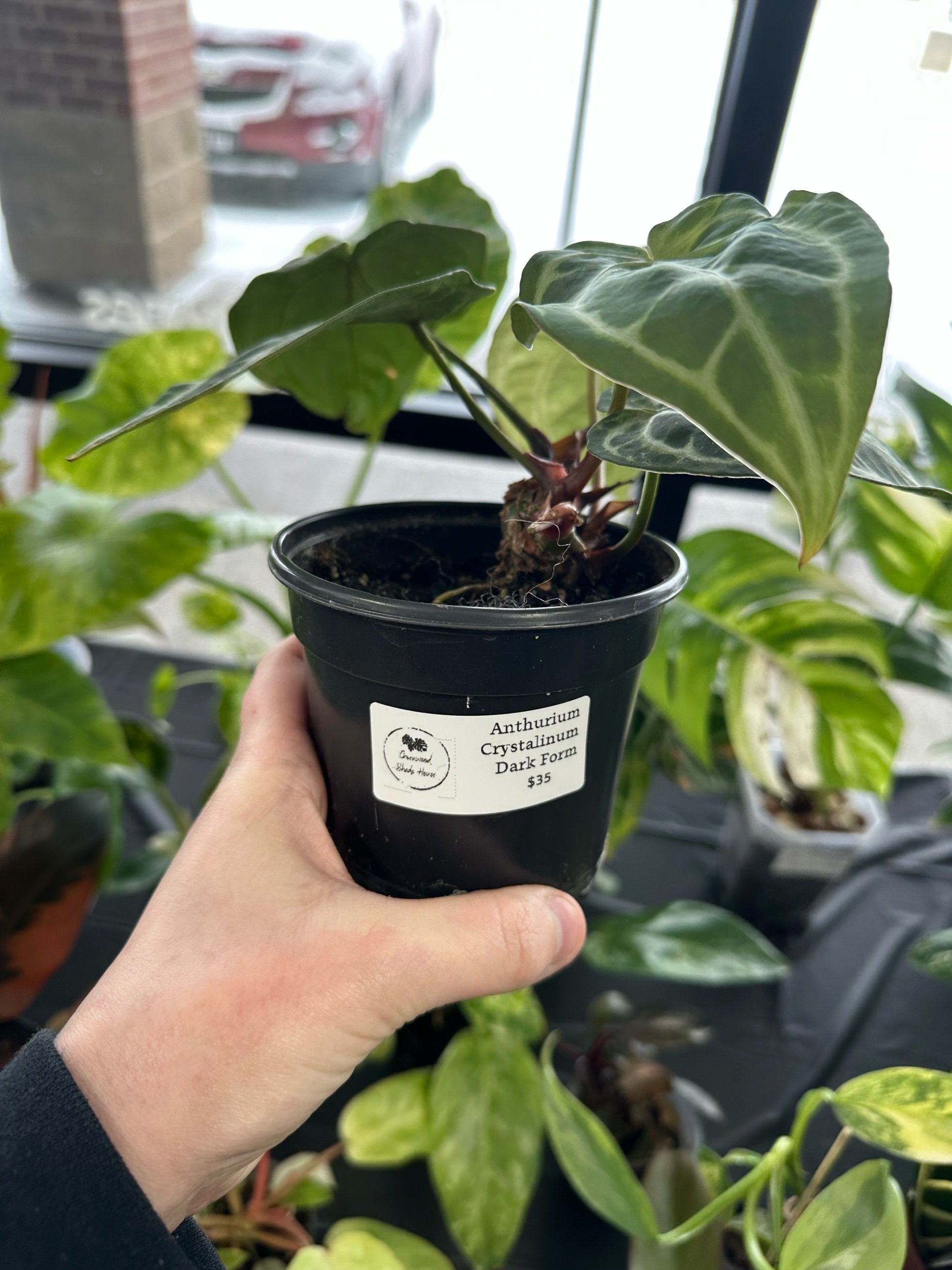
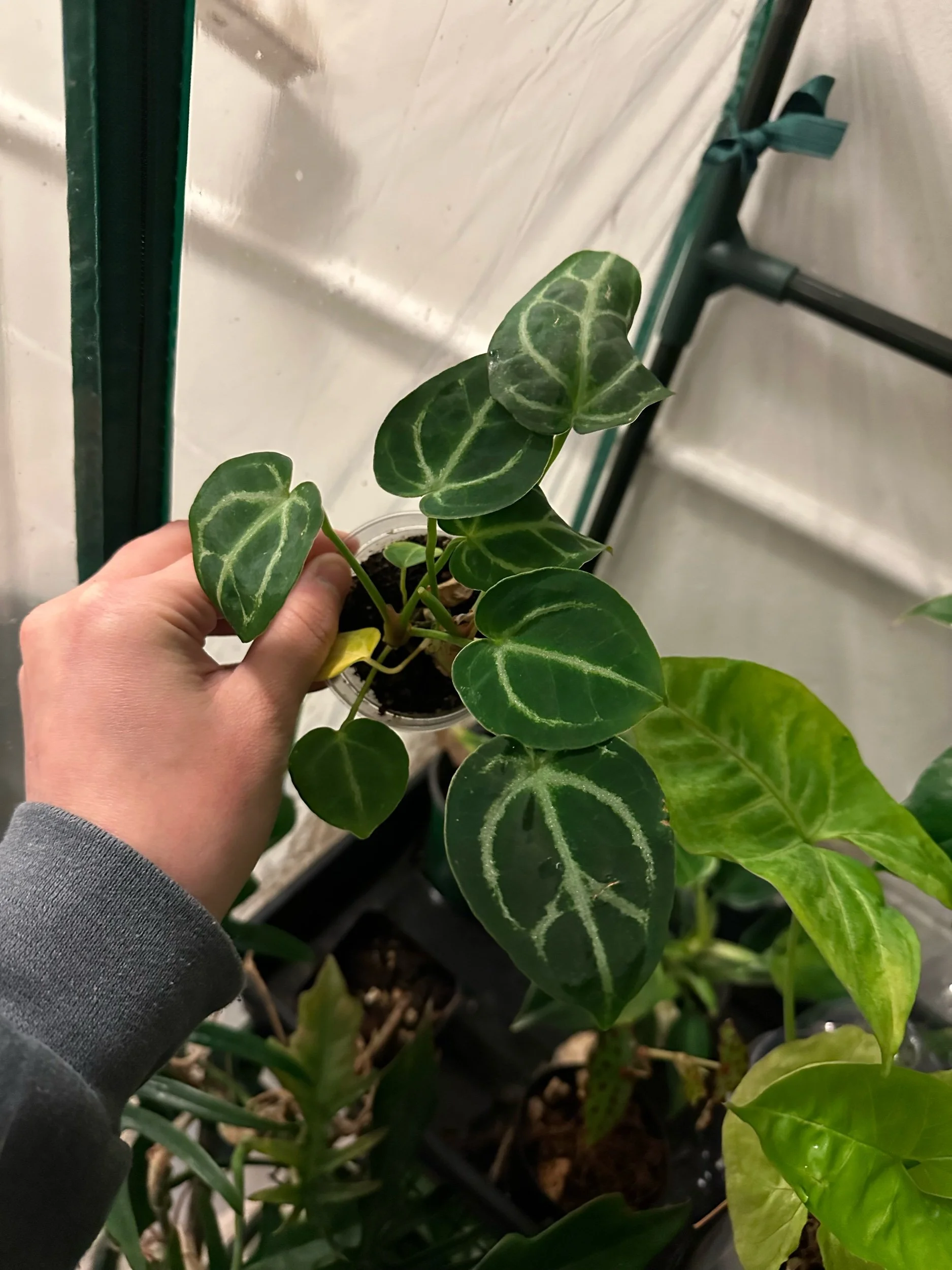
 Image 1 of 2
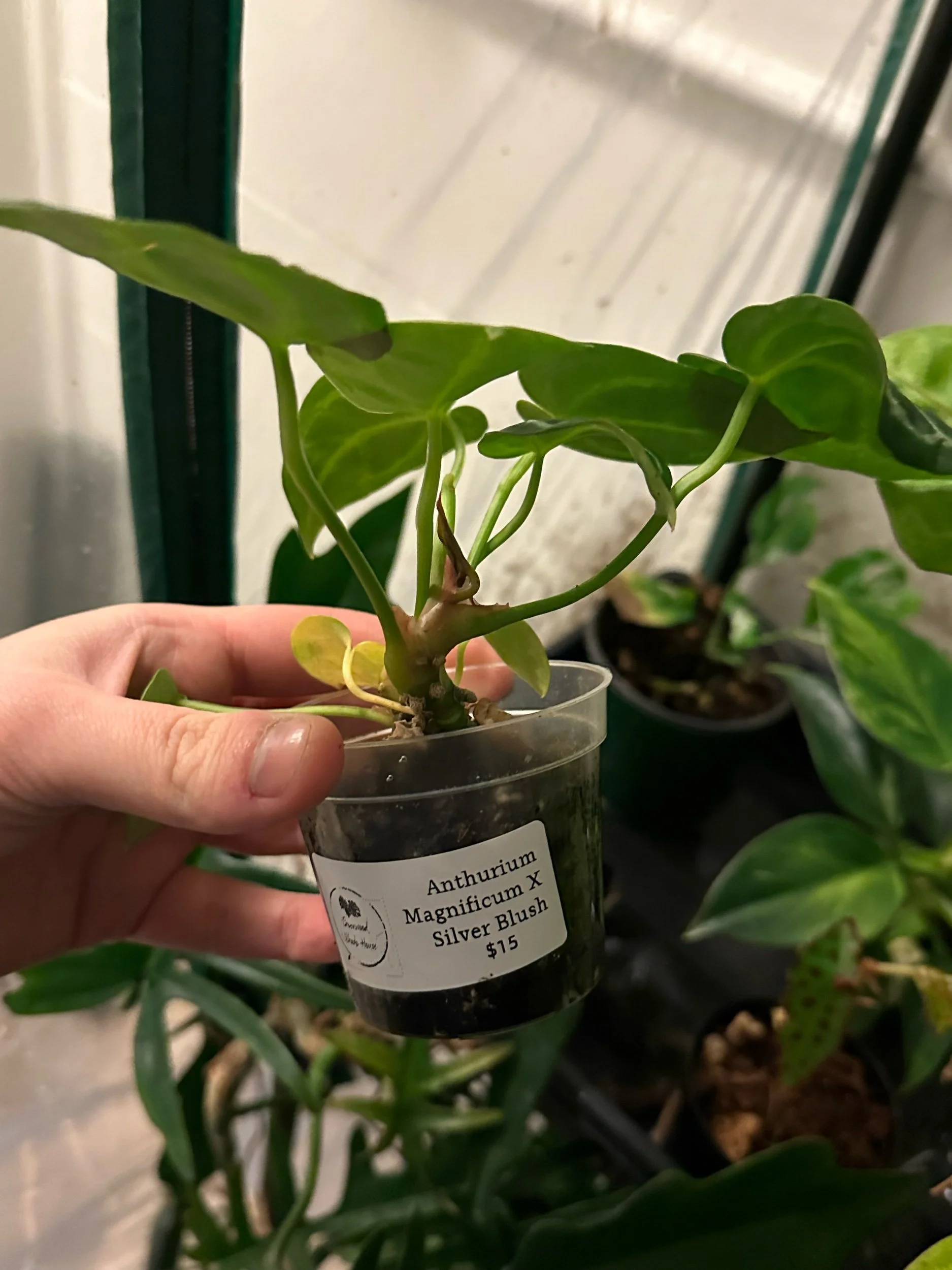 Image 2 of 2
Anthurium 'Magnificum x Silver Blush'
Overview Anthurium 'Magnificum x Silver Blush' is an eye-catching hybrid grown for its striking foliage. It combines the deep, velvety, heart-shaped leaves and strong venation of Anthurium magnificum with the silvery variegation and lighter leaf tones associated with Silver Blush lines. The result is a dramatic indoor specimen prized by collectors for bold contrast and sculptural form.
Appearance
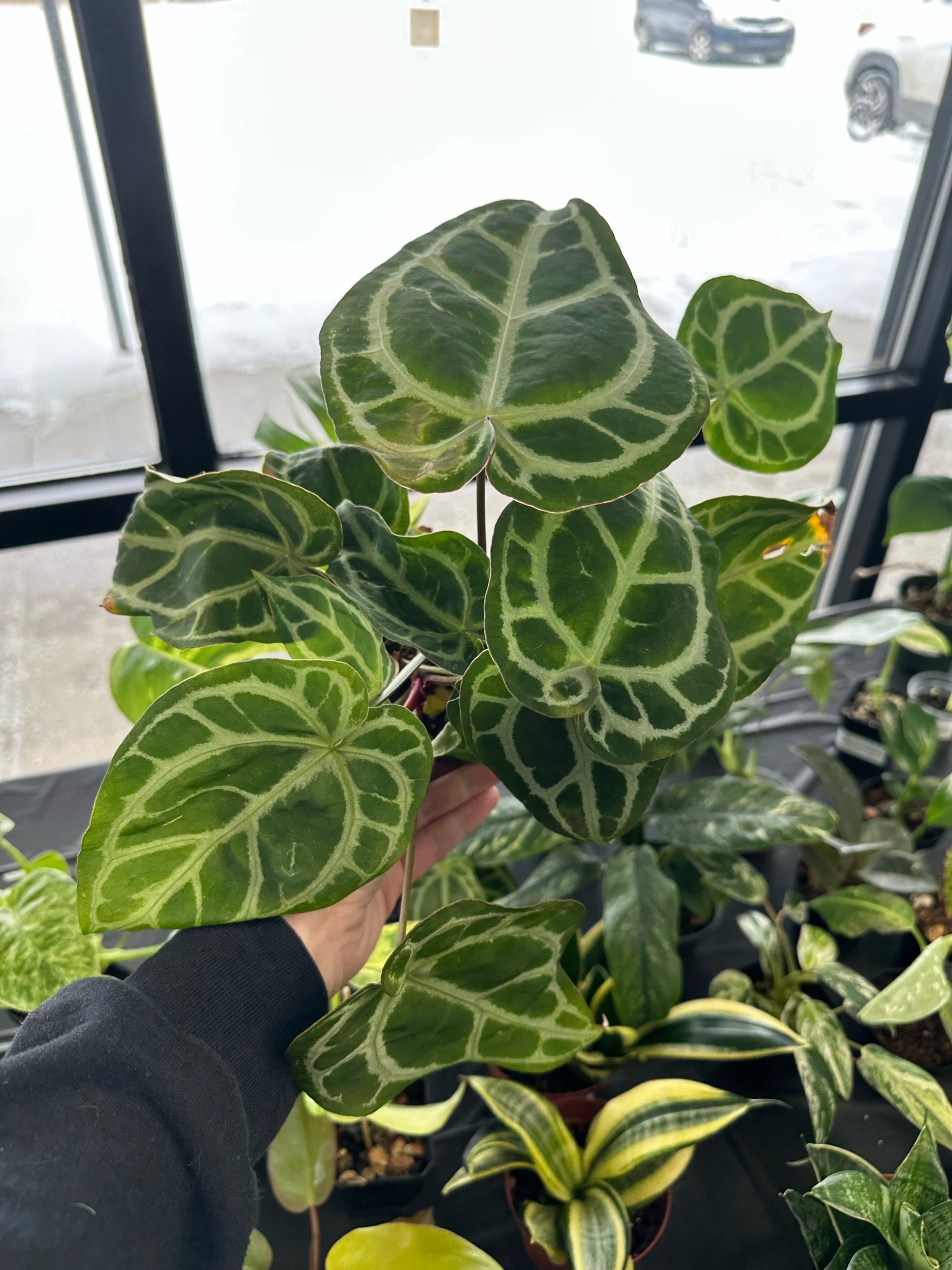
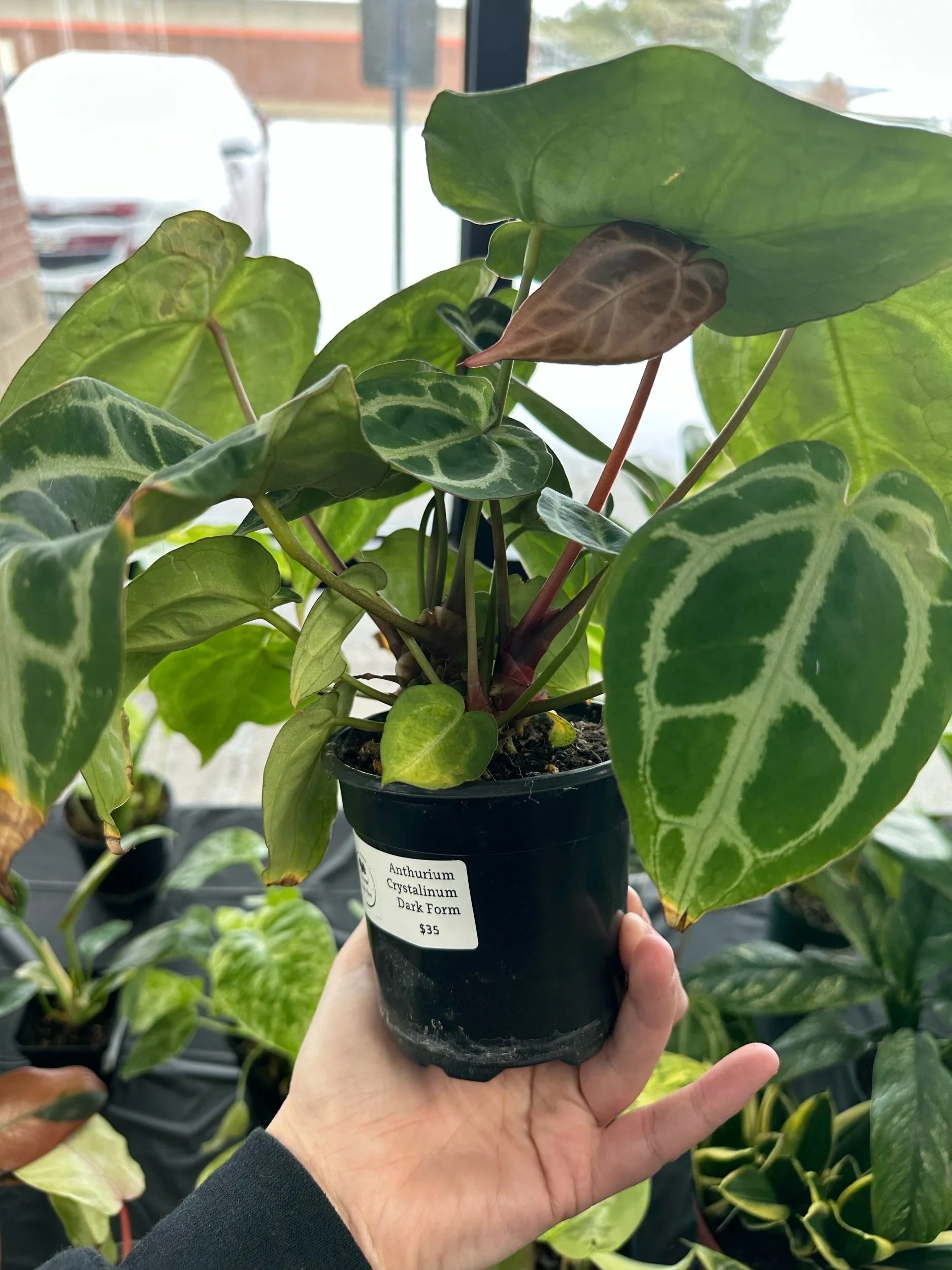
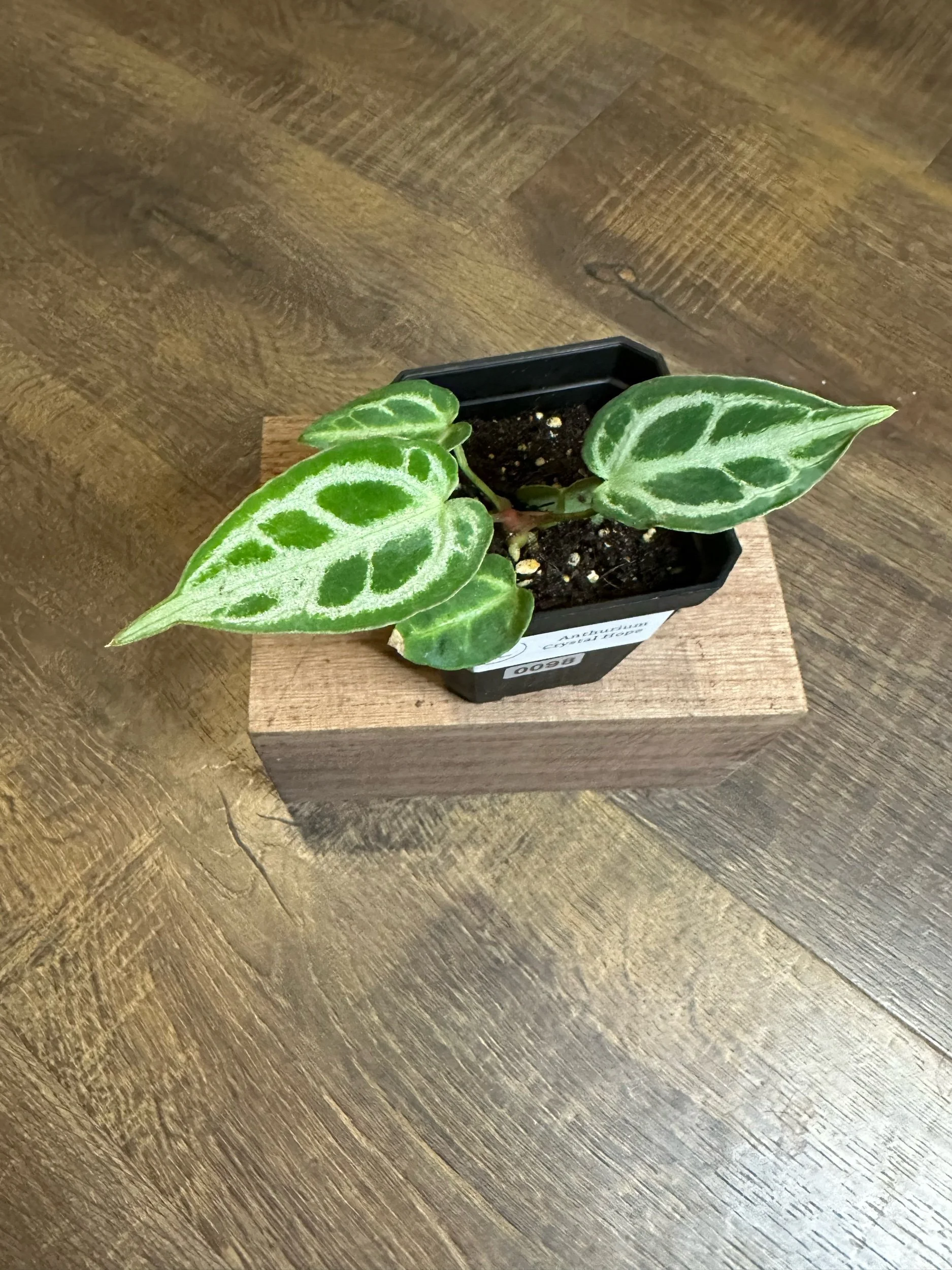
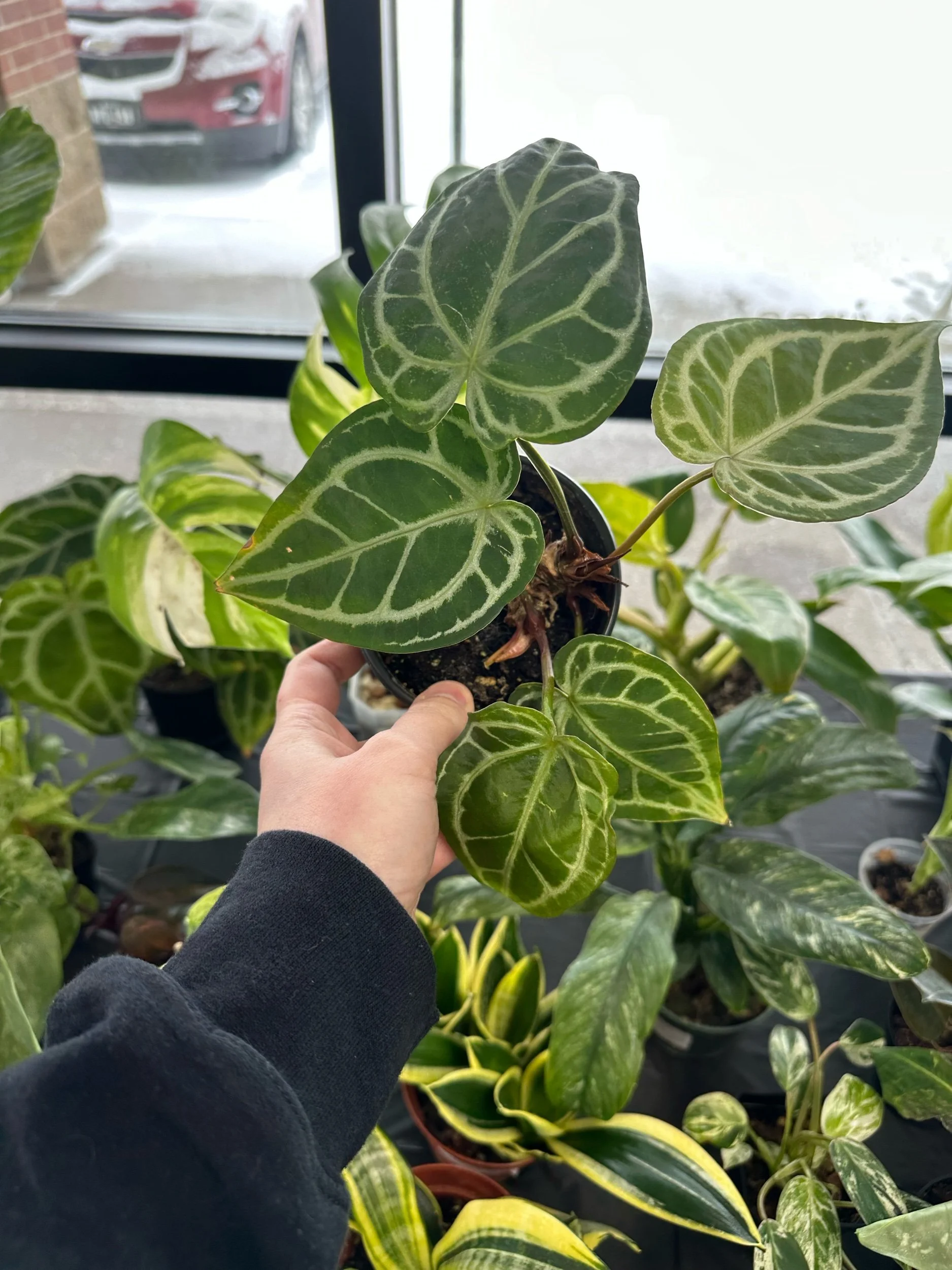
Leaves: Large, thick, heart-shaped to slightly lobed; surface often velvety with pronounced ribs. Color ranges from deep emerald to dark green, overlaid with silvery/grayish marbling or splashes depending on individual plant genetics and light exposure.
Size: Mature leaves can reach 10–18 inches across on a well-grown plant; overall mature plant tends to be compact to moderately large depending on pot size and care.
Stems & growth habit: Short petioles and a low, rosette-like habit. New growth emerges from the crown; offsets or pups may form over time.
Flowers: Typical anthurium inflorescences (spathe and spadix) occur but are not the main ornamental feature; blooms are usually inconspicuous compared to the foliage.
Light
Bright, indirect light is ideal. Avoid direct afternoon sun, which can scorch leaves or fade the silver markings.
Too little light will reduce variegation intensity and slow growth; too much light increases risk of bleaching or sunburn.
Temperature & Humidity
Temperature: Prefer consistent warmth—65–80°F (18–27°C). Protect from drafts and temperatures below 60°F (15°C).
Humidity: High humidity (60–80%) encourages best leaf texture and growth. In typical homes, place on a humidity tray, group with other plants, or use a humidifier.
Soil & Potting
Use a well-draining, airy mix: chunky orchid bark, perlite, and high-quality peat or coco coir-based potting mix. Aroid mixes that retain some moisture but allow airflow around the roots are ideal.
Repot every 1–2 years or when rootbound. Gently refresh mix and avoid burying the crown too deeply.
Watering
Keep the medium evenly moist but not waterlogged. Allow the top 1–2 inches to dry slightly between waterings.
Use filtered or rainwater if possible; many aroids are sensitive to salts or chlorine in hard tap water.
Avoid letting the plant sit in standing water to prevent root rot.
Fertilizer
Feed with a balanced, diluted liquid fertilizer formulated for houseplants or aroids during the growing season (spring–early fall) every 4–6 weeks.
Reduce or stop feeding in winter when growth slows.
Pests & Problems
Common pests: spider mites, mealybugs, scale, and fungus gnats. Inspect new plants and treat infestations promptly with neem oil, insecticidal soap, or targeted remedies.
Leaf issues: brown crispy edges often indicate low humidity or under-watering; yellowing can result from overwatering, poor drainage, or root problems. Pale, washed-out leaves may mean too much direct sun.
Variegation instability: as a hybrid, variegation can shift; recovery of fully silvery patterns depends on light, nutrition, and genetics.
Propagation
Primarily propagated by division or by separating offsets/pups with a clean cut, ensuring each division has roots and at least one growth point.
Stem cuttings rooted in moist, well-draining medium or water can work for some offsets, but division is generally more reliable.
Placement & Styling
Make a statement on a plant shelf, pedestal, or as a focal specimen on a table. The dramatic foliage suits minimalist, modern, or collector displays.
Pair with other humidity-loving aroids or low-contrast plants to keep the Silver Blush markings as the focal point.
Shipping & Care Note
As with many thicker-leaved aroids, Anthurium 'Magnificum x Silver Blush' benefits from careful packaging and fast shipping to reduce stress. On arrival, allow the plant to acclimate and inspect for any shipping damage before resuming regular care.
Final tip Prioritize humidity, bright indirect light, and an airy aroid mix—these three factors will promote the best color, leaf size, and long-term health for this striking hybrid.
Anthurium 'Magnificum x Silver Blush'
Overview Anthurium 'Magnificum x Silver Blush' is an eye-catching hybrid grown for its striking foliage. It combines the deep, velvety, heart-shaped leaves and strong venation of Anthurium magnificum with the silvery variegation and lighter leaf tones associated with Silver Blush lines. The result is a dramatic indoor specimen prized by collectors for bold contrast and sculptural form.
Appearance
Leaves: Large, thick, heart-shaped to slightly lobed; surface often velvety with pronounced ribs. Color ranges from deep emerald to dark green, overlaid with silvery/grayish marbling or splashes depending on individual plant genetics and light exposure.
Size: Mature leaves can reach 10–18 inches across on a well-grown plant; overall mature plant tends to be compact to moderately large depending on pot size and care.
Stems & growth habit: Short petioles and a low, rosette-like habit. New growth emerges from the crown; offsets or pups may form over time.
Flowers: Typical anthurium inflorescences (spathe and spadix) occur but are not the main ornamental feature; blooms are usually inconspicuous compared to the foliage.
Light
Bright, indirect light is ideal. Avoid direct afternoon sun, which can scorch leaves or fade the silver markings.
Too little light will reduce variegation intensity and slow growth; too much light increases risk of bleaching or sunburn.
Temperature & Humidity
Temperature: Prefer consistent warmth—65–80°F (18–27°C). Protect from drafts and temperatures below 60°F (15°C).
Humidity: High humidity (60–80%) encourages best leaf texture and growth. In typical homes, place on a humidity tray, group with other plants, or use a humidifier.
Soil & Potting
Use a well-draining, airy mix: chunky orchid bark, perlite, and high-quality peat or coco coir-based potting mix. Aroid mixes that retain some moisture but allow airflow around the roots are ideal.
Repot every 1–2 years or when rootbound. Gently refresh mix and avoid burying the crown too deeply.
Watering
Keep the medium evenly moist but not waterlogged. Allow the top 1–2 inches to dry slightly between waterings.
Use filtered or rainwater if possible; many aroids are sensitive to salts or chlorine in hard tap water.
Avoid letting the plant sit in standing water to prevent root rot.
Fertilizer
Feed with a balanced, diluted liquid fertilizer formulated for houseplants or aroids during the growing season (spring–early fall) every 4–6 weeks.
Reduce or stop feeding in winter when growth slows.
Pests & Problems
Common pests: spider mites, mealybugs, scale, and fungus gnats. Inspect new plants and treat infestations promptly with neem oil, insecticidal soap, or targeted remedies.
Leaf issues: brown crispy edges often indicate low humidity or under-watering; yellowing can result from overwatering, poor drainage, or root problems. Pale, washed-out leaves may mean too much direct sun.
Variegation instability: as a hybrid, variegation can shift; recovery of fully silvery patterns depends on light, nutrition, and genetics.
Propagation
Primarily propagated by division or by separating offsets/pups with a clean cut, ensuring each division has roots and at least one growth point.
Stem cuttings rooted in moist, well-draining medium or water can work for some offsets, but division is generally more reliable.
Placement & Styling
Make a statement on a plant shelf, pedestal, or as a focal specimen on a table. The dramatic foliage suits minimalist, modern, or collector displays.
Pair with other humidity-loving aroids or low-contrast plants to keep the Silver Blush markings as the focal point.
Shipping & Care Note
As with many thicker-leaved aroids, Anthurium 'Magnificum x Silver Blush' benefits from careful packaging and fast shipping to reduce stress. On arrival, allow the plant to acclimate and inspect for any shipping damage before resuming regular care.
Final tip Prioritize humidity, bright indirect light, and an airy aroid mix—these three factors will promote the best color, leaf size, and long-term health for this striking hybrid.