 Image 1 of 4
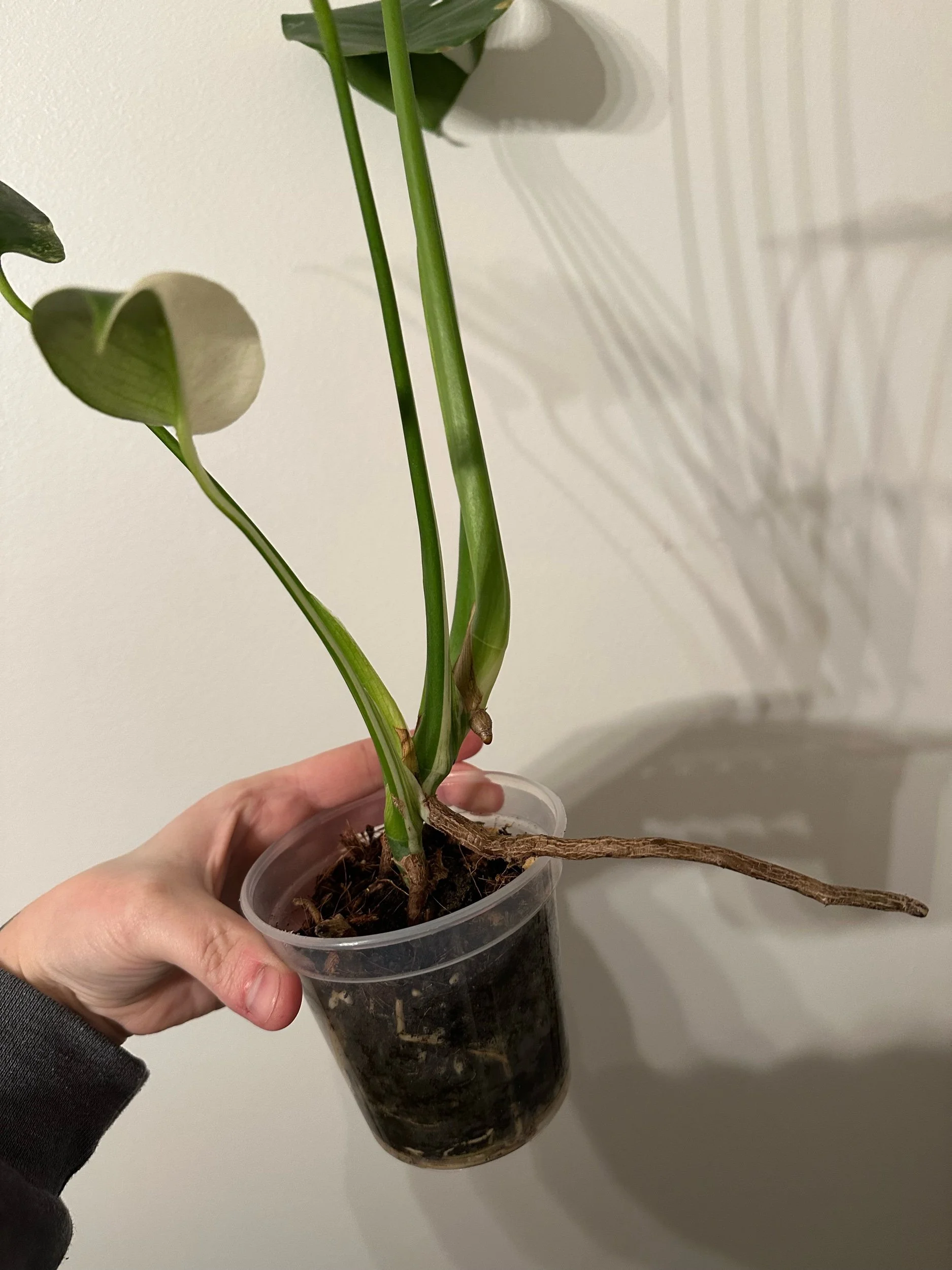 Image 2 of 4
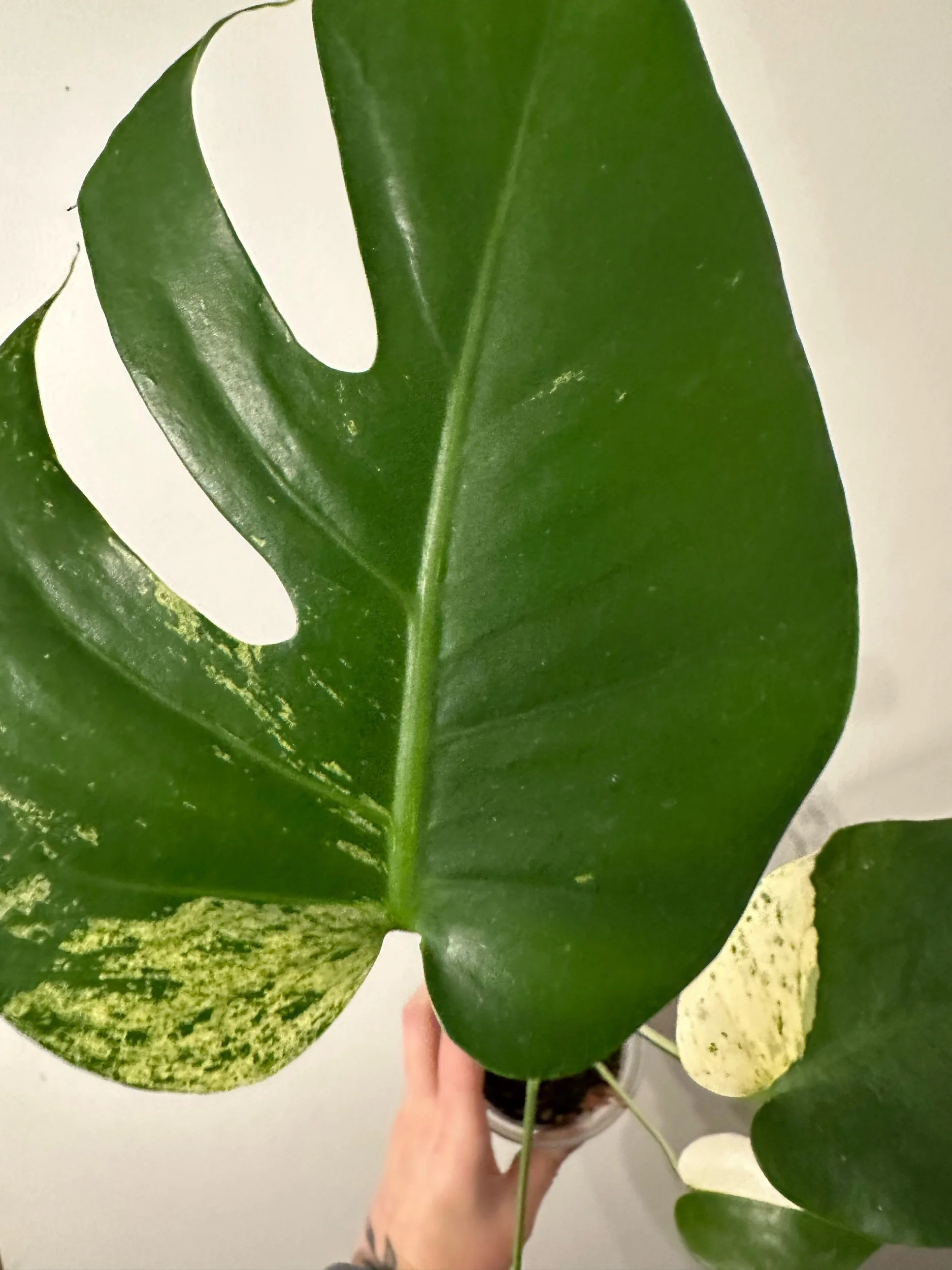 Image 3 of 4
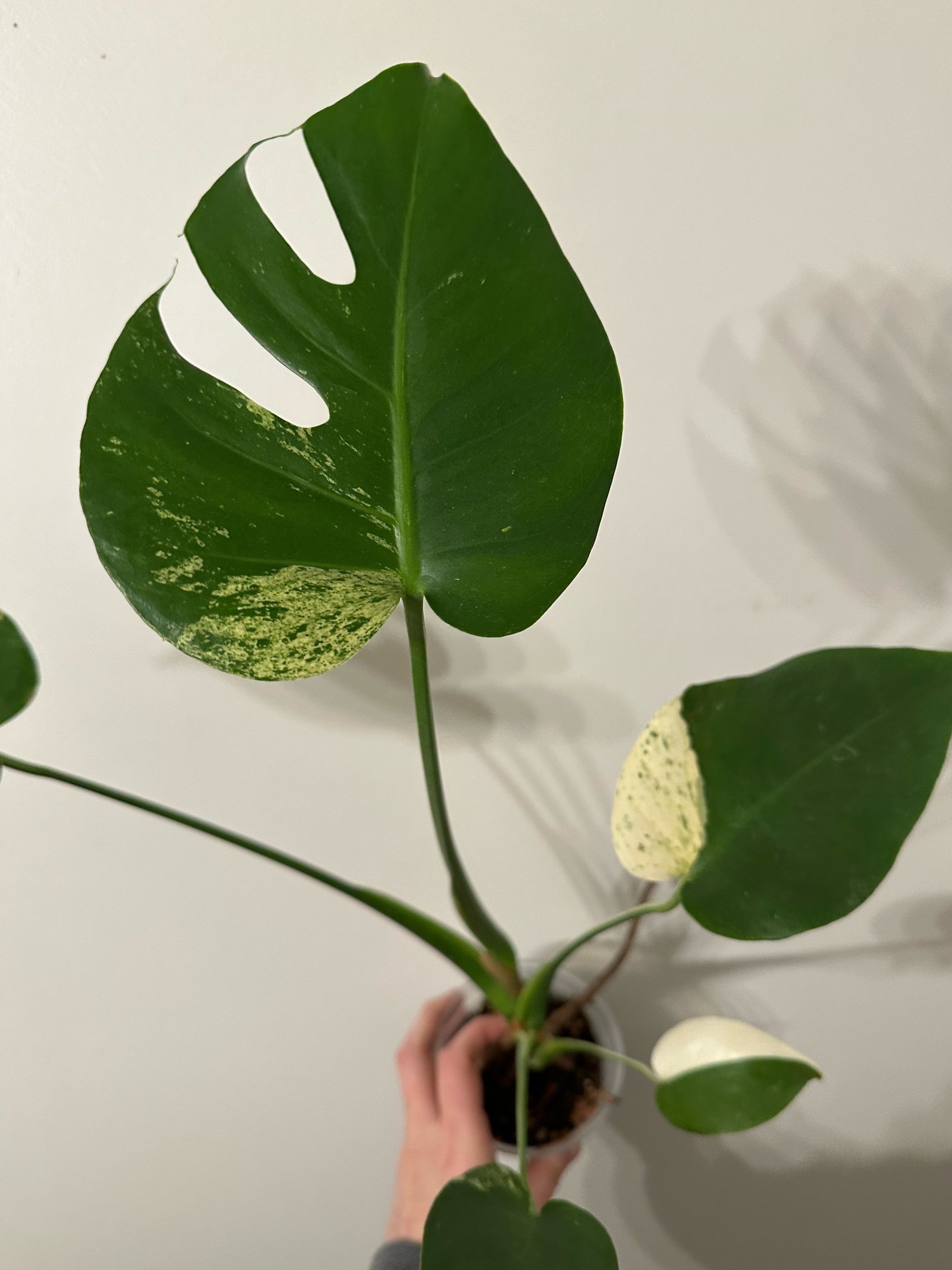 Image 4 of 4
Monstera Deliciosa "Mint"
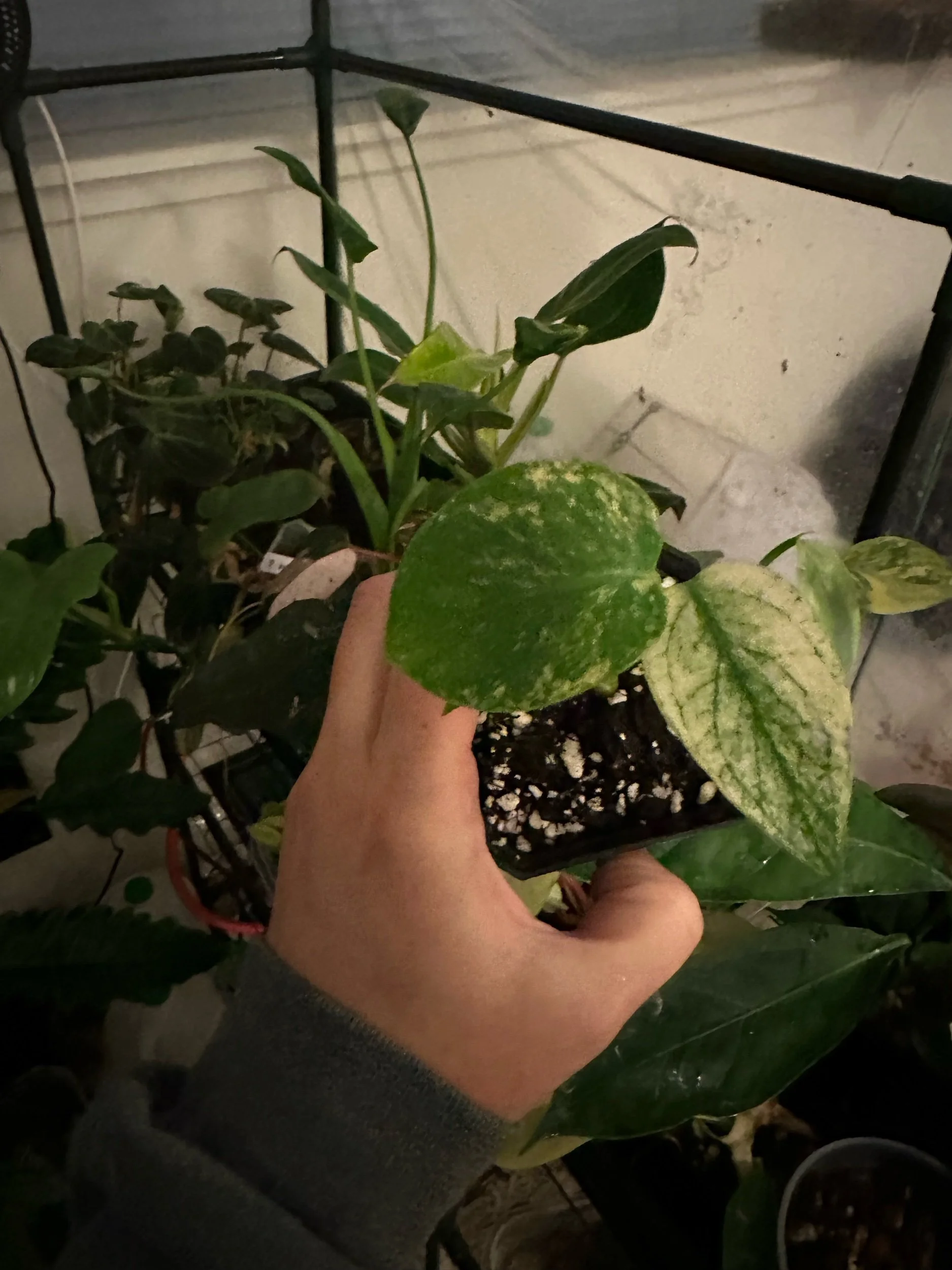
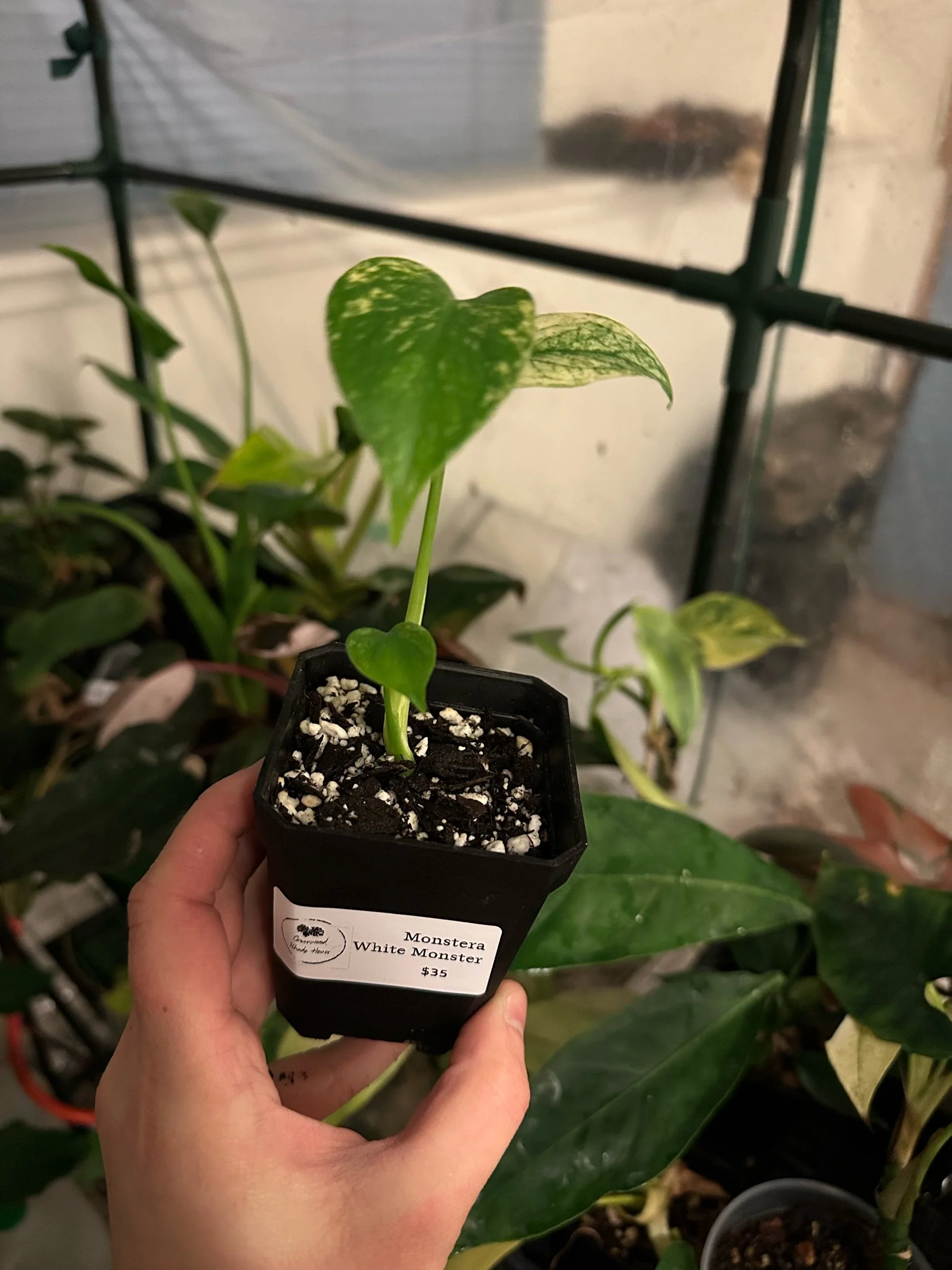
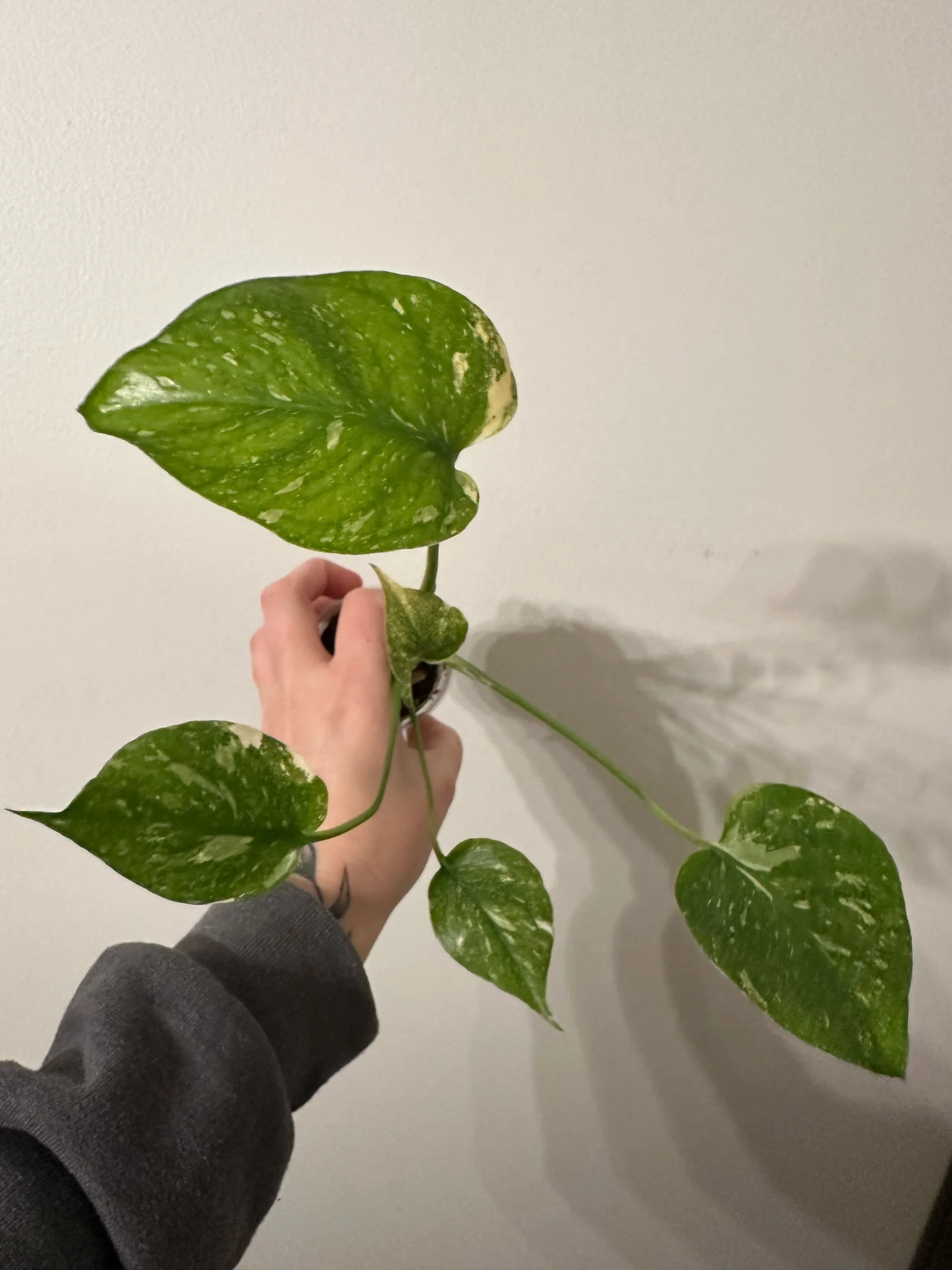
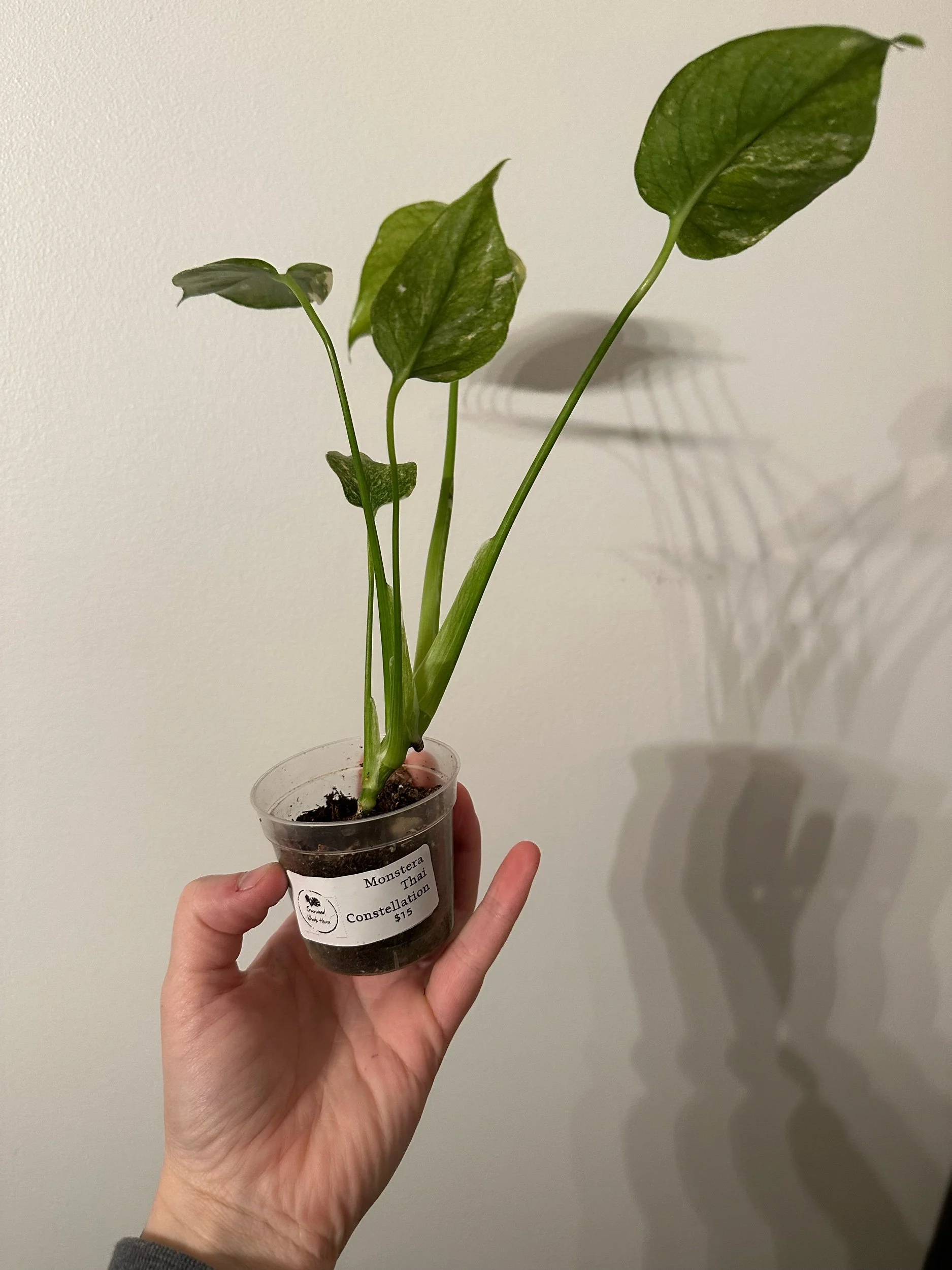
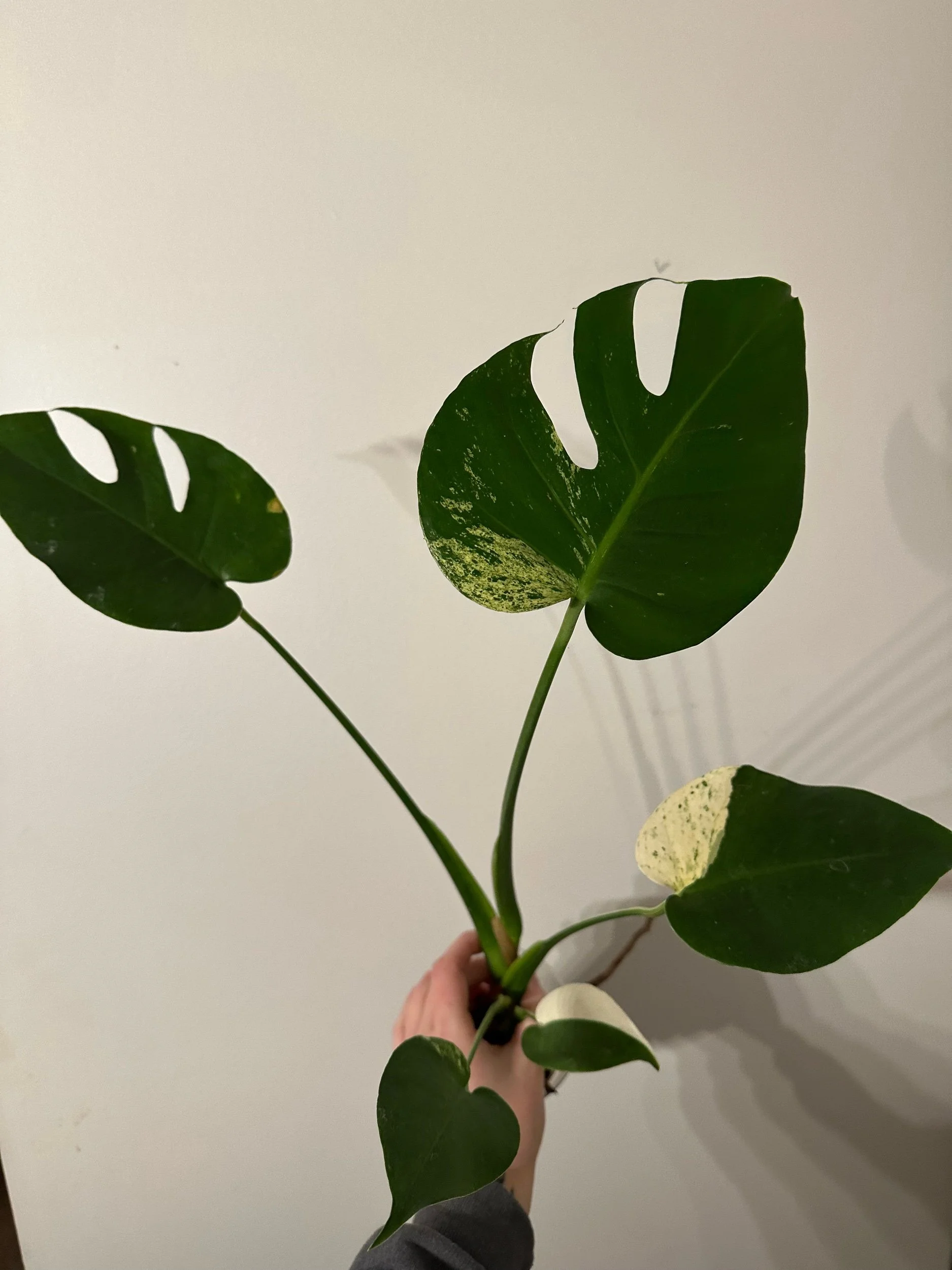
Overview The Monstera Deliciosa "Mint" is a variegated form of the classic Swiss cheese plant known for its striking pale green to minty white variegation on glossy, fenestrated leaves. It combines the dramatic leaf splits of Monstera deliciosa with eye-catching lighter variegation that can range from subtle streaks to large swaths of cream or mint tones. This cultivar is prized for its decorative impact and makes a bold statement in bright, bright-indirect light.
Appearance
Leaves: Large, heart-shaped to split (fenestrated) leaves with irregular minty-white to pale green variegation. Variegation patterns vary plant to plant.
Growth habit: Climbing vine that will produce larger, mature leaves with age. May be trained on a moss pole or allowed to trail.
Size: Indoors typically reaches 3–8 feet depending on support, light, and care.
Light
Needs bright, indirect light for best variegation retention and healthy growth.
Avoid direct midday sun, which can scorch pale variegated areas.
In lower light, variegation may fade and growth will slow.
Water
Water when the top 1–2 inches of soil feels dry.
Use room-temperature water; water thoroughly until excess drains from the pot, then allow to drain completely.
Avoid letting the plant sit in standing water; variegated Monsteras are less tolerant of overwatering.
Humidity & Temperature
Prefers higher humidity (50% or above) but tolerates average home humidity.
Mist occasionally or use a humidifier to protect softer variegated tissue.
Ideal temperature range: 65–82°F (18–28°C). Protect from drafts and temperatures below 55°F (13°C).
Soil & Potting
Use a well-draining, aerated mix: high-quality indoor potting mix amended with orchid bark, perlite, and a bit of coco coir or peat for moisture retention.
Choose a pot with drainage holes. A moss pole or stake helps support climbing and encourages larger leaves.
Fertilizer
Feed with a balanced, water-soluble houseplant fertilizer during the growing season (spring and summer) every 4–6 weeks at half strength.
Reduce feeding in fall and winter when growth slows.
Propagation
Propagate via stem cuttings with at least one node and preferably an aerial root. Place cuttings in water or a moist, well-draining soil mix until roots form.
Keep cuttings warm and in bright, indirect light for best success.
Common Problems
Loss of variegation (reversion): New growth may revert to solid green. Remove reverted stems to maintain variegation or keep a revert as a backup for vigor.
Yellowing leaves: Often a sign of overwatering or poor drainage.
Brown crispy edges: Usually caused by low humidity, underwatering, or salt build-up from fertilizer.
Leaf scorch on variegated areas: Caused by direct sun; move to gentler light.
Care Tips
Rotate the plant regularly for even growth and light exposure.
Clean leaves gently with a soft cloth to remove dust and allow efficient photosynthesis.
Prune leggy growth to encourage bushier form and to maintain desired size.
Be patient—variegated Monsteras often grow slower than their all-green counterparts.
Toxicity
Toxic to pets and humans if ingested due to insoluble calcium oxalates. Keep out of reach of children and pets.
Why choose Monstera Deliciosa "Mint"
Unique, eye-catching variegation that brightens interiors.
Strong architectural presence with dramatic fenestrated leaves.
A rewarding choice for collectors and anyone wanting a standout houseplant when given bright, indirect light and attentive care.
Shipping & Availability (Greenwood Shade House)
Plants are carefully inspected, potted in breathable nursery pots with drainage, and shipped with protective packaging to minimize stress.
Variegated plants can be limited; availability may vary by season. Contact Greenwood Shade House for current inventory and care guidance specific to your plant.
Monstera Deliciosa "Mint"
Overview The Monstera Deliciosa "Mint" is a variegated form of the classic Swiss cheese plant known for its striking pale green to minty white variegation on glossy, fenestrated leaves. It combines the dramatic leaf splits of Monstera deliciosa with eye-catching lighter variegation that can range from subtle streaks to large swaths of cream or mint tones. This cultivar is prized for its decorative impact and makes a bold statement in bright, bright-indirect light.
Appearance
Leaves: Large, heart-shaped to split (fenestrated) leaves with irregular minty-white to pale green variegation. Variegation patterns vary plant to plant.
Growth habit: Climbing vine that will produce larger, mature leaves with age. May be trained on a moss pole or allowed to trail.
Size: Indoors typically reaches 3–8 feet depending on support, light, and care.
Light
Needs bright, indirect light for best variegation retention and healthy growth.
Avoid direct midday sun, which can scorch pale variegated areas.
In lower light, variegation may fade and growth will slow.
Water
Water when the top 1–2 inches of soil feels dry.
Use room-temperature water; water thoroughly until excess drains from the pot, then allow to drain completely.
Avoid letting the plant sit in standing water; variegated Monsteras are less tolerant of overwatering.
Humidity & Temperature
Prefers higher humidity (50% or above) but tolerates average home humidity.
Mist occasionally or use a humidifier to protect softer variegated tissue.
Ideal temperature range: 65–82°F (18–28°C). Protect from drafts and temperatures below 55°F (13°C).
Soil & Potting
Use a well-draining, aerated mix: high-quality indoor potting mix amended with orchid bark, perlite, and a bit of coco coir or peat for moisture retention.
Choose a pot with drainage holes. A moss pole or stake helps support climbing and encourages larger leaves.
Fertilizer
Feed with a balanced, water-soluble houseplant fertilizer during the growing season (spring and summer) every 4–6 weeks at half strength.
Reduce feeding in fall and winter when growth slows.
Propagation
Propagate via stem cuttings with at least one node and preferably an aerial root. Place cuttings in water or a moist, well-draining soil mix until roots form.
Keep cuttings warm and in bright, indirect light for best success.
Common Problems
Loss of variegation (reversion): New growth may revert to solid green. Remove reverted stems to maintain variegation or keep a revert as a backup for vigor.
Yellowing leaves: Often a sign of overwatering or poor drainage.
Brown crispy edges: Usually caused by low humidity, underwatering, or salt build-up from fertilizer.
Leaf scorch on variegated areas: Caused by direct sun; move to gentler light.
Care Tips
Rotate the plant regularly for even growth and light exposure.
Clean leaves gently with a soft cloth to remove dust and allow efficient photosynthesis.
Prune leggy growth to encourage bushier form and to maintain desired size.
Be patient—variegated Monsteras often grow slower than their all-green counterparts.
Toxicity
Toxic to pets and humans if ingested due to insoluble calcium oxalates. Keep out of reach of children and pets.
Why choose Monstera Deliciosa "Mint"
Unique, eye-catching variegation that brightens interiors.
Strong architectural presence with dramatic fenestrated leaves.
A rewarding choice for collectors and anyone wanting a standout houseplant when given bright, indirect light and attentive care.
Shipping & Availability (Greenwood Shade House)
Plants are carefully inspected, potted in breathable nursery pots with drainage, and shipped with protective packaging to minimize stress.
Variegated plants can be limited; availability may vary by season. Contact Greenwood Shade House for current inventory and care guidance specific to your plant.