 Image 1 of 2
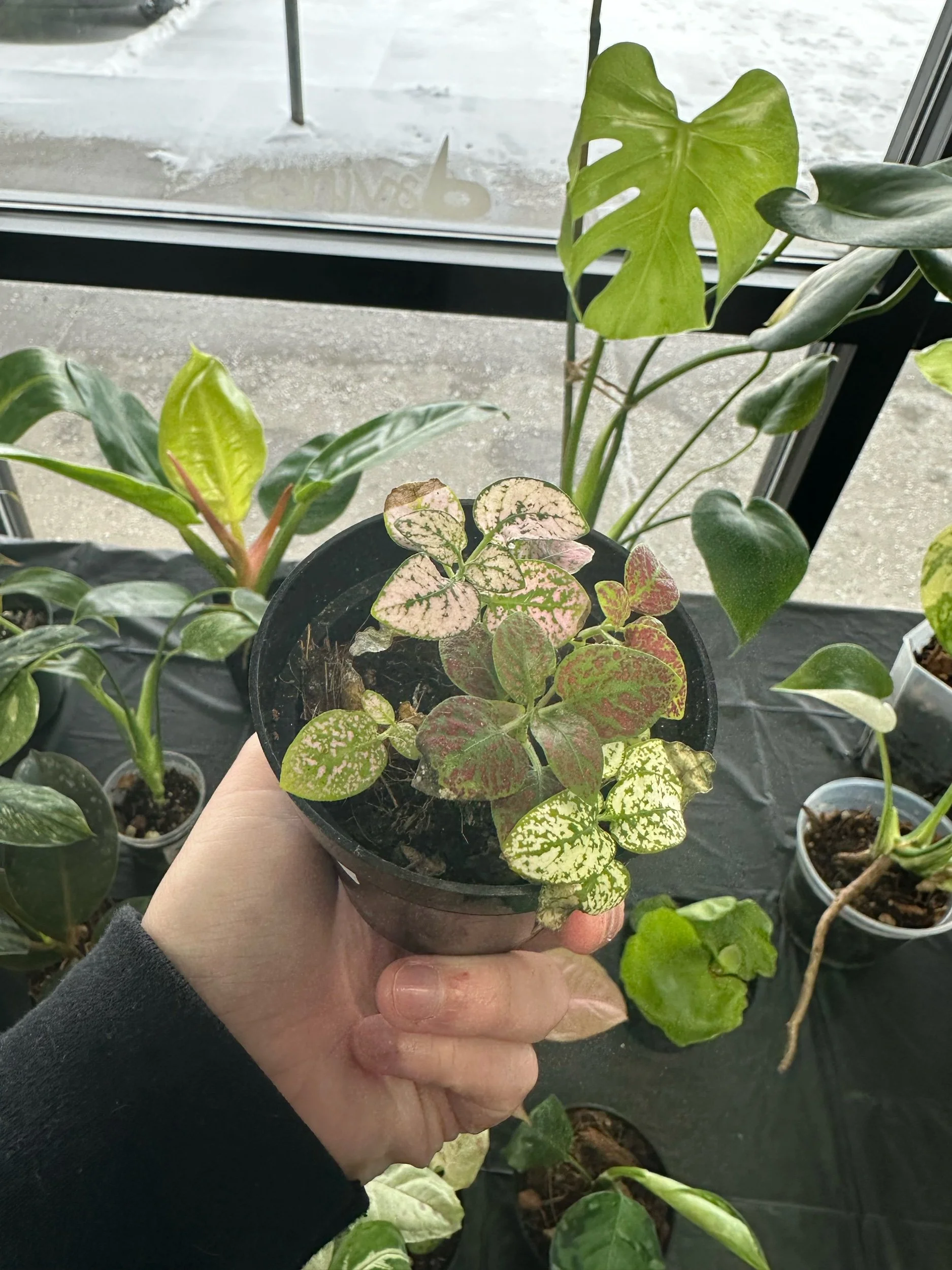 Image 2 of 2
Polka Dot Plant Care
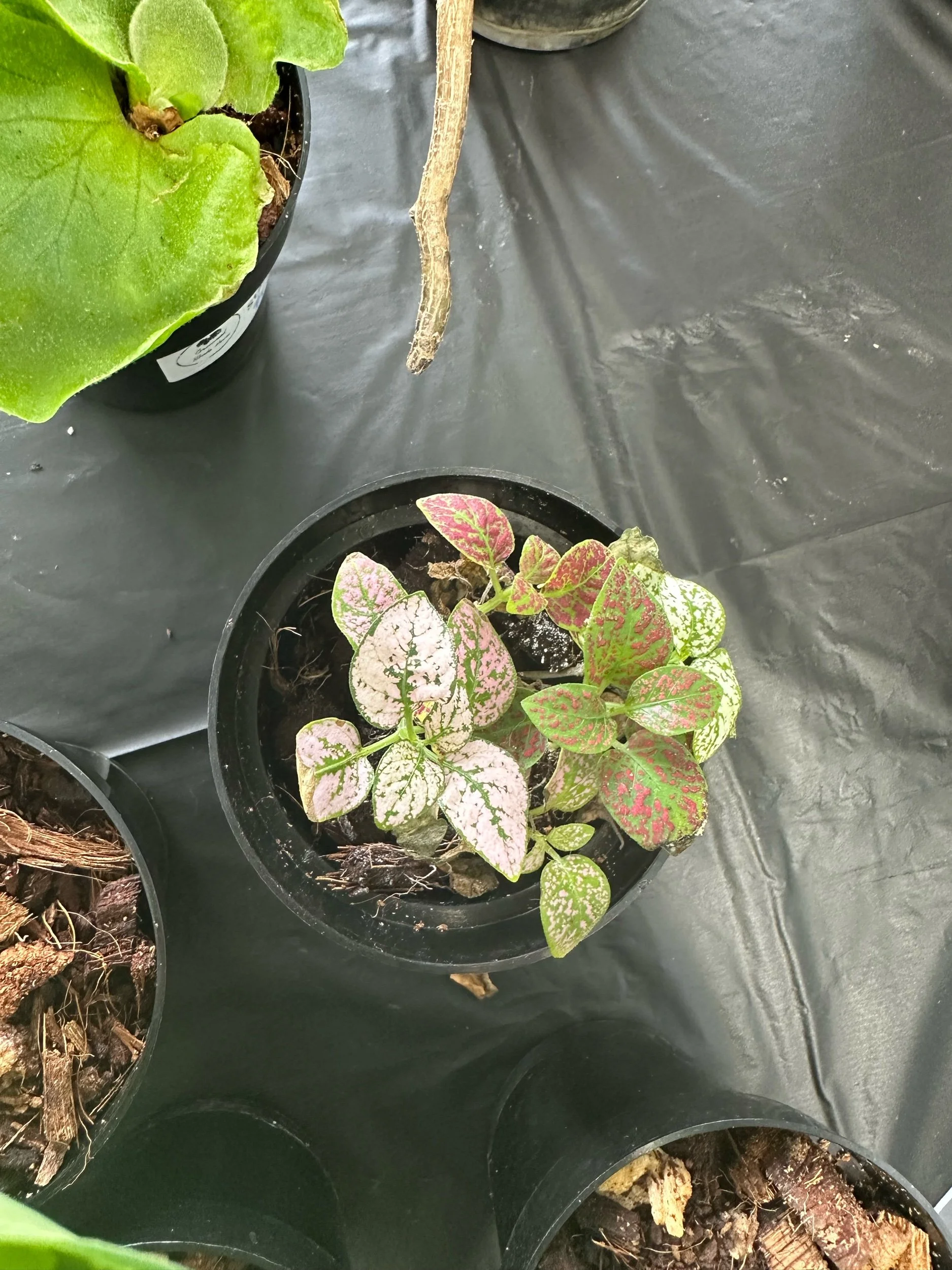
Overview The polka dot plant (Hypoestes phyllostachya) is a compact, colorful houseplant prized for its speckled foliage in pink, white, red, or purple. It’s easy to grow indoors and works well in mixed containers, terrariums, or as a tabletop accent.
Light
Bright, indirect light is best. A north- or east-facing window or several feet back from a south- or west-facing window works well.
Too little light causes leggy growth and faded leaf color; too much direct sun can scorch leaves and bleach the pattern.
Rotate the plant weekly for even growth and color.
Temperature & Humidity
Ideal temperature: 65–75°F (18–24°C). Avoid temperatures below 60°F (15°C).
Prefers moderate to high humidity. Aim for 40–60% humidity.
Increase humidity with a pebble tray, grouping plants, or a humidifier. Avoid misting as a sole humidity method because foliage can remain wet.
Soil & Potting
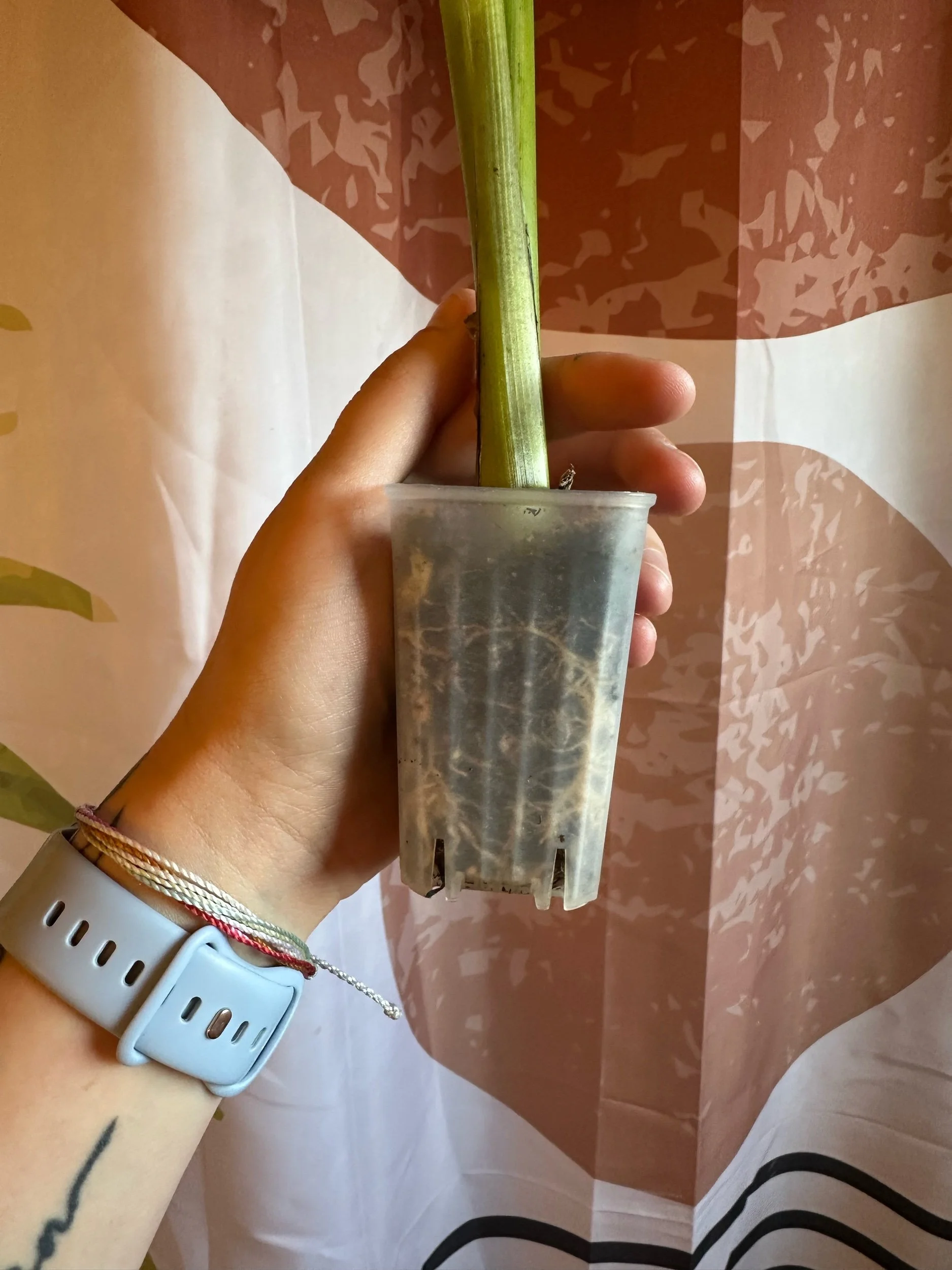
Use a well-draining, peat-based potting mix with good aeration.
Pots should have drainage holes to prevent waterlogging.
Repot every 12–18 months or when rootbound; choose a pot 1–2 inches larger in diameter.
Watering
Keep soil consistently moist but not soggy. Water when the top 1/2–1 inch of soil feels dry.
Water thoroughly until excess drains, then discard runoff.
Reduce watering in winter when growth slows, but do not let the soil dry out completely for long periods.
Fertilizing
Feed every 2–4 weeks during the growing season (spring–summer) with a balanced, water-soluble fertilizer at half the label strength.
Hold off on regular fertilizing in fall and winter when growth slows.
Pruning & Maintenance
Pinch back growing tips regularly to encourage bushier, compact growth and prevent legginess.
Remove faded or damaged leaves to keep the plant looking healthy.
If stems become overly leggy, cut them back to a node; new shoots will emerge.
Propagation
Easily propagated from stem cuttings. Take 2–4 inch cuttings, remove lower leaves, and root in water or moist potting mix.
Roots form quickly; transplant to potting mix once roots are several inches long.
Pests & Problems
Common pests: spider mites, aphids, whiteflies, and mealybugs. Inspect regularly and treat with insecticidal soap or neem oil if needed.
Leaf color fading often indicates insufficient light; leggy growth also points to low light or lack of pruning.
Brown tips can indicate low humidity, overfertilizing, or inconsistent watering.
Yellowing leaves often result from overwatering or poor drainage.
Varieties & Uses
Popular cultivars include 'Confetti', 'Rosea', 'Pink Splash', and 'White Splash', each with distinct spot patterns and colors.
Works well as a tabletop plant, in terrariums, or as an underplant in mixed containers. Its compact size makes it good for desks, shelves, and small spaces.
Tips
Rotate containers for even light exposure and color.
Grow in groups to raise local humidity and create a denser display.
Keep out of reach of pets and children; polka dot plants can be mildly toxic if ingested.
By following these care basics—bright indirect light, consistent moisture, regular pruning, and moderate humidity—you’ll keep your polka dot plant healthy and vibrantly patterned.
Polka Dot Plant Care
Overview The polka dot plant (Hypoestes phyllostachya) is a compact, colorful houseplant prized for its speckled foliage in pink, white, red, or purple. It’s easy to grow indoors and works well in mixed containers, terrariums, or as a tabletop accent.
Light
Bright, indirect light is best. A north- or east-facing window or several feet back from a south- or west-facing window works well.
Too little light causes leggy growth and faded leaf color; too much direct sun can scorch leaves and bleach the pattern.
Rotate the plant weekly for even growth and color.
Temperature & Humidity
Ideal temperature: 65–75°F (18–24°C). Avoid temperatures below 60°F (15°C).
Prefers moderate to high humidity. Aim for 40–60% humidity.
Increase humidity with a pebble tray, grouping plants, or a humidifier. Avoid misting as a sole humidity method because foliage can remain wet.
Soil & Potting
Use a well-draining, peat-based potting mix with good aeration.
Pots should have drainage holes to prevent waterlogging.
Repot every 12–18 months or when rootbound; choose a pot 1–2 inches larger in diameter.
Watering
Keep soil consistently moist but not soggy. Water when the top 1/2–1 inch of soil feels dry.
Water thoroughly until excess drains, then discard runoff.
Reduce watering in winter when growth slows, but do not let the soil dry out completely for long periods.
Fertilizing
Feed every 2–4 weeks during the growing season (spring–summer) with a balanced, water-soluble fertilizer at half the label strength.
Hold off on regular fertilizing in fall and winter when growth slows.
Pruning & Maintenance
Pinch back growing tips regularly to encourage bushier, compact growth and prevent legginess.
Remove faded or damaged leaves to keep the plant looking healthy.
If stems become overly leggy, cut them back to a node; new shoots will emerge.
Propagation
Easily propagated from stem cuttings. Take 2–4 inch cuttings, remove lower leaves, and root in water or moist potting mix.
Roots form quickly; transplant to potting mix once roots are several inches long.
Pests & Problems
Common pests: spider mites, aphids, whiteflies, and mealybugs. Inspect regularly and treat with insecticidal soap or neem oil if needed.
Leaf color fading often indicates insufficient light; leggy growth also points to low light or lack of pruning.
Brown tips can indicate low humidity, overfertilizing, or inconsistent watering.
Yellowing leaves often result from overwatering or poor drainage.
Varieties & Uses
Popular cultivars include 'Confetti', 'Rosea', 'Pink Splash', and 'White Splash', each with distinct spot patterns and colors.
Works well as a tabletop plant, in terrariums, or as an underplant in mixed containers. Its compact size makes it good for desks, shelves, and small spaces.
Tips
Rotate containers for even light exposure and color.
Grow in groups to raise local humidity and create a denser display.
Keep out of reach of pets and children; polka dot plants can be mildly toxic if ingested.
By following these care basics—bright indirect light, consistent moisture, regular pruning, and moderate humidity—you’ll keep your polka dot plant healthy and vibrantly patterned.