 Image 1 of 2
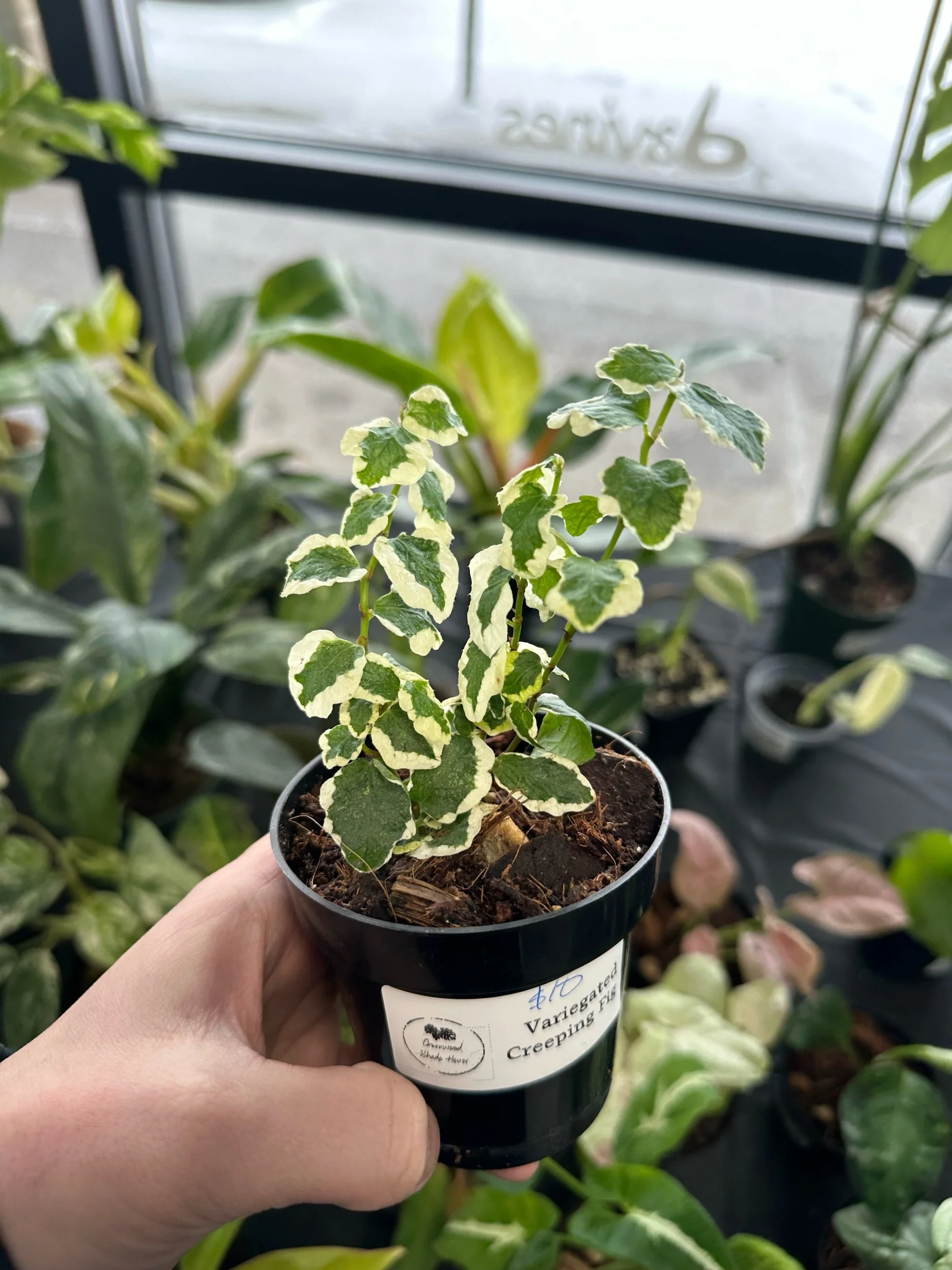 Image 2 of 2
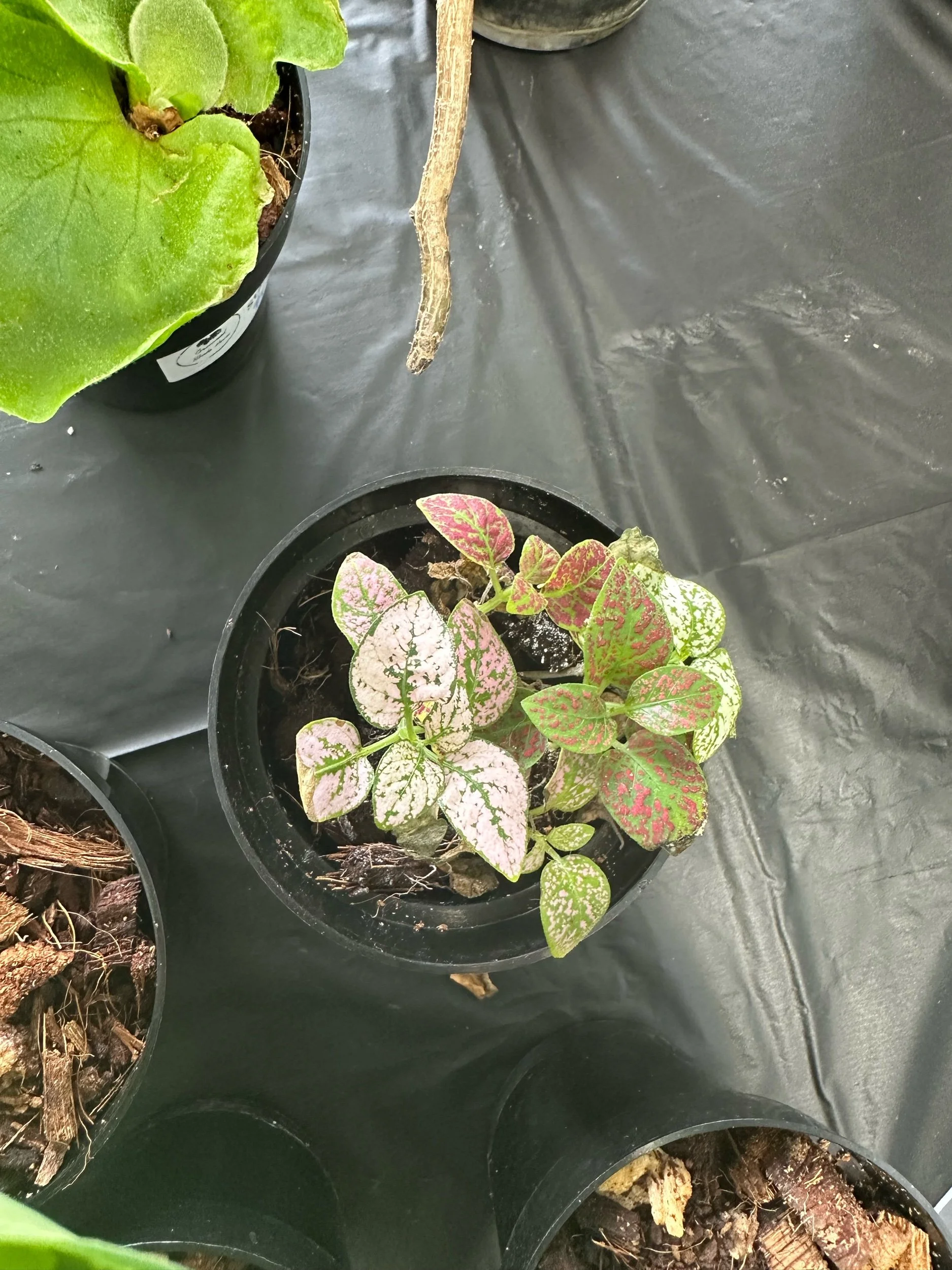
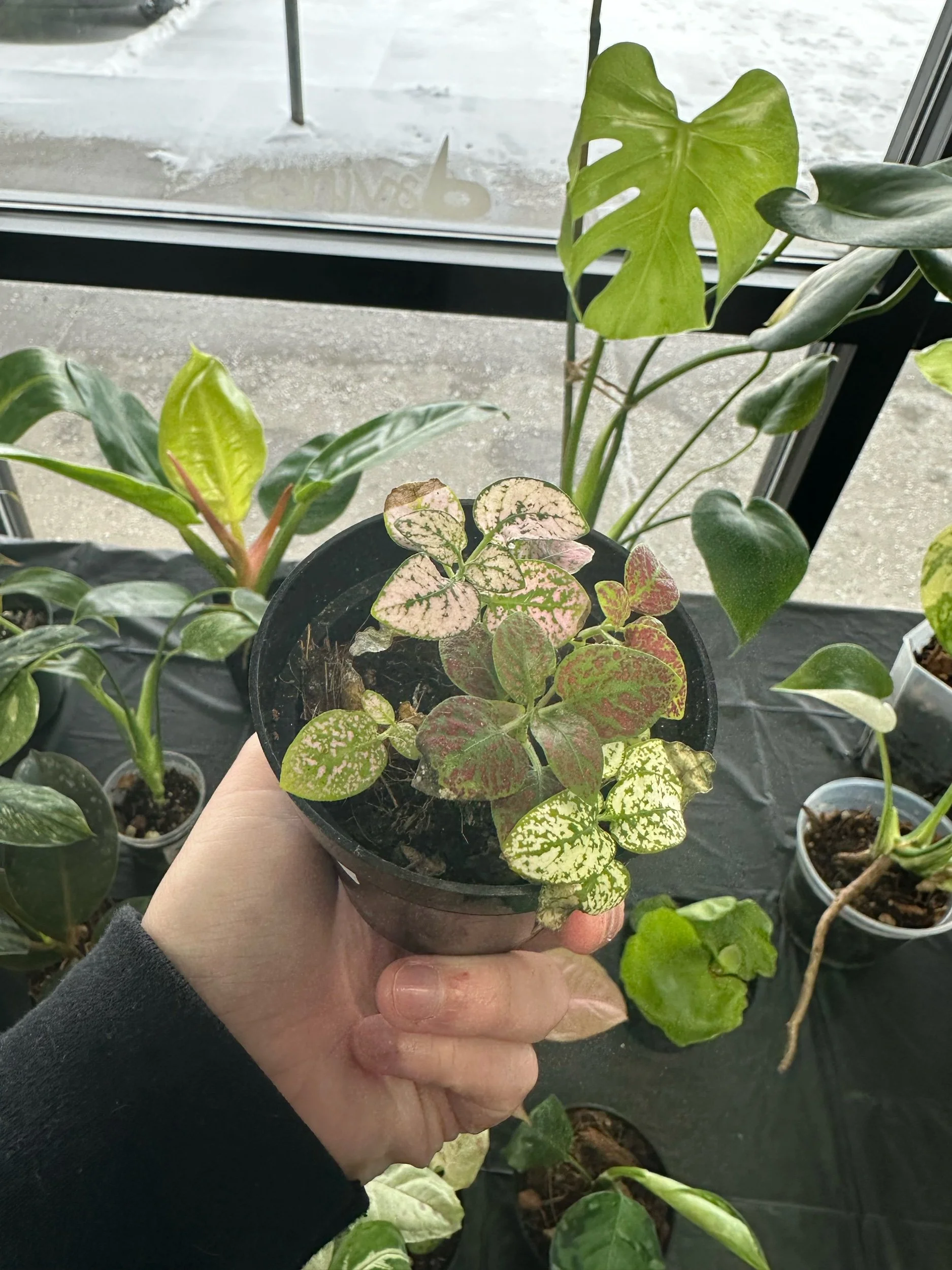
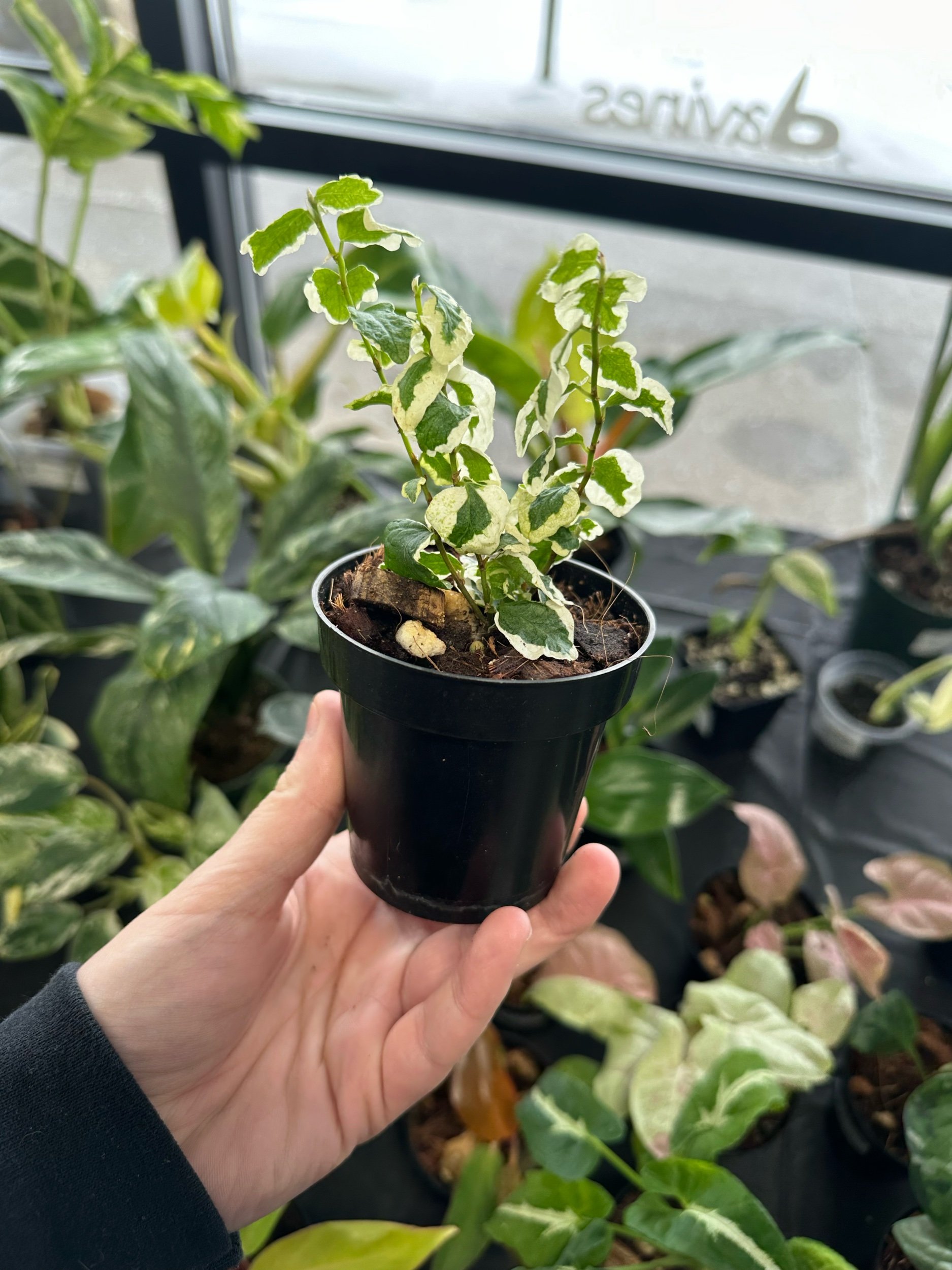
Variegated Creeping Fig (Ficus pumila ‘Variegata’)
Overview
Common name: Variegated creeping fig
Scientific name: Ficus pumila ‘Variegata’
Type: Evergreen vining/shredding-clinging houseplant or groundcover
Growth habit: Low, trailing or climbing; attaches to surfaces with aerial roots
Leaf size: Small (about 1/2"–1" / 1–2.5 cm)
Variegation: Creamy-white or pale yellow margins and splashes on green leaves
Light
Bright, indirect light is ideal to maintain variegation.
Tolerates medium light; variegation may fade in low light and growth becomes leggier.
Avoid strong direct afternoon sun, which can scorch leaves.
Temperature & Humidity
Preferred temperature: 60–85°F (16–29°C). Keep above 50°F (10°C).
Likes high humidity. Benefit from regular misting, a pebble tray, or grouping with other plants.
In dry indoor air, new leaves may brown at the edges or drop.
Soil & Potting
Use a well-draining potting mix: all-purpose indoor mix amended with perlite or orchid bark for aeration.
Good drainage is essential; avoid waterlogged soil to prevent root rot.
Repot every 1–2 years or when rootbound. Choose a shallow pot for better support of trailing growth.
Watering
Keep soil consistently moist but not soggy. Water when the top 1/4" (about 6 mm) of soil feels dry.
Reduce frequency in winter. Overwatering leads to yellowing leaves and root problems.
Fertilizing
Feed with a balanced, diluted liquid houseplant fertilizer every 4–6 weeks during the growing season (spring–summer).
Cut back feeding in fall and winter when growth slows.
Pruning & Training
Prune regularly to maintain shape, encourage bushier growth, and remove leggy vines.
Can be trained on a trellis, moss pole, or allowed to cascade from hanging baskets.
Pinch growing tips to promote fuller growth.
Propagation
Easily propagated by stem cuttings: take 2–4" (5–10 cm) cuttings with at least a couple of leaves, root in water or directly in moist potting mix. Keep warm and humid for best success.
Pests & Problems
Common pests: spider mites, mealybugs, scale. Inspect regularly and treat with insecticidal soap or neem oil as needed.
Brown leaf edges or dropping leaves: usually due to low humidity, underwatering, or sudden temperature changes.
Pale or reduced variegation: often caused by insufficient light.
Root rot from overwatering: avoid soggy soil and ensure proper drainage.
Uses & Styling
Attractive in hanging baskets where variegated vines can cascade.
Works as a tabletop trailing plant or trained to climb frames and walls for a living wall effect.
Small leaves and variegation make it a good companion plant in mixed containers.
Toxicity
Like other Ficus species, sap can be mildly irritating to skin and is considered toxic if ingested by pets or humans. Keep out of reach of children and pets.
Summary The variegated creeping fig is a charming, low-leaved vining plant prized for its creamy-splashed foliage and versatile uses as a hanger or climber. Provide bright, indirect light, consistent moisture without waterlogging, and higher humidity to keep variegation bright and growth healthy. Regular pruning and training will maintain an attractive habit.
Variegated Creeping Fig (Ficus pumila ‘Variegata’)
Overview
Common name: Variegated creeping fig
Scientific name: Ficus pumila ‘Variegata’
Type: Evergreen vining/shredding-clinging houseplant or groundcover
Growth habit: Low, trailing or climbing; attaches to surfaces with aerial roots
Leaf size: Small (about 1/2"–1" / 1–2.5 cm)
Variegation: Creamy-white or pale yellow margins and splashes on green leaves
Light
Bright, indirect light is ideal to maintain variegation.
Tolerates medium light; variegation may fade in low light and growth becomes leggier.
Avoid strong direct afternoon sun, which can scorch leaves.
Temperature & Humidity
Preferred temperature: 60–85°F (16–29°C). Keep above 50°F (10°C).
Likes high humidity. Benefit from regular misting, a pebble tray, or grouping with other plants.
In dry indoor air, new leaves may brown at the edges or drop.
Soil & Potting
Use a well-draining potting mix: all-purpose indoor mix amended with perlite or orchid bark for aeration.
Good drainage is essential; avoid waterlogged soil to prevent root rot.
Repot every 1–2 years or when rootbound. Choose a shallow pot for better support of trailing growth.
Watering
Keep soil consistently moist but not soggy. Water when the top 1/4" (about 6 mm) of soil feels dry.
Reduce frequency in winter. Overwatering leads to yellowing leaves and root problems.
Fertilizing
Feed with a balanced, diluted liquid houseplant fertilizer every 4–6 weeks during the growing season (spring–summer).
Cut back feeding in fall and winter when growth slows.
Pruning & Training
Prune regularly to maintain shape, encourage bushier growth, and remove leggy vines.
Can be trained on a trellis, moss pole, or allowed to cascade from hanging baskets.
Pinch growing tips to promote fuller growth.
Propagation
Easily propagated by stem cuttings: take 2–4" (5–10 cm) cuttings with at least a couple of leaves, root in water or directly in moist potting mix. Keep warm and humid for best success.
Pests & Problems
Common pests: spider mites, mealybugs, scale. Inspect regularly and treat with insecticidal soap or neem oil as needed.
Brown leaf edges or dropping leaves: usually due to low humidity, underwatering, or sudden temperature changes.
Pale or reduced variegation: often caused by insufficient light.
Root rot from overwatering: avoid soggy soil and ensure proper drainage.
Uses & Styling
Attractive in hanging baskets where variegated vines can cascade.
Works as a tabletop trailing plant or trained to climb frames and walls for a living wall effect.
Small leaves and variegation make it a good companion plant in mixed containers.
Toxicity
Like other Ficus species, sap can be mildly irritating to skin and is considered toxic if ingested by pets or humans. Keep out of reach of children and pets.
Summary The variegated creeping fig is a charming, low-leaved vining plant prized for its creamy-splashed foliage and versatile uses as a hanger or climber. Provide bright, indirect light, consistent moisture without waterlogging, and higher humidity to keep variegation bright and growth healthy. Regular pruning and training will maintain an attractive habit.