
 Image 1 of 2
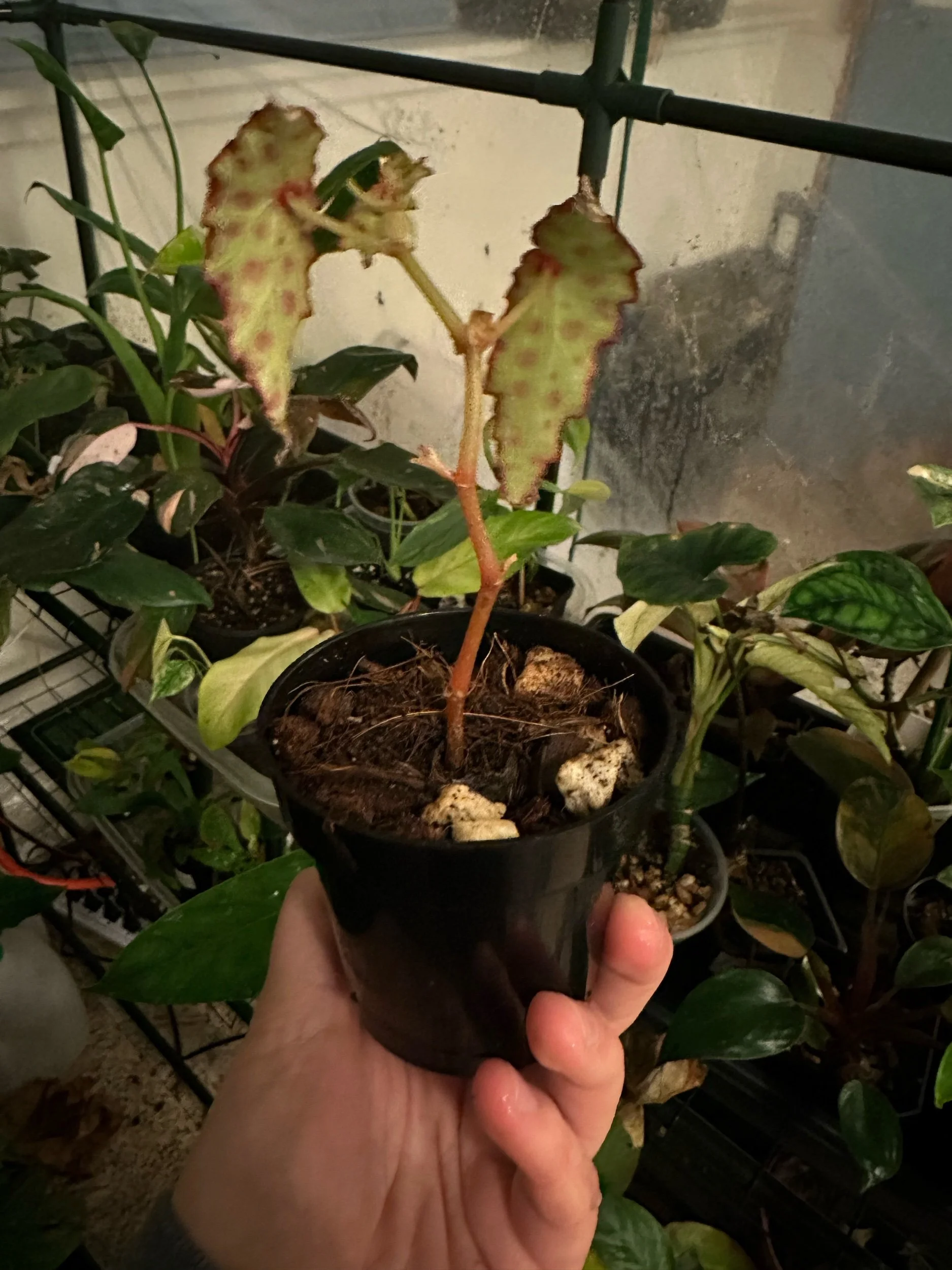 Image 2 of 2
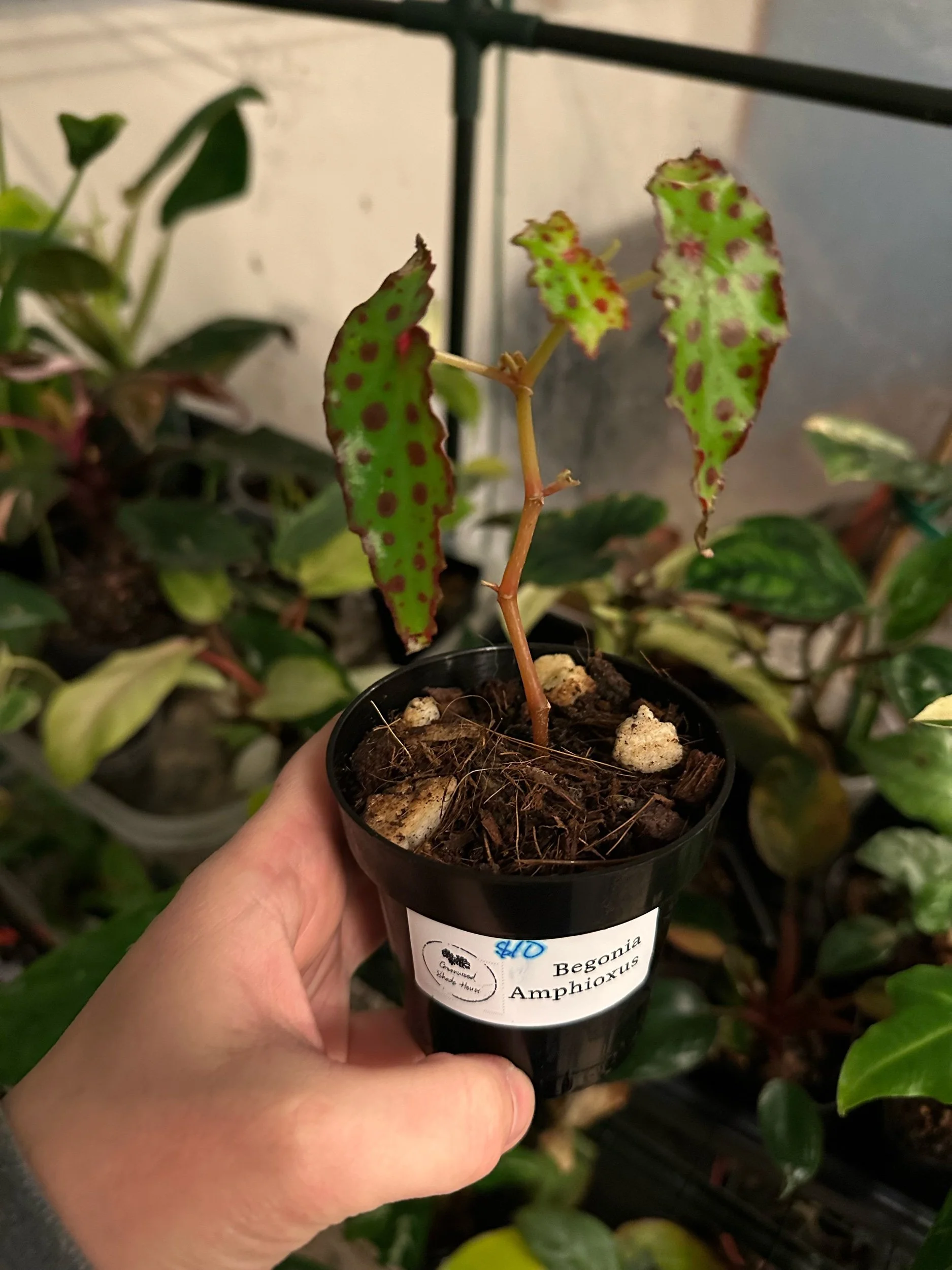
Begonia 'Amphioxus'
Overview Begonia 'Amphioxus' is a striking terrestrial begonia prized for its large, paddle-shaped leaves and sculptural form. It’s a hybrid known for bold foliage texture and a compact habit, making it excellent for tabletop display or shaded containers. Flowering is modest compared to its foliage — small clusters of pale blooms that add subtle charm.
Light
Bright, indirect light is best. Avoid direct afternoon sun, which can scorch the delicate leaves.
Tolerates lower light than many flowering plants, but too little light dulls leaf color and slows growth.
Water
Keep soil consistently lightly moist but not waterlogged. Allow the top 1 inch (2.5 cm) of the potting mix to dry between waterings.
Use room-temperature water and water evenly around the root zone. Avoid wetting the leaf crown to reduce rot risk.
Reduce watering slightly in cooler months when growth slows.
Soil & Potting
Use a well-draining, humus-rich potting mix. A blend of peat or coco coir, compost, and perlite or orchid bark works well.
Good airflow through the mix is important to prevent root rot.
Choose a pot with drainage holes. Terracotta pots help moderate moisture but dry faster; plastic retains moisture longer.
Temperature & Humidity
Prefers temperatures between 65–75°F (18–24°C). Keep above 55°F (13°C).
High humidity (50–70%) encourages lush growth and prevents crisp leaf edges. Use a humid tray, pebble tray, or room humidifier if indoor air is dry.
Avoid placement near drafts, heating vents, or air conditioners.
Fertilizer
Feed with a balanced, water-soluble houseplant fertilizer at half strength every 3–4 weeks during the growing season (spring through early fall).
Cut back feeding in winter when growth slows.
Pruning & Maintenance
Remove yellowed or damaged leaves promptly to maintain appearance and reduce pest issues.
Pinch back leggy growth to encourage a fuller form.
Repot every 1–2 years or when root-bound, ideally in spring.
Propagation
Best propagated by leaf or stem cuttings.
Leaf-cutting: Take a healthy leaf with a portion of petiole, place in moist rooting medium (perlite/peat mix) and keep warm and humid until new plantlets form.
Stem-cutting: Root a short stem in water or moist mix; once roots form, transplant to potting mix.
Pests & Problems
Common pests: mealybugs, spider mites, and thrips. Inspect leaves regularly and treat early with insecticidal soap or neem oil.
Overwatering leads to root rot; ensure good drainage and avoid waterlogged soil.
Brown leaf edges or tips often indicate low humidity or inconsistent watering.
Leaf spots can come from fungal issues if leaves stay wet; water at the soil level and improve air circulation.
Uses & Display
Excellent as an accent plant in shaded indoor locations, terrariums (if humidity controlled), or as part of mixed container plantings in low-light areas.
Its sculptural leaves make it a focal point on shelves, plant stands, or desks.
Summary Care Quick Reference
Light: Bright, indirect
Water: Keep lightly moist; top 1" dry between waterings
Soil: Well-draining, humus-rich
Temp: 65–75°F (18–24°C)
Humidity: 50–70%
Feed: Balanced fertilizer every 3–4 weeks in growth season
Propagation: Leaf or stem cuttings
Greenwood Shade House note Begonia 'Amphioxus' suits plant lovers who prioritize dramatic foliage and can provide consistent humidity and careful watering. As a women-owned indoor plant community, we recommend placing this begonia where its sculptural leaves can be appreciated and cared for with steady conditions rather than direct sun.
Begonia 'Amphioxus'
Overview Begonia 'Amphioxus' is a striking terrestrial begonia prized for its large, paddle-shaped leaves and sculptural form. It’s a hybrid known for bold foliage texture and a compact habit, making it excellent for tabletop display or shaded containers. Flowering is modest compared to its foliage — small clusters of pale blooms that add subtle charm.
Light
Bright, indirect light is best. Avoid direct afternoon sun, which can scorch the delicate leaves.
Tolerates lower light than many flowering plants, but too little light dulls leaf color and slows growth.
Water
Keep soil consistently lightly moist but not waterlogged. Allow the top 1 inch (2.5 cm) of the potting mix to dry between waterings.
Use room-temperature water and water evenly around the root zone. Avoid wetting the leaf crown to reduce rot risk.
Reduce watering slightly in cooler months when growth slows.
Soil & Potting
Use a well-draining, humus-rich potting mix. A blend of peat or coco coir, compost, and perlite or orchid bark works well.
Good airflow through the mix is important to prevent root rot.
Choose a pot with drainage holes. Terracotta pots help moderate moisture but dry faster; plastic retains moisture longer.
Temperature & Humidity
Prefers temperatures between 65–75°F (18–24°C). Keep above 55°F (13°C).
High humidity (50–70%) encourages lush growth and prevents crisp leaf edges. Use a humid tray, pebble tray, or room humidifier if indoor air is dry.
Avoid placement near drafts, heating vents, or air conditioners.
Fertilizer
Feed with a balanced, water-soluble houseplant fertilizer at half strength every 3–4 weeks during the growing season (spring through early fall).
Cut back feeding in winter when growth slows.
Pruning & Maintenance
Remove yellowed or damaged leaves promptly to maintain appearance and reduce pest issues.
Pinch back leggy growth to encourage a fuller form.
Repot every 1–2 years or when root-bound, ideally in spring.
Propagation
Best propagated by leaf or stem cuttings.
Leaf-cutting: Take a healthy leaf with a portion of petiole, place in moist rooting medium (perlite/peat mix) and keep warm and humid until new plantlets form.
Stem-cutting: Root a short stem in water or moist mix; once roots form, transplant to potting mix.
Pests & Problems
Common pests: mealybugs, spider mites, and thrips. Inspect leaves regularly and treat early with insecticidal soap or neem oil.
Overwatering leads to root rot; ensure good drainage and avoid waterlogged soil.
Brown leaf edges or tips often indicate low humidity or inconsistent watering.
Leaf spots can come from fungal issues if leaves stay wet; water at the soil level and improve air circulation.
Uses & Display
Excellent as an accent plant in shaded indoor locations, terrariums (if humidity controlled), or as part of mixed container plantings in low-light areas.
Its sculptural leaves make it a focal point on shelves, plant stands, or desks.
Summary Care Quick Reference
Light: Bright, indirect
Water: Keep lightly moist; top 1" dry between waterings
Soil: Well-draining, humus-rich
Temp: 65–75°F (18–24°C)
Humidity: 50–70%
Feed: Balanced fertilizer every 3–4 weeks in growth season
Propagation: Leaf or stem cuttings
Greenwood Shade House note Begonia 'Amphioxus' suits plant lovers who prioritize dramatic foliage and can provide consistent humidity and careful watering. As a women-owned indoor plant community, we recommend placing this begonia where its sculptural leaves can be appreciated and cared for with steady conditions rather than direct sun.