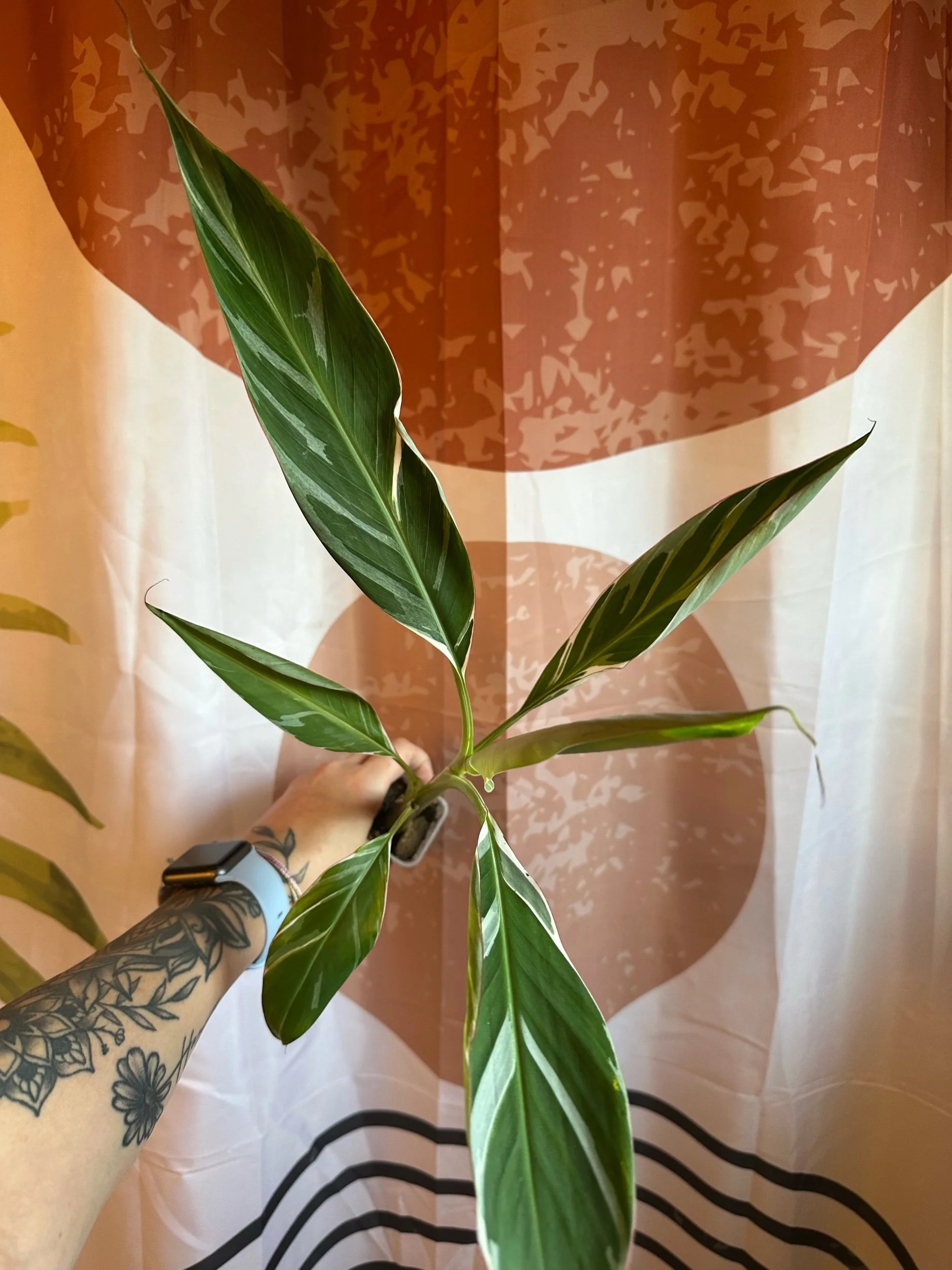
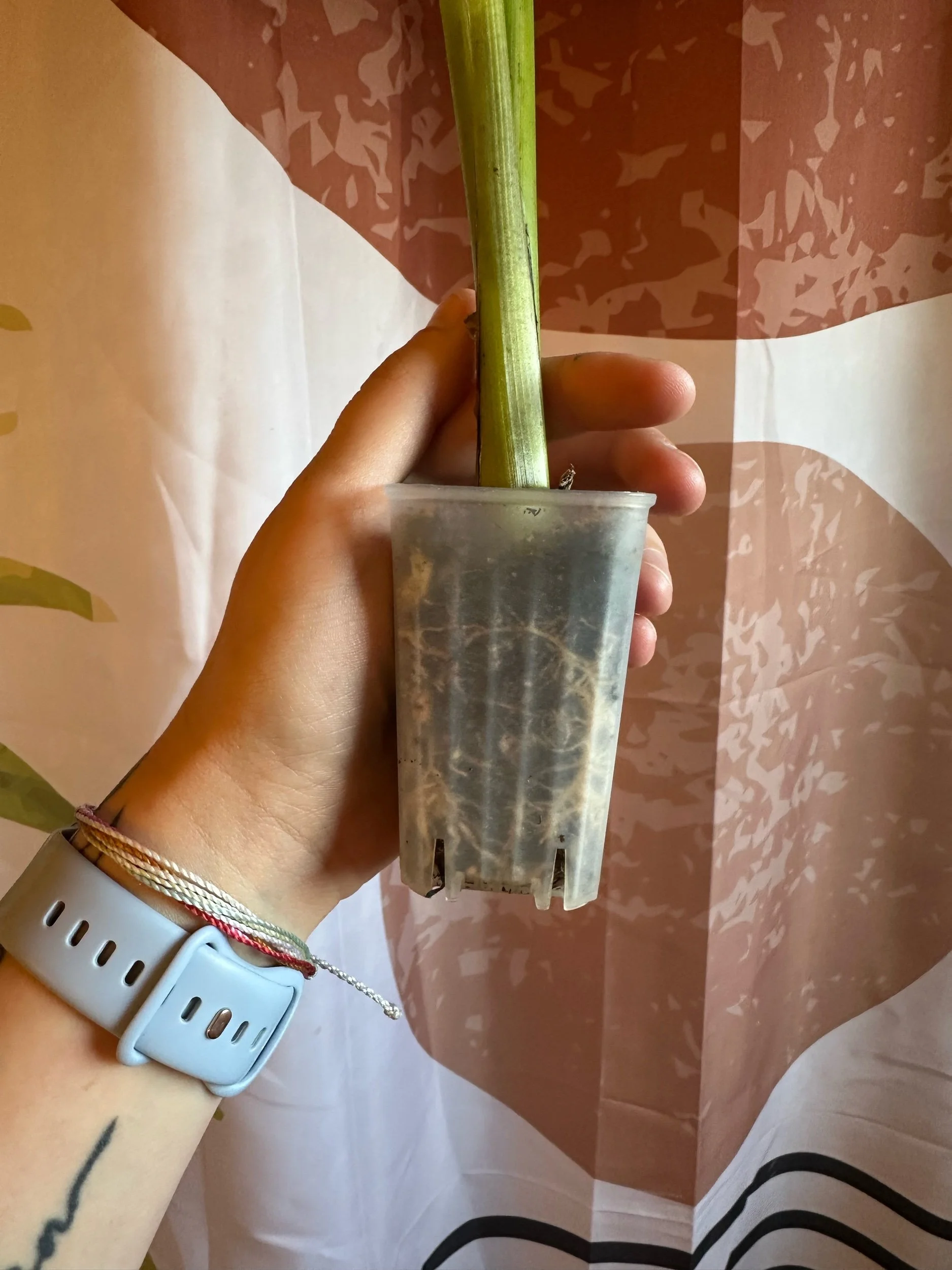
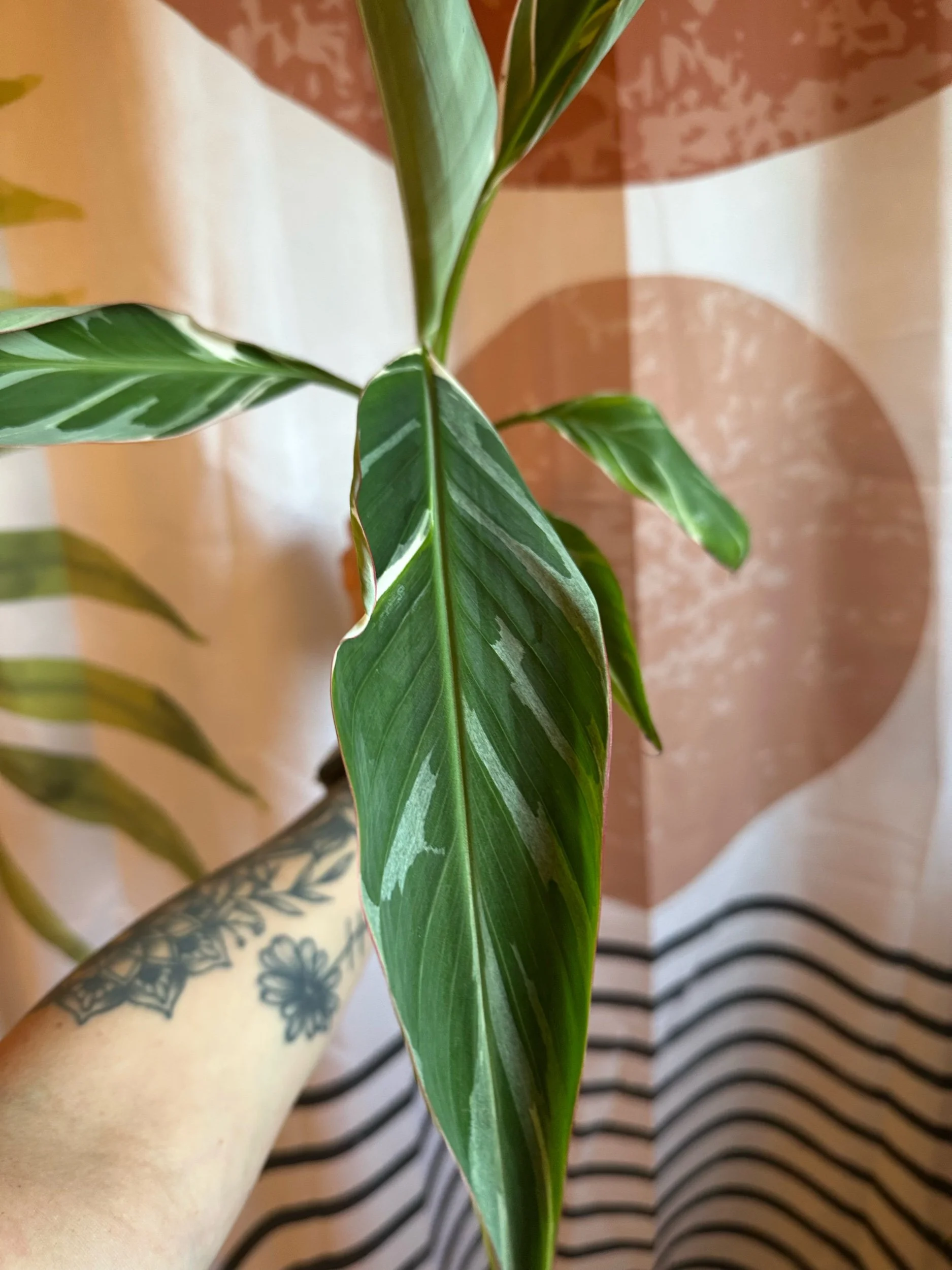
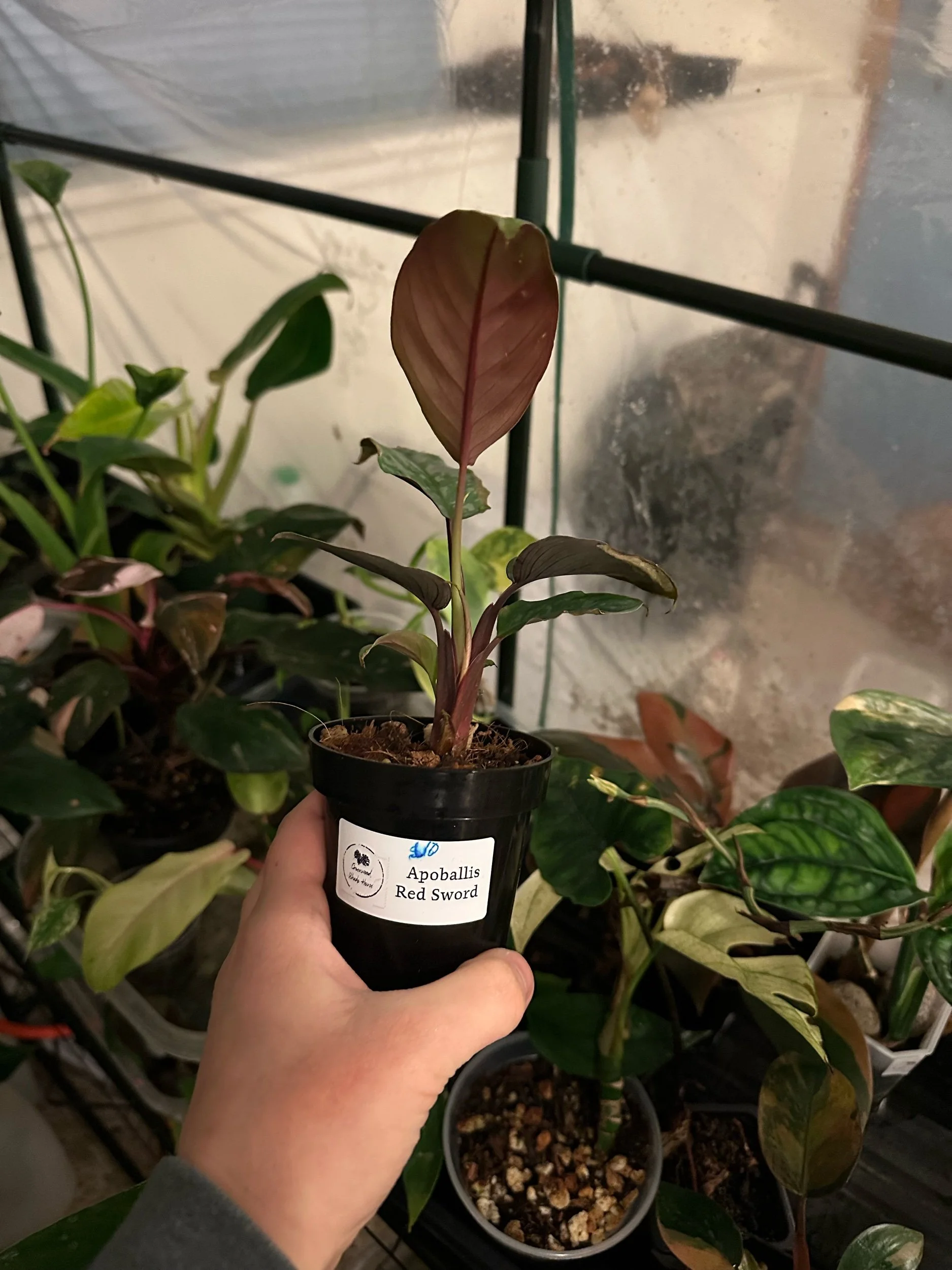
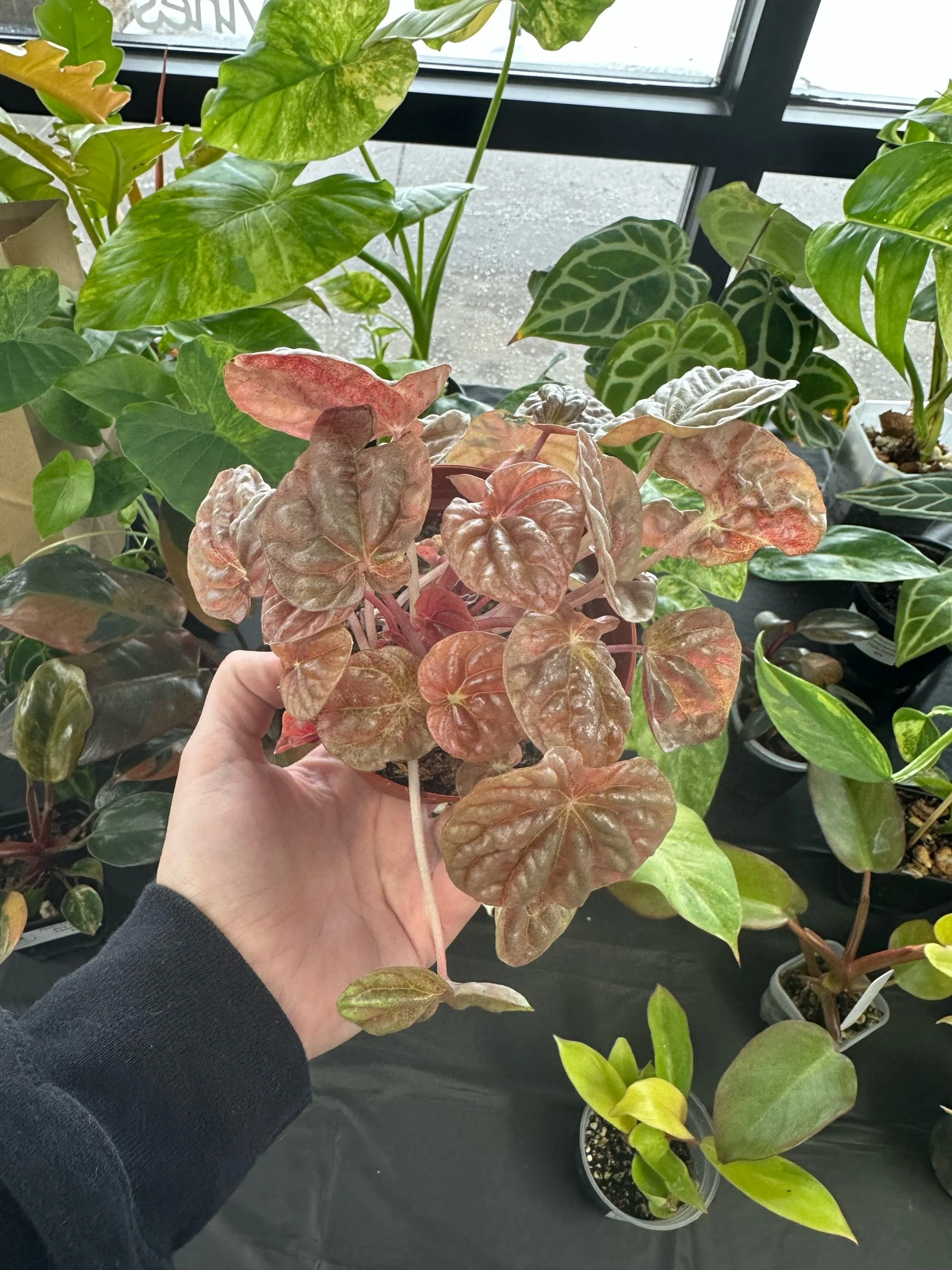
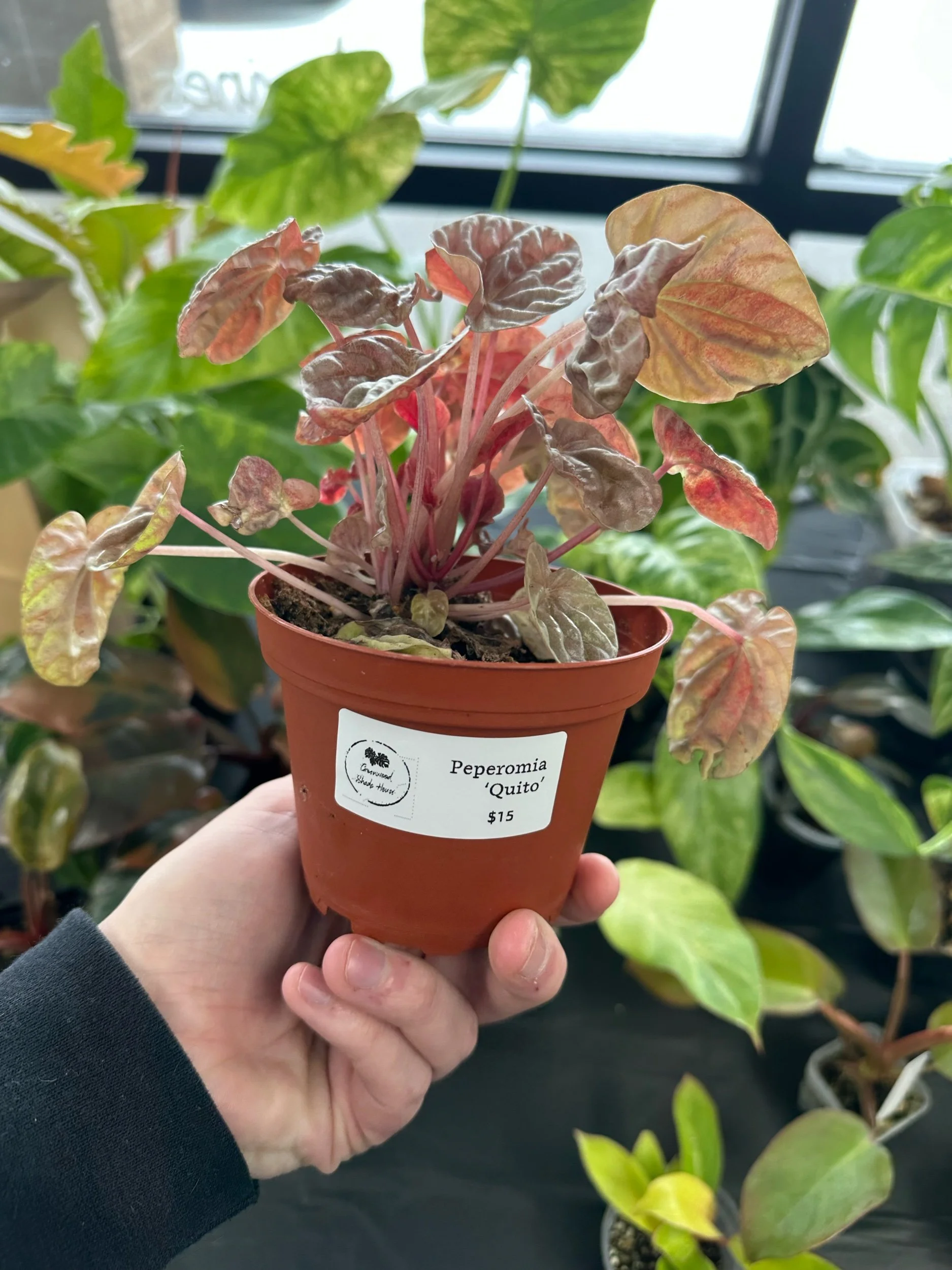
 Image 1 of 2
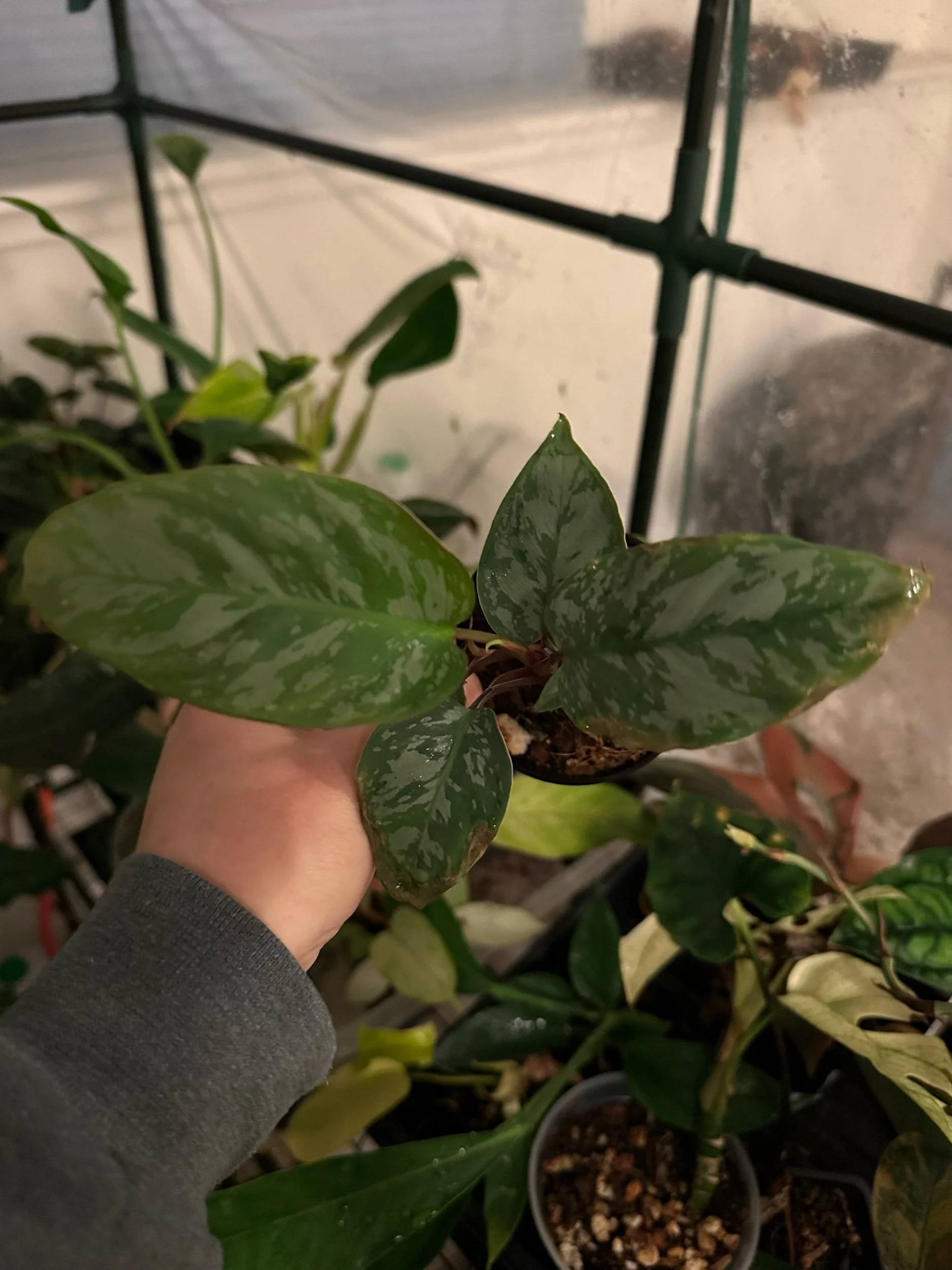
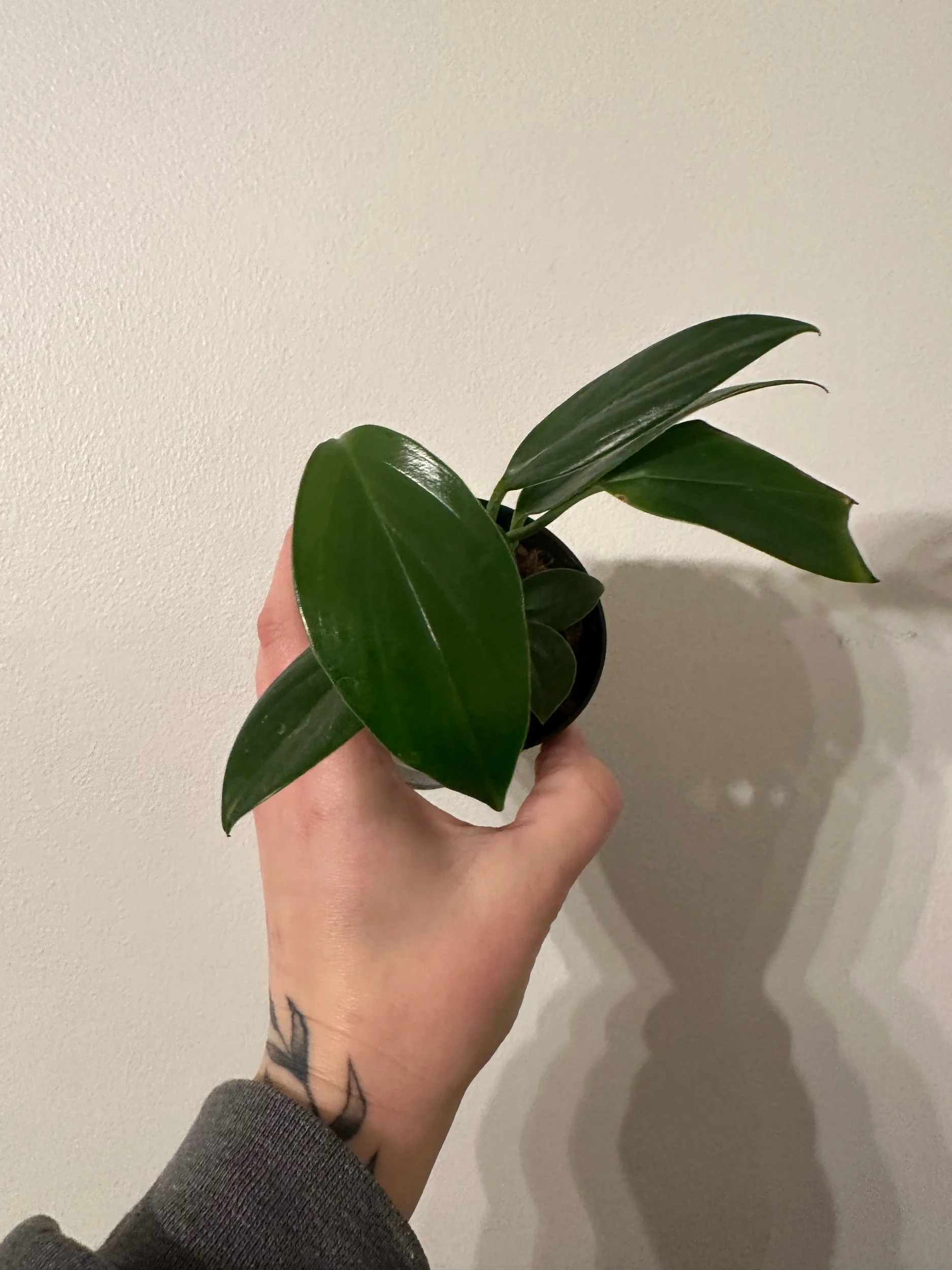
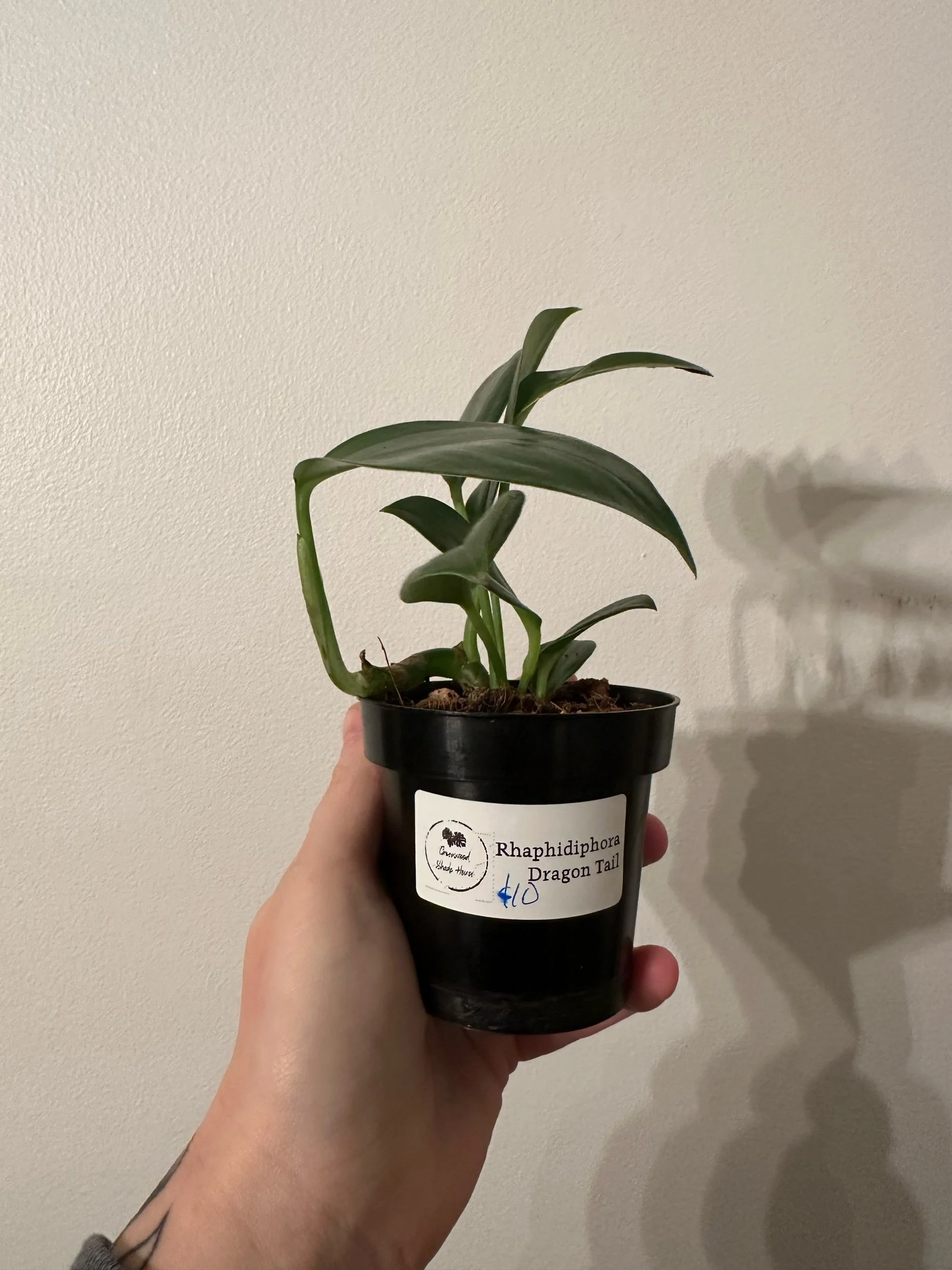 Image 2 of 2
Rhaphidiphora decursiva (Dragon Tail)
Overview Rhaphidiphora decursiva, commonly called Dragon Tail, is a climbing aroid prized for its glossy, fenestrated leaves and dramatic vining habit. Native to Southeast Asia, it’s appreciated for bold foliage that becomes more lobed and split with maturity. It’s a striking choice for indoor trellises, moss poles, or as a cascading plant on a high shelf.
Appearance
Leaves: Young leaves are typically ovate and entire; mature leaves develop deep splits, fenestrations, and an elongated, dramatic shape. Leaf color ranges from deep glossy green to slightly lighter new growth.
Growth habit: A vigorous climber with aerial roots; stems can become long and flexible, ideal for training on supports.
Size: Indoors, stems can reach several feet depending on support and conditions; leaves may span 6–18 inches in mature specimens.
Light
Bright, indirect light is best. Avoid direct afternoon sun which can scorch leaves.
Tolerates lower light but will grow more slowly and produce fewer fenestrations.
East- or north-facing windows with filtered light are ideal; you can also place it a few feet back from a west- or south-facing window.
Water
Keep evenly moist but not waterlogged. Allow the top 1–2 inches (2.5–5 cm) of soil to dry between waterings.
Reduce frequency in winter when growth slows.
Signs of overwatering: yellowing, limp leaves, root rot. Underwatering shows as wrinkled or crispy leaf edges.
Humidity & Temperature
Prefers higher humidity (50–70%) for best leaf development and to reduce brown edges.
Average indoor temps of 65–80°F (18–27°C) are suitable. Avoid temps below 55°F (13°C).
Use humidity trays, pebble trays, or a humidifier in drier homes; grouping plants can help maintain local humidity.
Soil & Potting
Use a well-draining, airy potting mix. Mix suggestions: high-quality indoor potting soil + orchid bark + perlite or coco coir to increase drainage and aeration.
Good drainage is essential to prevent root rot. Choose pots with drainage holes.
Repot every 1–2 years or when rootbound. Spring is the best time to repot.
Support & Training
Provide a moss pole, trellis, or stakes to encourage aerial roots to attach and promote larger, more fenestrated leaves.
You can train stems horizontally or vertically depending on display preference; leaves often become larger and more split when climbing.
Fertilizer
Feed monthly during the active growing season (spring and summer) with a balanced, water-soluble fertilizer diluted to half strength.
Reduce or stop feeding in fall and winter.
Propagation
Best propagated by stem cuttings with at least one node and aerial roots. Root cuttings in water or directly in a moist soilless mix.
Keep cuttings warm and humid for faster root development.
Pests & Problems
Common pests: spider mites, mealybugs, scale, and aphids. Inspect leaves and stems regularly.
Treat infestations early with insecticidal soap, neem oil, or by wiping with a diluted alcohol solution for small outbreaks.
Leaf yellowing may indicate overwatering; brown crispy edges point to low humidity or underwatering.
Toxicity
Like many aroids, Rhaphidiphora decursiva contains calcium oxalate crystals and is considered toxic if ingested by pets or humans. Keep out of reach of children and pets.
Display & Styling Tips
Allow vines to trail from hanging baskets or climb a tall moss pole for a dramatic focal point.
Combine with other tropical climbers for a lush, layered display.
Mature plants with fenestrated leaves make striking visual statements in bathrooms or kitchens with higher humidity.
Summary Dragon Tail (Rhaphidiphora decursiva) is a rewarding, fast-growing climbing aroid that thrives in bright, indirect light with consistent moisture and elevated humidity. Provide airy soil, a sturdy support, and regular feeding for the best leaf development and a bold, tropical display.
Rhaphidiphora decursiva (Dragon Tail)
Overview Rhaphidiphora decursiva, commonly called Dragon Tail, is a climbing aroid prized for its glossy, fenestrated leaves and dramatic vining habit. Native to Southeast Asia, it’s appreciated for bold foliage that becomes more lobed and split with maturity. It’s a striking choice for indoor trellises, moss poles, or as a cascading plant on a high shelf.
Appearance
Leaves: Young leaves are typically ovate and entire; mature leaves develop deep splits, fenestrations, and an elongated, dramatic shape. Leaf color ranges from deep glossy green to slightly lighter new growth.
Growth habit: A vigorous climber with aerial roots; stems can become long and flexible, ideal for training on supports.
Size: Indoors, stems can reach several feet depending on support and conditions; leaves may span 6–18 inches in mature specimens.
Light
Bright, indirect light is best. Avoid direct afternoon sun which can scorch leaves.
Tolerates lower light but will grow more slowly and produce fewer fenestrations.
East- or north-facing windows with filtered light are ideal; you can also place it a few feet back from a west- or south-facing window.
Water
Keep evenly moist but not waterlogged. Allow the top 1–2 inches (2.5–5 cm) of soil to dry between waterings.
Reduce frequency in winter when growth slows.
Signs of overwatering: yellowing, limp leaves, root rot. Underwatering shows as wrinkled or crispy leaf edges.
Humidity & Temperature
Prefers higher humidity (50–70%) for best leaf development and to reduce brown edges.
Average indoor temps of 65–80°F (18–27°C) are suitable. Avoid temps below 55°F (13°C).
Use humidity trays, pebble trays, or a humidifier in drier homes; grouping plants can help maintain local humidity.
Soil & Potting
Use a well-draining, airy potting mix. Mix suggestions: high-quality indoor potting soil + orchid bark + perlite or coco coir to increase drainage and aeration.
Good drainage is essential to prevent root rot. Choose pots with drainage holes.
Repot every 1–2 years or when rootbound. Spring is the best time to repot.
Support & Training
Provide a moss pole, trellis, or stakes to encourage aerial roots to attach and promote larger, more fenestrated leaves.
You can train stems horizontally or vertically depending on display preference; leaves often become larger and more split when climbing.
Fertilizer
Feed monthly during the active growing season (spring and summer) with a balanced, water-soluble fertilizer diluted to half strength.
Reduce or stop feeding in fall and winter.
Propagation
Best propagated by stem cuttings with at least one node and aerial roots. Root cuttings in water or directly in a moist soilless mix.
Keep cuttings warm and humid for faster root development.
Pests & Problems
Common pests: spider mites, mealybugs, scale, and aphids. Inspect leaves and stems regularly.
Treat infestations early with insecticidal soap, neem oil, or by wiping with a diluted alcohol solution for small outbreaks.
Leaf yellowing may indicate overwatering; brown crispy edges point to low humidity or underwatering.
Toxicity
Like many aroids, Rhaphidiphora decursiva contains calcium oxalate crystals and is considered toxic if ingested by pets or humans. Keep out of reach of children and pets.
Display & Styling Tips
Allow vines to trail from hanging baskets or climb a tall moss pole for a dramatic focal point.
Combine with other tropical climbers for a lush, layered display.
Mature plants with fenestrated leaves make striking visual statements in bathrooms or kitchens with higher humidity.
Summary Dragon Tail (Rhaphidiphora decursiva) is a rewarding, fast-growing climbing aroid that thrives in bright, indirect light with consistent moisture and elevated humidity. Provide airy soil, a sturdy support, and regular feeding for the best leaf development and a bold, tropical display.